Gutter guide
Ice Dams and Gutters in an Omaha Winter
Ice dams start on the roof, not in the gutter, but the gutter usually takes the beating. Here is how they form in an Omaha winter, what they break, and what actually helps.
By Agatha Prewitt, Gutter Guides EditorUpdated
The short answer
An ice dam forms when heat from the house melts snow on the upper roof and the water refreezes at the cold eave. The ridge of ice grows over the gutter, adds weight, bends hangers and splits seams, and can push water under shingles. Gutters do not cause ice dams, but clogged or sagging ones make them worse. Lasting prevention starts in the attic, while heat cable and good gutter upkeep reduce the damage.
Call (402) 395-0908How an ice dam actually forms
Picture a snow-covered roof on a cold, sunny day. Warm air leaking from the living space heats the roof deck over the attic, so the snow on the upper roof melts from underneath. That water runs down the slope until it reaches the eave, which hangs past the warm walls and stays as cold as the outside air. There it freezes.
Each day of melting adds another layer. The ice ridge grows along the edge of the roof and across the gutter, and meltwater backs up behind it in a pool. If that pool rises past the overlap of the shingles, it seeps under them and into the roof deck, walls or ceiling below.
Why Omaha winters are hard on gutters
January is the coldest month here, with average highs near 33 degrees and lows around 14.5. That is close to the worst range for ice dams, since sunny afternoons and attic heat push the roof just above freezing while nights drop well below. The National Weather Service puts Omaha's average annual snowfall at about 27.1 inches, enough to blanket roofs several times each winter.
Recent winters have also grown more erratic. The Nebraska State Climate Office reports the state now averages 16 fewer days below freezing than it once did, and warm spells of five days or more above freezing have become more common. More thaws mean more melt and refreeze cycles, and each one adds ice at the eave.
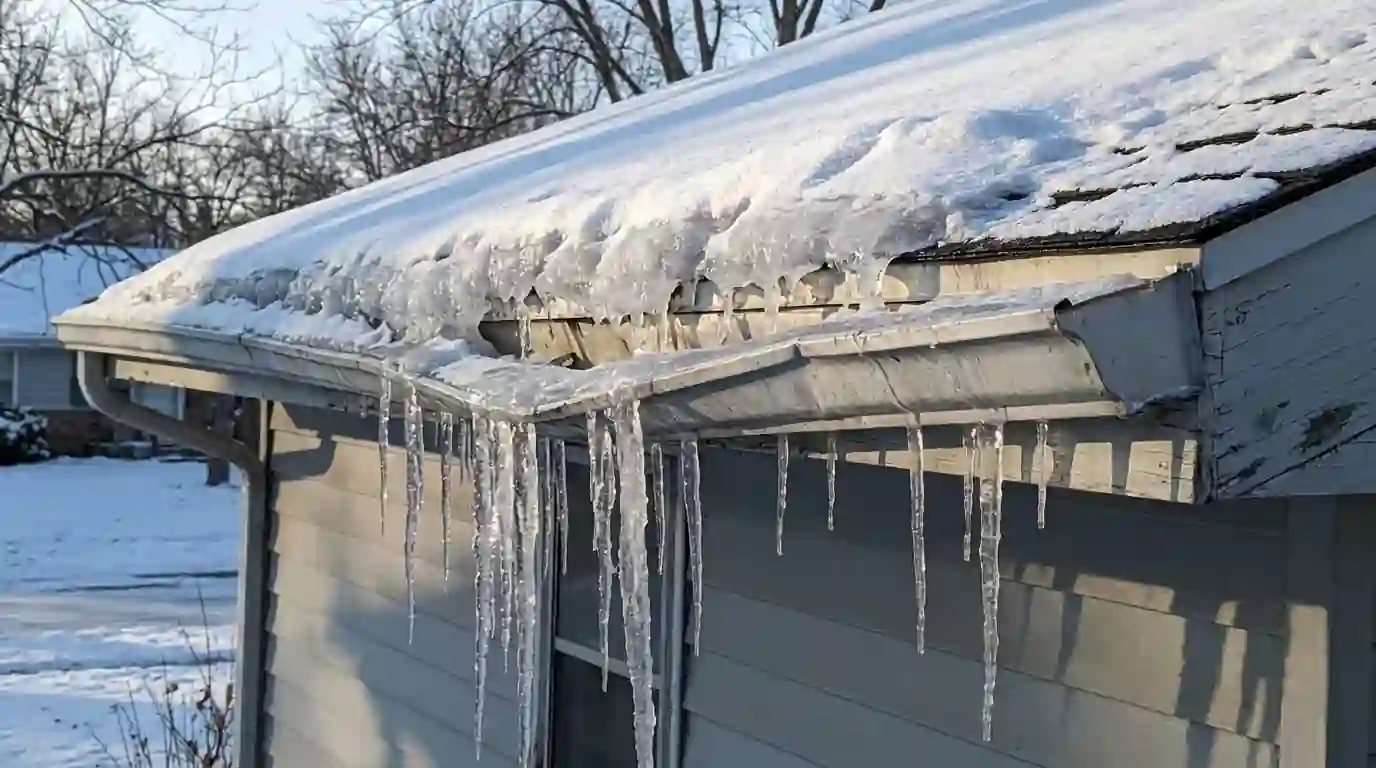
What ice does to gutters and downspouts
Ice is heavy, and a gutter full of it is carrying far more load than it was designed for. We see the same damage after most hard winters:
- Hangers bent or pulled out of the fascia, leaving a run that sags or tilts outward
- Spikes and ferrules backed out on older systems, so whole sections pull away from the house
- Split seams and cracked miters where ice expanded inside the corners
- Downspouts crushed or split when water froze solid inside them
- Front lips bent outward by a sliding sheet of ice and snow
- Fascia soaked and softened where meltwater ran behind the gutter
Do gutters cause ice dams?
Not on their own. An ice dam would form at the eave of a roof with no gutters at all, because the cause is heat escaping into the attic. What gutters do is give the ice something to grab, and they can make a dam bigger when they are already full of leaves or sagging toward the house.
A clogged gutter freezes into a solid block in the first cold snap, so later meltwater has nowhere to go but back up the roof. A gutter pitched the wrong way holds water that freezes in place. Clearing the gutters after fall leaf drop and checking pitch and hangers before winter keeps the system from adding to the problem.
Safe ways to deal with ice on the roof edge
The worst thing you can do is climb up with a hammer, hatchet or ice pick. Chipping at ice on a gutter dents and punctures the aluminum and tears shingles that are brittle in the cold. Salt pellets and rock salt thrown on the roof can stain siding, damage plants below and corrode metal.
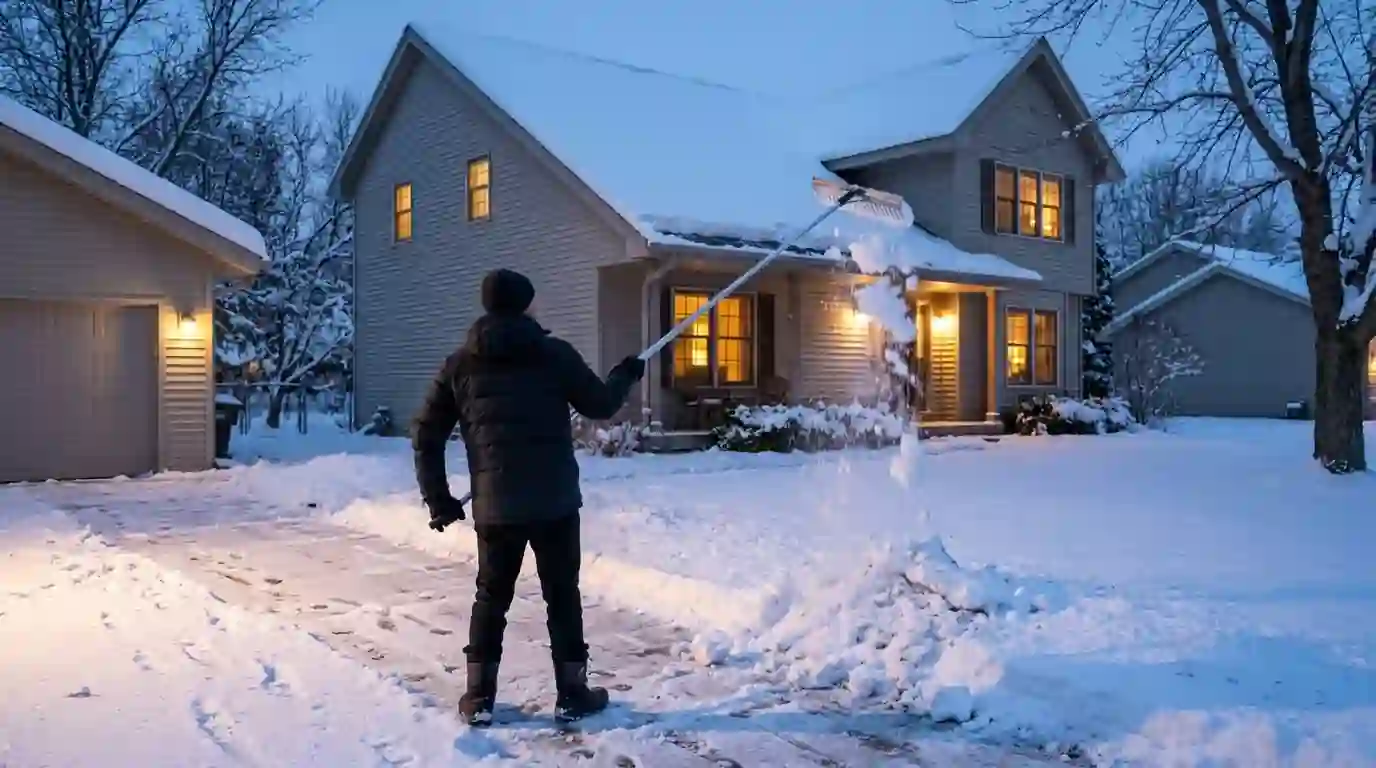
From the ground, a roof rake with a long handle can pull the bottom few feet of snow off the roof after a storm, which removes the fuel for the next dam. Keep the rake head off the shingles and stay clear of the falling snow. When a dam is already leaking into the house, professional removal with low-pressure steam is the method that does the least harm to the roof and gutters. See the price table below for typical ranges.
Repairing gutters after the thaw
Once the ice is gone, walk the house and look at every run from the ground. Gaps between the gutter and fascia, a wavy front lip, or water dribbling from a corner during the first spring rain all point to winter damage.
Most of it is fixable. Our ice dam gutter repair work replaces bent hangers with hidden hangers screwed into solid wood, reseals or rebuilds split corners, swaps crushed downspout sections and resets the pitch. Where the fascia has gone soft, we replace that board first so new hangers have something to bite into. If a long run is badly kinked or the system is old sectional gutter, replacing the gutters with a seamless run on closely spaced hangers often costs less over time than repeated patching.
| Item | Published range |
|---|---|
| Ice dam removal | $650 to $2,400 |
| Steam ice dam removal | $400 to $600 per hour |
| Heat cable installation | $900 to $1,800 |
| Typical gutter repair | $100 to $450 |
National ranges published by Angi, Fixr, HomeAdvisor, HomeGuide. Your price depends on the house; we give you a number on the phone or at the house before any work starts. See the full gutter price guide.
Prevention: attic first, gutters second
The lasting fix for ice dams is keeping heat out of the attic. Air sealing around light fixtures, vents and attic hatches, enough insulation and good soffit and ridge ventilation keep the roof deck cold so snow melts evenly instead of from below. That is insulation and roofing work, and it is worth a conversation with a contractor who does it.
On the gutter side, three things help. Self-regulating heated gutter cables in the gutters and downspouts keep a channel open so meltwater can drain, though they need a GFCI outlet and do not stop dams on their own. Metal drip edge and gutter apron keep water from running behind the gutter onto the fascia. And a clean, well-pitched gutter on hidden hangers spaced close together handles ice load far better than an old spike-and-ferrule system.
Our gutter sizing guide covers when a heavier profile makes sense on steep or metal roofs that shed snow in sheets. If ice has already bent your gutters this winter, give us a call and we will look once it is safe to work at the roof edge.
Agatha Prewitt, Gutter Guides Editor
Writes the gutter guides for Hastings Seamless Gutters, drawing on what our crews see on Omaha roofs through hail season, cottonwood season and winter.
FAQ
Questions readers ask
Should I chip ice out of my gutters with a hammer?
No. Aluminum gutters dent and puncture easily, and cold shingles crack when struck. Chipping usually turns a seasonal ice problem into a gutter replacement. From the ground, use a roof rake to pull the lower few feet of snow off after each storm. If ice is already backing water into the house, low-pressure steam removal is the method that spares the roof and the gutters.
Will heat cable in my gutters stop ice dams?
Not completely. Self-regulating heat cable in the gutters and downspouts keeps a drainage path open so meltwater can leave the roof, which reduces the size and weight of a dam. It does not stop the attic heat that creates the dam in the first place. Cable works best alongside air sealing, insulation and ventilation, and it needs a GFCI protected outlet.
Why did my downspout split during the winter?
Water froze inside it. When a downspout is partly clogged with leaves or seeds, or its extension is buried in snow, meltwater pools in the lower section and freezes. Ice expands as it forms and splits the seam or bursts the elbow. Keeping downspouts clear in fall and making sure the outlet can drain freely in winter prevents most of these splits.
Can I take gutters off to avoid ice dams?
You can, but it trades one problem for another. Without gutters, roof water drops right at the foundation, which is a common cause of wet basements in Omaha. Ice dams form at the eave whether or not gutters are present, since the cause is attic heat. A better approach is fixing the attic and keeping gutters clean, pitched and securely hung.
Questions about your own gutters?
Call and describe what you are seeing. The line is answered 24/7 and a crew can come out to measure.