Seamless gutter installation
6-Inch Seamless Gutters in Omaha, NE
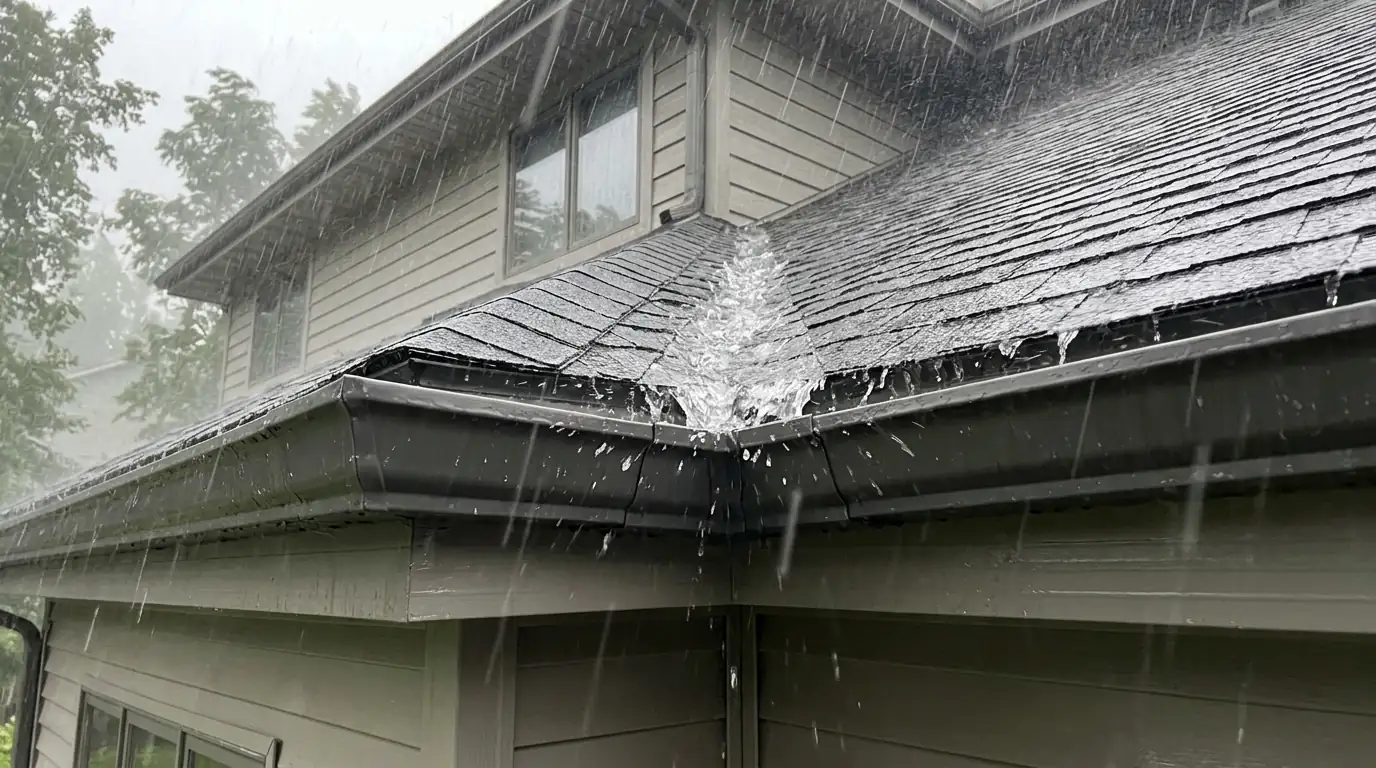
Water pouring over clean gutters during a summer storm is not a cleaning problem. It usually means the roof is sending more water than a 5-inch trough can hold.
- Phone answered 24/7
- Our own crews
- Measured and priced on site
 Omaha, Nebraska
Quick answer
Six-inch seamless gutters are a wider version of the standard K-style profile, formed on site from heavier aluminum coil. They carry noticeably more water than 5-inch gutters and pair with 3x4 downspouts, which makes them the fix for big roof planes, steep pitches, valleys and metal roofs that overflow in heavy rain.
We get this call every spring: the gutters were just cleaned, the downspouts are clear, and water still sheets over the front during a downpour. The homeowner assumes something is broken. Usually nothing is, the gutter is simply too small for the roof area feeding it.
Moving that run to a 6-inch gutter is often the cleanest fix. From the street it looks almost identical to the 5-inch K-style gutters on the rest of the house, but the deeper, wider trough holds and moves far more water before anything spills.
What changes when you size up
A 6-inch gutter is an inch wider across the top and deeper than a 5-inch, and the extra cross section adds a lot of capacity because it grows in both directions at once. Published figures put the gain at about half again as much water, which is the difference between a run that keeps up and one that spills.
The bigger trough also accepts a 3x4 downspout without crowding the outlet, and the wider opening at the top catches water that would overshoot a narrower gutter coming off a steep roof.
Roofs that need the wider trough
Gutter size should follow the roof, not the house. A modest ranch with a single moderate roof plane almost never needs 6-inch. A two-story with a long, unbroken rear slope, or a house where three roof faces meet over the back patio, often does on at least one run.
We look at each eave separately and size the runs that need it. It is common to leave the front of a house in 5-inch and put 6-inch only on the back or below a valley.
- Large roof planes that drain to a single eave
- Steep pitches where water hits the gutter fast
- Inside corners below a roof valley
- Metal roofs that shed water and snow quickly
- Upper roofs that drain onto a lower roof and then into one gutter
Valleys and metal roofs
A valley collects water from two roof faces and drops it into the gutter at one spot. In a heavy storm, the stream can be fast enough to jump a 5-inch gutter at the corner. A 6-inch trough, often with a valley splash guard at the inside corner, catches that stream.
Standing seam and other metal roofs shed water faster than shingles and release snow in slabs. The wider, deeper 6-inch profile with tighter hanger spacing holds up better under both.
Pairing with 3x4 downspouts
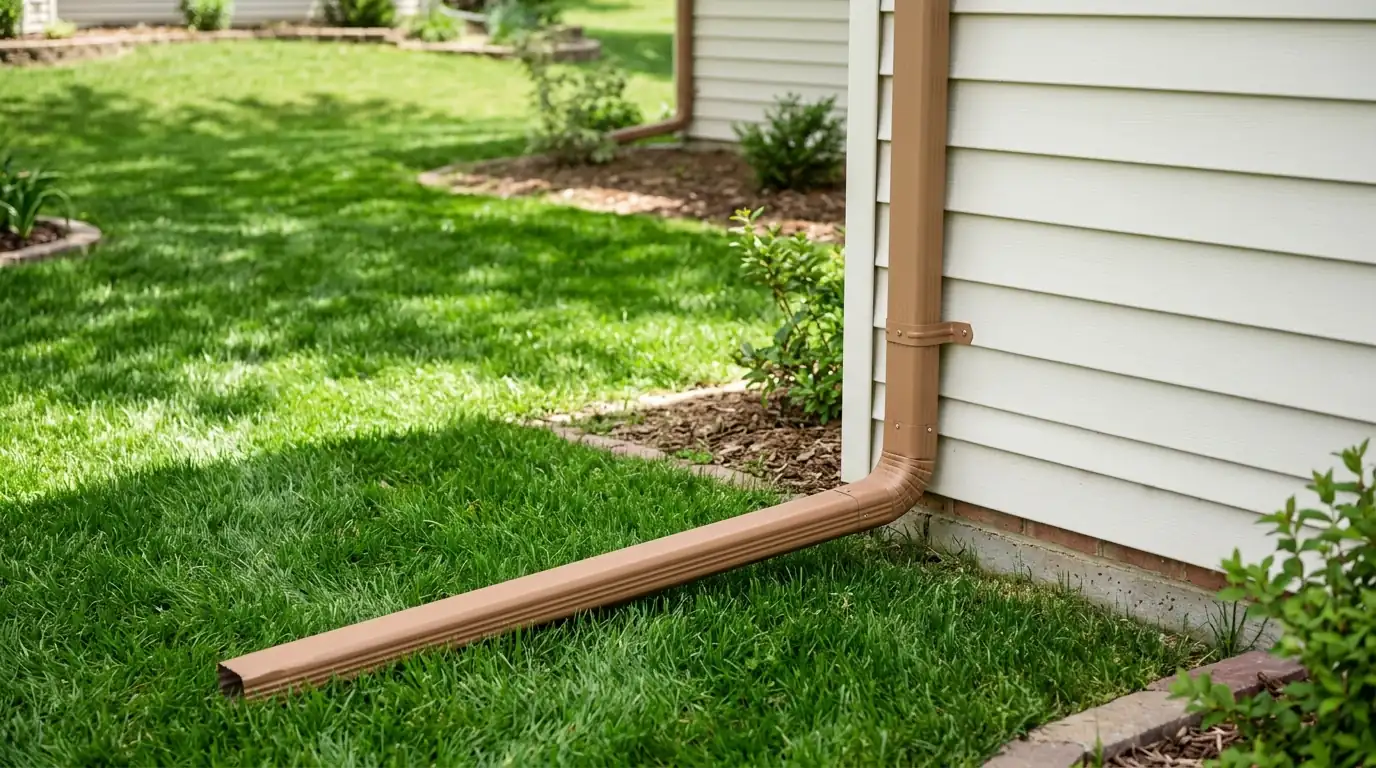
A bigger gutter only helps if the water can leave it. We pair 6-inch runs with 3x4 downspouts, which drain much faster than 2x3 and are less likely to pack with silver maple seeds or cottonwood fluff at the elbows.
On long runs, a second outlet is still worth adding. Two 3x4 downspouts at each end of a long eave split the load and keep the trough from filling toward the middle. Our downspout installation page covers how we choose locations.
How the cost compares with 5 inch
Six-inch gutters use wider coil, usually in the heavier .032 gauge, and the larger downspouts cost more per foot. Published upgrade figures put the difference at a few dollars per linear foot over 5-inch, and the table below shows that range.
Because we only size up the runs that need it, the added cost on a whole house is usually modest. For a full side-by-side, read our 5-inch vs 6-inch guide.
What to look for
Signs a run needs 6-inch gutters
Overflow with clean gutters
Water spills over the front during ordinary storms even right after a cleaning, which points to a trough that cannot carry the roof runoff.
Corner overshoot at valleys
A sheet of water jumps the gutter at an inside corner, splashing the walk or soaking the ground right below the valley.
Erosion under one eave
A trench in the mulch or bare soil along one side of the house shows where overflow lands again and again during heavy rain.
Steep or tall roof
Roofs with steep pitch or a tall, unbroken slope speed water into the gutter faster than a 5-inch profile can move it toward the outlet.
New metal roof
Switching to metal increases how fast water and snow come off the roof, and the old gutter size often stops keeping up.
Water in the basement on one side
Damp walls or a wet corner in the basement below one eave can trace back to overflow dumping water against the foundation there.
How the job goes
How we size and install 6-inch runs
- 1
Find the problem runs
We look at each eave, the roof area and pitch above it, any valleys, and the overflow marks below, then decide which runs need 6-inch and which can stay at 5-inch.
- 2
Plan outlets and downspouts
Outlets are placed for 3x4 downspouts, with extra outlets on long runs, so the larger gutter can actually empty during a cloudburst.
- 3
Form the wide profile on site
The roll former is set up for 6-inch coil and shapes each run to length in the driveway, with end caps, miters and outlets fitted before lifting.
- 4
Hang with tighter spacing
Six-inch runs hold more water and snow, so hidden hangers go in closer together and are screwed into solid fascia and rafter tails where possible.
- 5
Flow test the problem corner
We run water into the trouble spot, especially below valleys, to confirm the new gutter and splash guard catch it before we pack up.
Pricing
Price of going to 6 inch
Six-inch work is usually priced as the base seamless aluminum installation plus an upgrade amount per foot. The rows below show both, plus the downspout line since 3x4 downspouts come with the larger gutter.
| Item | Published range |
|---|---|
| Seamless aluminum installed, base | $14 to $20 per foot |
| Added cost, 5 inch to 6 inch | $3 to $5 per foot |
| Aluminum downspout, per foot installed | $7.52 to $31.79 per foot |
National ranges published by Fixr, Angi. Your price depends on the house; we give you a number on the phone or at the house before any work starts. See the full gutter price guide.
The number of runs you upsize, the count and height of downspouts and any splash guards at valleys decide the final figure. See our price guide for more.
Omaha conditions
Nebraska downpours and big roofs
City of Omaha stormwater material notes that one inch of rain on a 1,000 square foot roof sends more than 600 gallons off the edge. A big two-story roof plane can be two or three times that size, and when a thunderstorm delivers its rain in a short burst, that is when 5-inch gutters on large roofs give up.
Hail adds a second reason. Nebraska ranks at the top nationally for hail risk, and the heavier .032 coil we use on 6-inch runs resists denting better than the thinner metal often used on 5-inch systems. If your gutters have already been dented, our hail damage service can combine replacement with the size upgrade.
Talk to a gutter crew about 6-inch seamless gutters
Tell us what you are seeing at the roof edge. We answer around the clock and give you straight answers on repair or replacement.
FAQ
6-Inch Seamless Gutters questions
Do 6-inch gutters look too big on an average house?
Less than most people expect. From the street, the extra inch is hard to spot, especially when the gutter matches the fascia. On very small ranches with narrow fascia boards, a 6-inch gutter can look heavy, which is one reason we only upsize the runs that need it. On two-story homes and houses with deep eaves, the larger profile usually looks right in proportion.
Can I upgrade just one side of my house to 6-inch gutters?
Yes. We often replace only the run below a valley or a large rear roof with 6-inch and leave the rest in 5-inch. Where the two sizes meet at a corner, we build a transition that seals properly. Matching the color keeps the change from standing out, and the house drains better where it actually needed help.
Do 6-inch gutters need different hangers than 5-inch gutters?
They use hidden hangers sized for the wider profile, and we space them closer together. A full 6-inch gutter holds a lot more water and, in winter, more ice and snow, so the extra hangers keep the run from sagging. Fastening into solid fascia and rafter tails matters even more on these runs than on smaller gutters.
Will bigger gutters fill with more leaves and seeds?
A wider opening does catch a bit more debris, but the larger trough and 3x4 downspouts also pass seeds and small leaves more easily, so clogs at the outlet are less common. Under heavy cottonwood or maple cover, a guard over the 6-inch run can help. Either way, plan on cleaning on the same schedule you would for 5-inch gutters.
Is a 6-inch gutter enough for a metal roof that sheds snow?
It helps a great deal, but sliding snow can still bend any gutter if a large slab drops at once. On metal roofs we use closer hanger spacing and heavier coil, and some homeowners add snow guards on the roof itself to hold snow until it melts. We can point out where slides are likely and set the gutter to handle meltwater rather than falling ice.
Related gutter services
Checking costs? The gutter price guide lists published ranges, the gutter size calculator estimates 5 or 6 inch and downspout count, and the cleaning schedule planner shows how often your trees fill the gutters.