Planner
Gutter cleaning schedule planner for Omaha yards
Cottonwood fluff, maple seeds and oak leaves fall at different times. Tell the planner what grows near your roof and it suggests a schedule.
Suggested clean-outs per year
- Jan
- Feb
- Mar
- Apr
- May
- Jun
- Jul
- Aug
- Sep
- Oct
- Nov
- Dec
How the planner decides
Each tree type adds a load and the months it drops debris. Cottonwoods count heavily in late spring, maples in spring and fall, oaks in late fall. Branches directly over the roof raise the load, trees farther away lower it, and guards cut it back. The result is rounded to a practical number of visits.
Cottonwood season
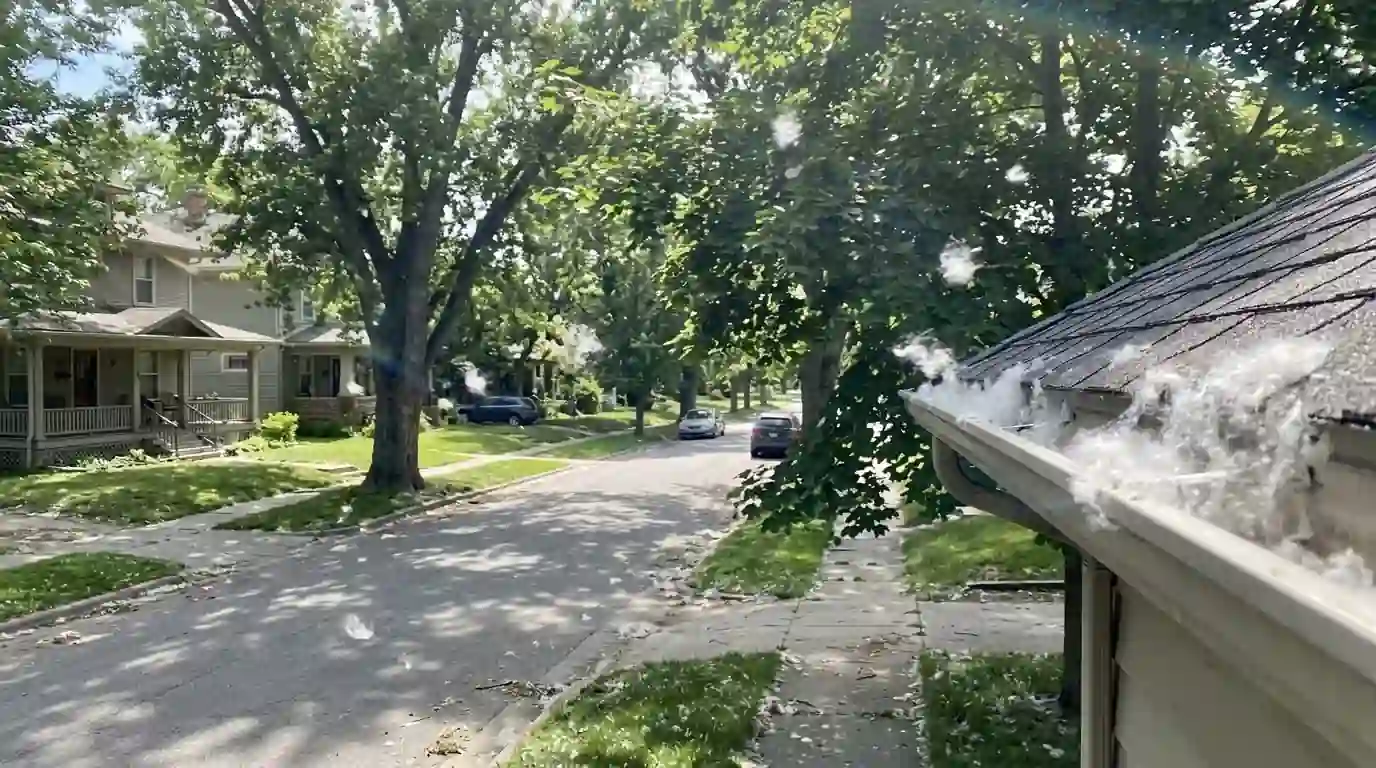
Cottonwood seed fluff collects on roofs and in gutters for a few weeks in late spring and early summer. It mats into a felt that slows water even when gutters look mostly clear from the ground, which is why a clean-out right after the fluff stops is worth more than one in early spring.
Fall leaves and the last clean-out
Oaks hold their leaves into November, so a clean-out timed too early in fall misses the heaviest drop. In most Omaha yards the last visit of the year lands after the oaks finish and before the ground freezes, so the gutters go into winter empty.
When to skip the ladder
Two-story gutters, steep roofs and wet or icy conditions are where most ladder falls happen. If your schedule calls for work up high, let a crew with the right ladders and standoffs handle it.
Related: gutter cleaning, maintenance plans, micro-mesh guards and the guide on how often to clean gutters.
FAQ
Planner questions
Is the planner accurate for my house?
It gives a sensible starting schedule based on common patterns for Omaha trees. Your own roof may load faster or slower depending on wind, roof pitch and the exact trees. After one season, compare what you see in the gutters with the planner and adjust.
Do guards mean I never clean gutters?
No guard removes cleaning entirely. Micro-mesh cuts the load the most, but fluff and pollen can mat on top and seeds can lodge at the edges. Plan on a lighter check, usually once a year, even with good guards.
What if I have no trees near the house?
Gutters on treeless lots still collect shingle grit, wind-blown leaves and nesting material. One clean-out a year, usually in fall, is typical. New neighborhoods can also see construction dust and debris for the first few years.
Can I book a recurring schedule?
Yes. Call and tell us what the planner suggested. We set up spring and fall visits on our calendar and call you before each one, so you do not have to remember.