Gutter guards
Gutter Guard Installation in Omaha, NE
Cleaning gutters twice a year is one thing. Climbing up four or five times because cottonwood fluff, maple seeds and oak leaves keep packing the troughs is another.
- Phone answered 24/7
- Our own crews
- Measured and priced on site
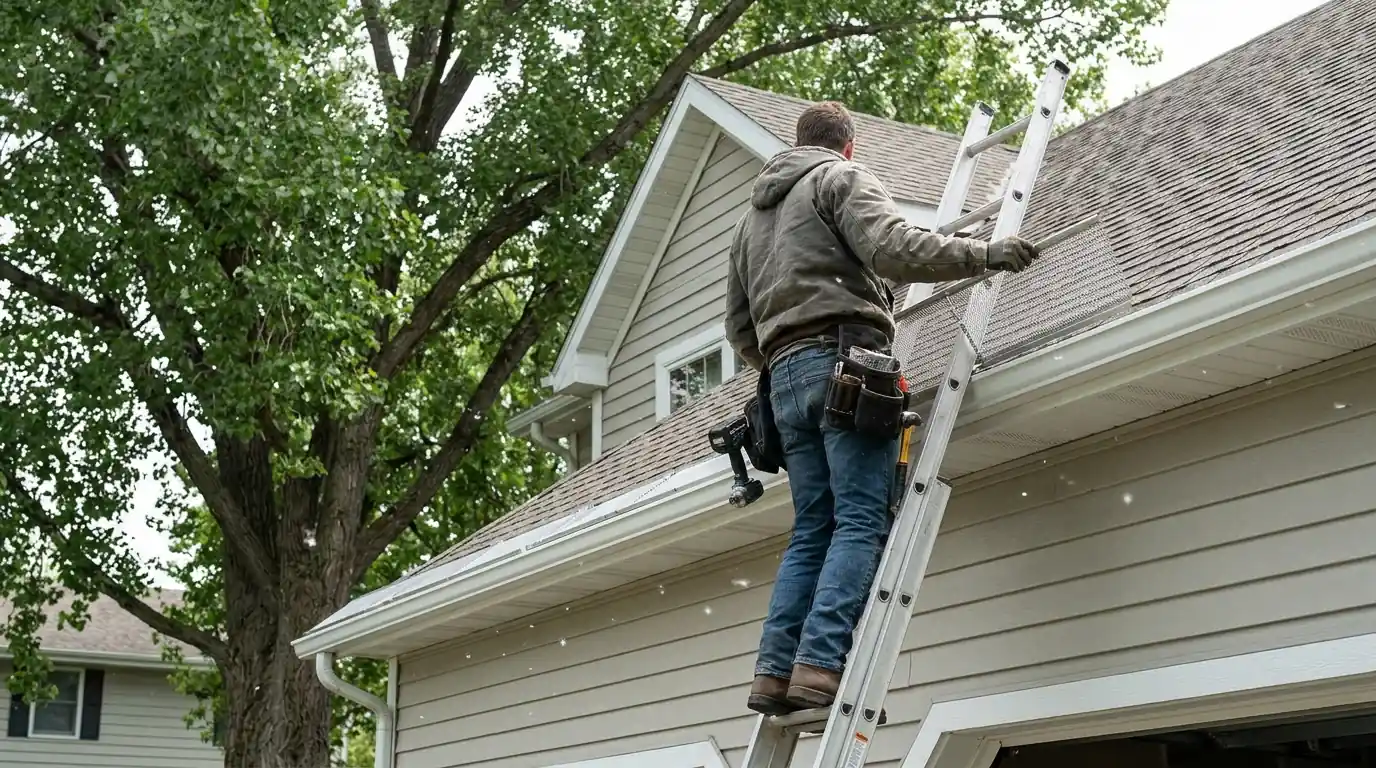 Omaha, Nebraska
Quick answer
Gutter guard installation means fitting covers over your gutters that let water in and keep debris out. The right guard depends on what falls on your roof: big leaves, winged seeds, needles or cottony fluff. Guards make sense when clean-outs come too often, when the roof is hard to reach, or when clogs keep causing overflow.
No single guard suits every yard. A cover that handles oak leaves well can mat over with cottonwood fluff in a week, and a fine mesh that blocks fluff costs more than a house with one small maple needs. We start by looking up, not at a brochure: which trees overhang the roof, how close, and what they drop through the year.
Then we check the gutters themselves. A guard on a sagging, poorly pitched or undersized gutter just hides the problem. If the runs need re-hanging or replacing, we say so first, because a guard is only as good as the gutter under it.
The four main guard types
Most guards fall into one of four families. Each has trade-offs in cost, what it blocks and how it behaves in winter.
- Screens: plastic or metal grids that drop in or snap on; the lowest cost, they stop large leaves but let seeds and fluff through.
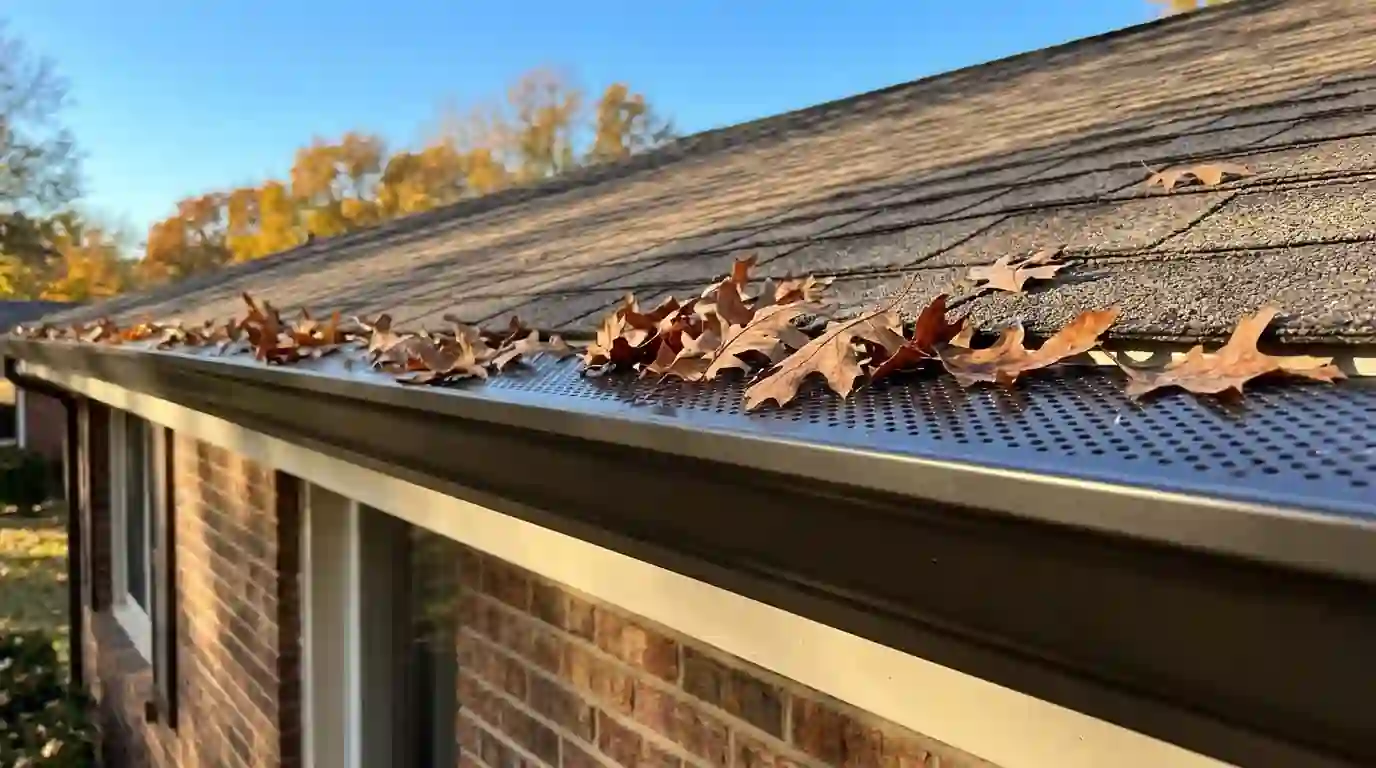
- Perforated aluminum: rigid panels punched with small holes; sturdy, good on leaves and twigs, fair on seeds.
- Micro-mesh: fine stainless mesh over an aluminum frame; blocks fluff, seeds, needles and shingle grit, at the highest cost.
- Reverse curve: a solid hood that sheds debris off the front and lets water curl around the nose into the gutter; works with leaves, struggles in very heavy rain.
Matching guards to the trees over your roof
Cottonwood is Nebraska's state tree, and its late spring fluff is the hardest debris we deal with. It floats into anything with large openings and felts into a mat. Under cottonwoods, micro-mesh guards are usually the only cover that keeps up.
Silver maple helicopter seeds come in heavy crops each spring and wedge into screens and outlets. Fine mesh or tight perforated aluminum handles them. Oak and big-leaf maple drop broad leaves in fall that sit on top of nearly any guard and blow off once dry, so a sturdy gutter screen or perforated panel often does the job for less.
Pine and spruce needles slide through screens and perforations end first. Mesh stops them, though needles can lie on top and need a brush now and then. Most yards have a mix, so we size the guard to the worst tree, not the most common one.
How guards attach and what that means for your roof
Guards fasten in one of two ways. Some slide under the first course of shingles at the back and rest on the gutter lip at the front. Others fasten only to the gutter, screwing to the front lip and resting against the fascia or the drip edge at the back.
Lifting shingles can affect a roof manufacturer's warranty terms, depending on the brand and how it is done. We will not tell you what your roof warranty says, but we will show you both attachment styles and use a gutter-only mount if you prefer not to touch the shingles. On older or brittle roofs, gutter-mount is usually the safer choice anyway.
Guards are not zero maintenance
Every guard keeps most debris out of the trough, and every guard still needs attention. Fine pollen, seed dust and shingle grit can build a film on top of mesh, and leaves pile up in roof valleys and at corners. Expect to rinse or brush the top surface from time to time and check the inside every couple of years.
That is a big change from scooping out packed gutters, but it is not nothing. When guards clog on top or slip loose after a windstorm, our guard cleaning and repair service sorts them out.
What to look for
Signs guards would help your home
Clogs between cleanings
If gutters overflow weeks after a clean-out because seeds or fluff refilled them, a guard cuts down how often the troughs pack up.
Tall trees within reach
Branches over or near the roof drop debris straight in. The closer and taller the trees, the more a guard pays off.
Hard or risky roof access
Two-story walls, steep slopes and tight side yards make each clean-out harder. Guards mean fewer trips up a tall ladder.
Seedlings in the gutter
Little trees sprouting in the trough show debris has been sitting long enough to compost and hold water.
Downspouts clog often
Elbows that pack with seeds every spring point to debris getting into the gutter faster than it can be cleared.
Water spills mid-run
Overflow from the middle of a straight run, not at a corner, usually means a dam of leaves or seeds sitting in the gutter.
How the job goes
How we install gutter guards
- 1
Tree and roof survey
We note every tree over the roof, the roof pitch and shingle condition, and measure each run so the guard type and the attachment method fit the house.
- 2
Clean and check gutters
Troughs get a full clean-out and flush, then we check pitch, hangers, seams and outlets. Any repairs happen before a single guard goes on.
- 3
Fit the guards
Panels are cut to length, notched at hangers, mitered at corners and fastened to the lip, with care at valleys where water hits hardest.
- 4
Finish the details
End caps, joints between panels and downspout outlets get attention so nothing gaps open. We match the guard color to the gutter where options allow.
- 5
Test with water
A hose on the roof shows that water passes through the guard into the gutter and out the downspouts without sheeting over the edge.
Pricing
Gutter guard cost by type
Guards are priced per foot of gutter. The first row is a professional install range across types, and the others are typical averages for specific styles.
| Item | Published range |
|---|---|
| Guards installed, range across types | $15 to $45 per foot |
| Micro-mesh guards, average | $40.50 per foot |
| Mesh screen guards, typical | $38.12 per foot |
| Reverse curve guards, typical | $41.22 per foot |
| Brush inserts, average | $18.94 per foot |
National ranges published by HomeGuide, This Old House. Your price depends on the house; we give you a number on the phone or at the house before any work starts. See the full gutter price guide.
Two-story walls, steep roofs, many corners and valleys, and any gutter repairs before the install raise the price. Long, straight one-story runs sit at the low end.
Omaha conditions
Guards under Omaha trees
The metro's tree canopy covers about 27 percent of Omaha, and many established neighborhoods have far more than that over their roofs. Silver maple was planted widely along Nebraska streets and yards, and its spring seed crop is one of the most common gutter cloggers we see, right alongside cottonwood fluff drifting in late spring.
Nebraska Extension suggests cleaning gutters twice a year, which works on a lightly treed lot. Under cottonwoods and silver maples, twice is rarely enough without guards. Our guide on whether gutter guards are worth it walks through the decision tree by tree.
Talk to a gutter crew about gutter guard installation
Tell us what you are seeing at the roof edge. We answer around the clock and give you straight answers on repair or replacement.
FAQ
Gutter Guard Installation questions
Which gutter guard works best under cottonwood trees?
Fine stainless micro-mesh is the type that holds up under cottonwoods. The fluff slips through screens and large perforations, then mats inside the gutter. Mesh keeps it on top, where it dries and blows off or rinses away. You may still need to brush the surface after a heavy seed drop, but the trough itself stays clear.
Can guards go on gutters that are already up?
Usually yes, as long as the gutters are in good shape. We clean them, check that they are pitched and well hung, and fix loose hangers or leaking seams first. If the gutters are sagging, rusted or undersized, putting guards on them is wasted money, and we will recommend repair or replacement before guards.
Do gutter guards cause ice dams in winter?
Guards do not create ice dams; those come from heat escaping into the attic and melting snow higher on the roof. Some guards can hold a layer of snow or ice on top, and mesh may freeze over on cold nights. Meltwater usually finds its way through as the day warms. Guards that sit flat or tilt slightly forward shed snow better.
Will I still need my gutters cleaned after guards go on?
Less often, but yes. Guards stop most debris, yet fine material still lands on top and some dust works through over time. Expect to rinse or brush the guards and check inside every couple of years, more often under heavy trees. That is a lot less work than scooping packed gutters every spring and fall.
Are cheap drop-in guards from the store worth trying?
Drop-in plastic screens are inexpensive and easy to place, but they rarely last under our trees. They sag between hangers, blow out in strong wind and let fluff and seeds through. Rigid metal screens fastened to the gutter hold up much better. If budget is tight, a fastened perforated screen is a better step up.
Related gutter services
Checking costs? The gutter price guide lists published ranges, the gutter size calculator estimates 5 or 6 inch and downspout count, and the cleaning schedule planner shows how often your trees fill the gutters.