Fascia, soffit and roof edge
Soffit repair in Omaha, NE for sagging, rotted or chewed eaves
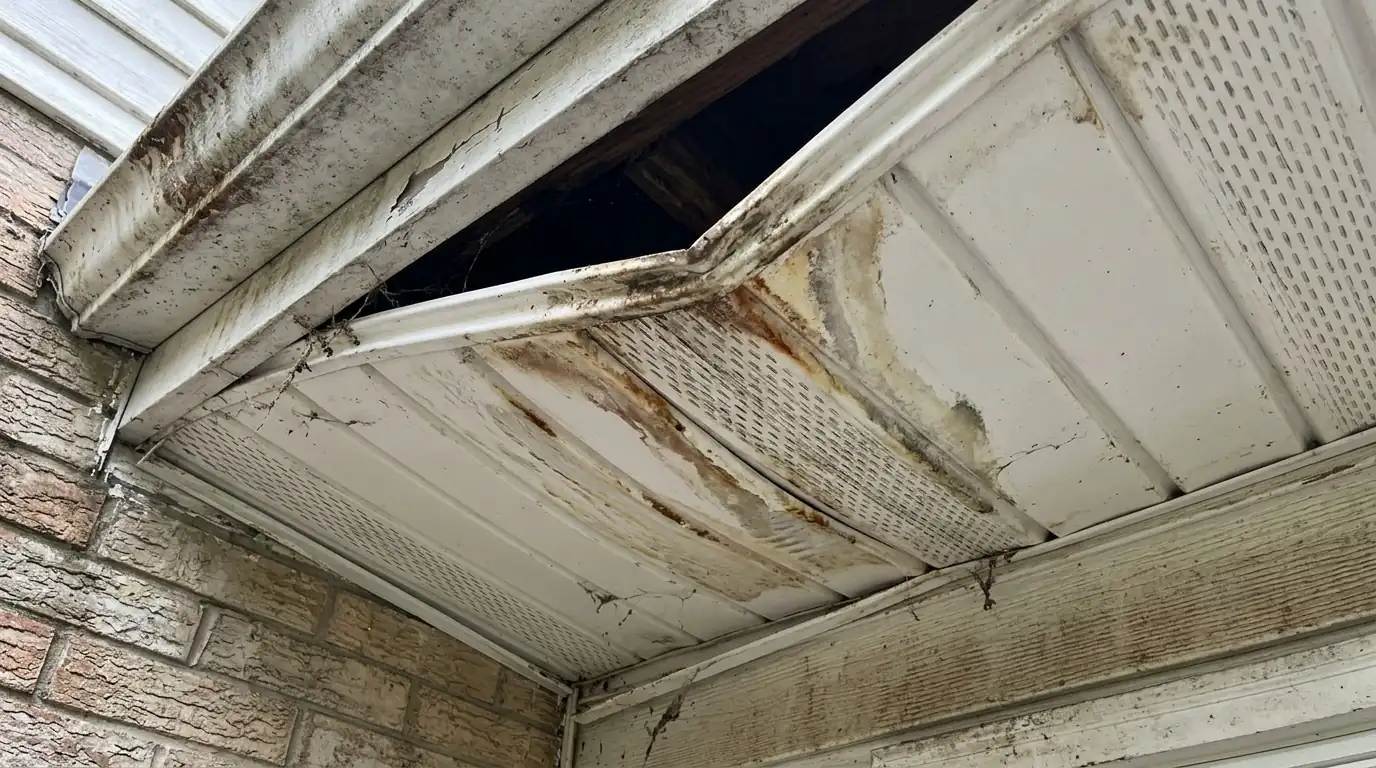
Soffit sits out of sight under the eaves until a panel drops, a squirrel chews through or brown water stains spread across it from a gutter that has been overflowing.
- Phone answered 24/7
- Our own crews
- Measured and priced on site
 Omaha, Nebraska
Quick answer
Soffit is the underside of the roof overhang, between the fascia and the house wall. Repair means removing damaged panels or boards, fixing what caused the damage and installing matching vented or solid soffit. You need it when soffit sags, stains, rots or has holes where birds and animals are getting into the attic.
Most soffit damage starts above it. Water from a clogged or leaking gutter runs behind the fascia, drips onto the soffit and soaks in. Over time wood soffit rots and plywood delaminates, while vinyl or aluminum panels loosen as the framing behind them gets wet.
Since the gutter and the soffit share the same roof edge, we look at both together. Fixing a stained soffit without stopping the water above it only means doing the job twice.
Water damage from the gutter above
Overflowing gutters are the leading cause of soffit damage we see. When water spills over the back of the gutter, it runs down the fascia and lands on the soffit surface. Plywood soffit swells and peels apart in layers, and painted wood blisters and turns soft along the outer edge.
Leaking seams and outlets do the same in a smaller spot, often leaving a round stain right under a corner or downspout. We trace each stain back to its source, then fix the gutter or the fascia behind it before replacing the soffit itself.
Birds, squirrels and other visitors
Soft soffit is an easy entry point. Squirrels chew through weakened plywood or pry up loose vinyl panels to reach the warm attic. Starlings and sparrows nest in gaps at the corners, and wasps build in vents with torn screens.
We patch the holes with new soffit material, close gaps at the corners and fascia return, and replace damaged vent strips. We are not a wildlife removal service, so if animals are still living in the attic, have them removed first so nothing gets sealed inside.
- Chewed holes at soffit corners and returns
- Panels pushed up or popped out of their channels
- Nesting material packed in vent openings
- Torn screens behind older wood soffit vents
Vented aluminum and vinyl soffit
Most replacement soffit today is aluminum or vinyl, in solid or vented panels that slide into J-channel or F-channel at the wall and fascia. Aluminum stays straighter in long spans and takes Omaha heat without warping. Vinyl costs less and resists dents, though cheap panels can sag over wide overhangs.
Vented panels have perforations that let air move into the attic from the eaves. Solid panels are used where venting is not wanted, such as over a porch ceiling. We match the existing pattern when only part of the soffit is being replaced.
Attic ventilation, in general terms
Soffit vents are the intake half of most attic ventilation systems. Air enters at the eaves and leaves through vents near the ridge, carrying away heat in summer and moisture in winter. Blocked soffit vents can leave an attic damp and contribute to ice forming at the eaves.
When we replace soffit, we make sure vented panels are not blocked by insulation pressed against them from inside, as far as we can see from the eave. A full ventilation assessment is roofing or insulation work, but we will point out anything obvious, like vents painted shut.
Matching what is already there
Homeowners usually want a repair that disappears. On aluminum or vinyl soffit, that means matching panel width, vent pattern and color, which is usually possible since white, beige and a few earth tones cover most houses. On older wood soffit, we can install new plywood or tongue-and-groove boards and paint to match, or wrap with aluminum.
If the existing soffit is a discontinued color or badly faded, a patch may stand out. In that case, we will show you the options, which might mean replacing a full side of the house so the color reads the same corner to corner.
What to look for
Signs your soffit needs repair
Brown water stains
Stains spreading across the underside of the eave usually line up with a leaking gutter seam, a blocked outlet or water running behind the gutter.
Sagging or drooping panels
Panels that bow down between supports or hang loose from their channels often mean the framing behind them is wet, rotted or no longer holding nails.
Peeling or flaking layers
Plywood soffit that is peeling apart in thin sheets has absorbed water repeatedly, and the delamination will keep spreading until the panel is replaced.
Holes or chewed edges
Ragged holes at corners or along edges are a common sign of squirrels or birds working their way into the attic space above.
Wasps or birds at the eaves
Insects or birds flying in and out of one spot under the eave point to a gap, torn vent or broken panel that needs closing.
Paint failing only overhead
When the rest of the trim looks fine but the soffit paint is blistered and bare, moisture is getting into it from above or from the attic.
How the job goes
How we repair soffit
- 1
Find the water source
We check the gutter, fascia and roof edge above the damaged soffit for overflow, leaks or missing drip edge, since the cause has to be fixed before new soffit goes up.
- 2
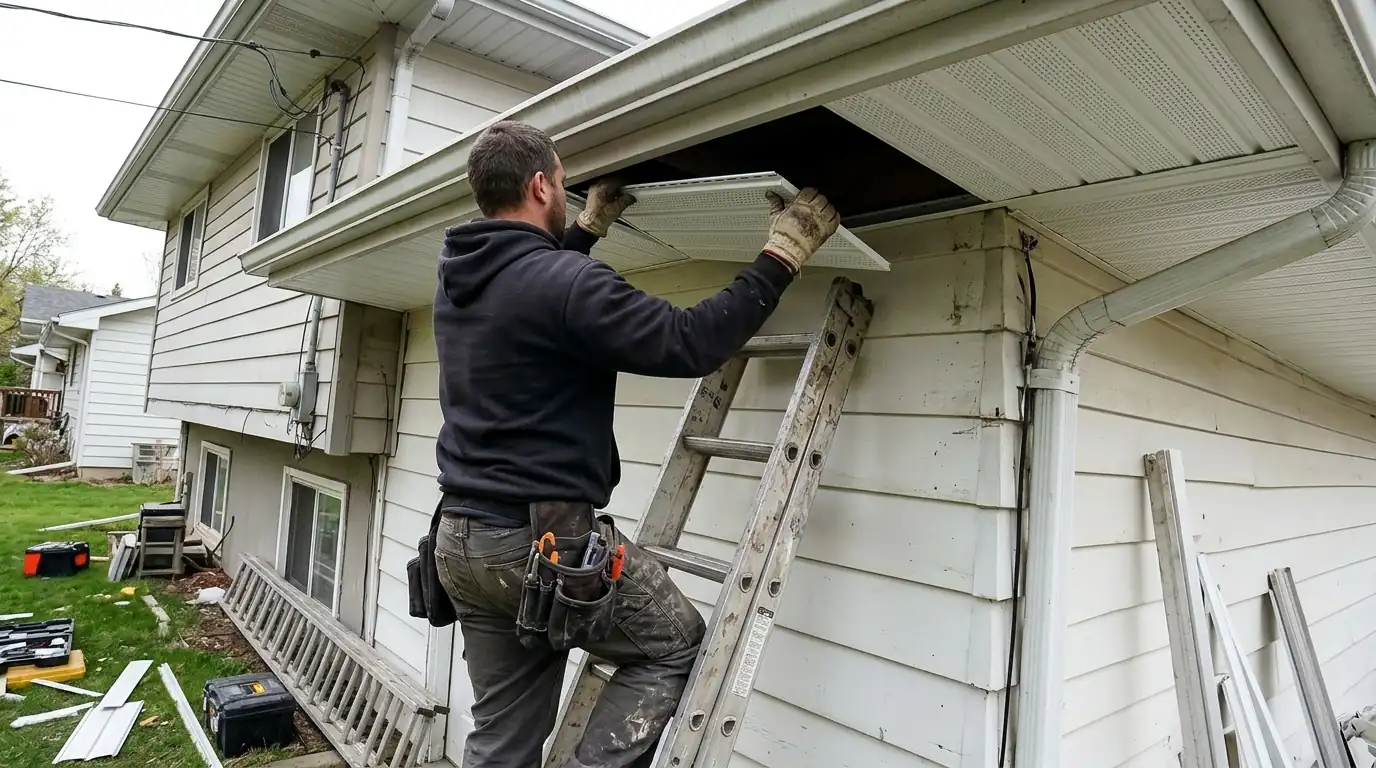
Remove damaged soffit
Damaged panels or boards are removed back to sound material, and the framing behind them is checked for rot, loose nailers and any nesting material left by animals.
- 3
Repair framing and nailers
Rotted lookouts or nailing strips are replaced so the new soffit has solid support and stays flat across the full width of the overhang.
- 4
Install matching soffit
New vented or solid aluminum, vinyl or wood soffit is cut and fitted into channels at the wall and fascia, matching the existing panel style and color as closely as possible.
- 5
Fix the gutter and finish trim
Any gutter or fascia problems found in the first step are repaired, trim is reset at the edges, and we water-test the gutter above the new soffit.
Pricing
What soffit repair costs
Soffit work is priced by the linear foot along the eave. The rows below come from national cost sources, and our price guide explains how to read them.
| Item | Published range |
|---|---|
| Soffit replacement, per foot | $4 to $22 per foot |
| Combined fascia and soffit, per foot | $6 to $20 per foot |
| Gutter fix at the source of the leak | $75 to $300 |
National ranges published by The Pricer, HomeAdvisor, HomeGuide. Your price depends on the house; we give you a number on the phone or at the house before any work starts. See the full gutter price guide.
Wider overhangs, rotted framing behind the panels, second-story height and hard-to-match older materials all raise the cost. Replacing a full side for color match costs more than a patch.
Omaha conditions
Soffit trouble under Omaha trees and winters
Silver maple was planted widely along Nebraska streets and yards, and its brittle limbs break in storms. A branch that lands on the roof edge can crack soffit or tear a gutter down with it, which is why we often repair both after a summer storm.
January lows average around 14 degrees in Omaha, and an attic warmed by the house below can melt snow on the roof even on cold days. When soffit vents are blocked, that warm, damp air has nowhere to go, and ice tends to build at the eaves. Clear soffit vents are one small part of keeping that in check.
Talk to a gutter crew about soffit repair
Tell us what you are seeing at the roof edge. We answer around the clock and give you straight answers on repair or replacement.
FAQ
Soffit Repair questions
Can you replace just a few soffit panels instead of the whole eave?
Usually, yes. Aluminum and vinyl soffit panels slide in and out of their channels, so a damaged area can often be cut out and replaced without disturbing the rest. The main limit is color match. If the existing panels have faded a lot, a new section may look brighter until it weathers.
Why does my soffit keep getting stained in the same spot?
Repeated stains in one place almost always trace back to a single source above, often a leaking miter, a blocked outlet or a stretch where water runs behind the gutter. Replacing the soffit without fixing that will just bring the stain back. We check for gutter leaks first.
Is vented soffit always better than solid?
Not always. Vented soffit is the right choice under most roof overhangs where the attic needs intake air. Solid soffit is better over porches, garages without attic space, or areas where vents would let in weather or insects. We match what is already on your house unless there is a reason to change it.
Do you remove animals living in the attic before fixing soffit?
No. We repair and close up the soffit, but animal removal needs a wildlife control specialist. Sealing an opening with squirrels or birds still inside can trap them in the attic and cause more damage. Once they are gone, we can close the gaps and replace chewed panels.
Will new soffit help with ice dams on my roof?
It can play a part. Soffit vents feed cool air into the attic, which helps keep the roof deck closer to outdoor temperature and reduces melting at the top of the roof. Ventilation and insulation are the main fixes, but clear soffit vents help, along with gutter heat cable where needed.
Related gutter services
Checking costs? The gutter price guide lists published ranges, the gutter size calculator estimates 5 or 6 inch and downspout count, and the cleaning schedule planner shows how often your trees fill the gutters.