Fascia, soffit and roof edge
Drip edge installation in Omaha, NE: stop water behind gutters
If rain runs off your shingles and disappears behind the gutter instead of into it, the fascia and soffit are taking that water every storm.
- Phone answered 24/7
- Our own crews
- Measured and priced on site
 Omaha, Nebraska
Quick answer
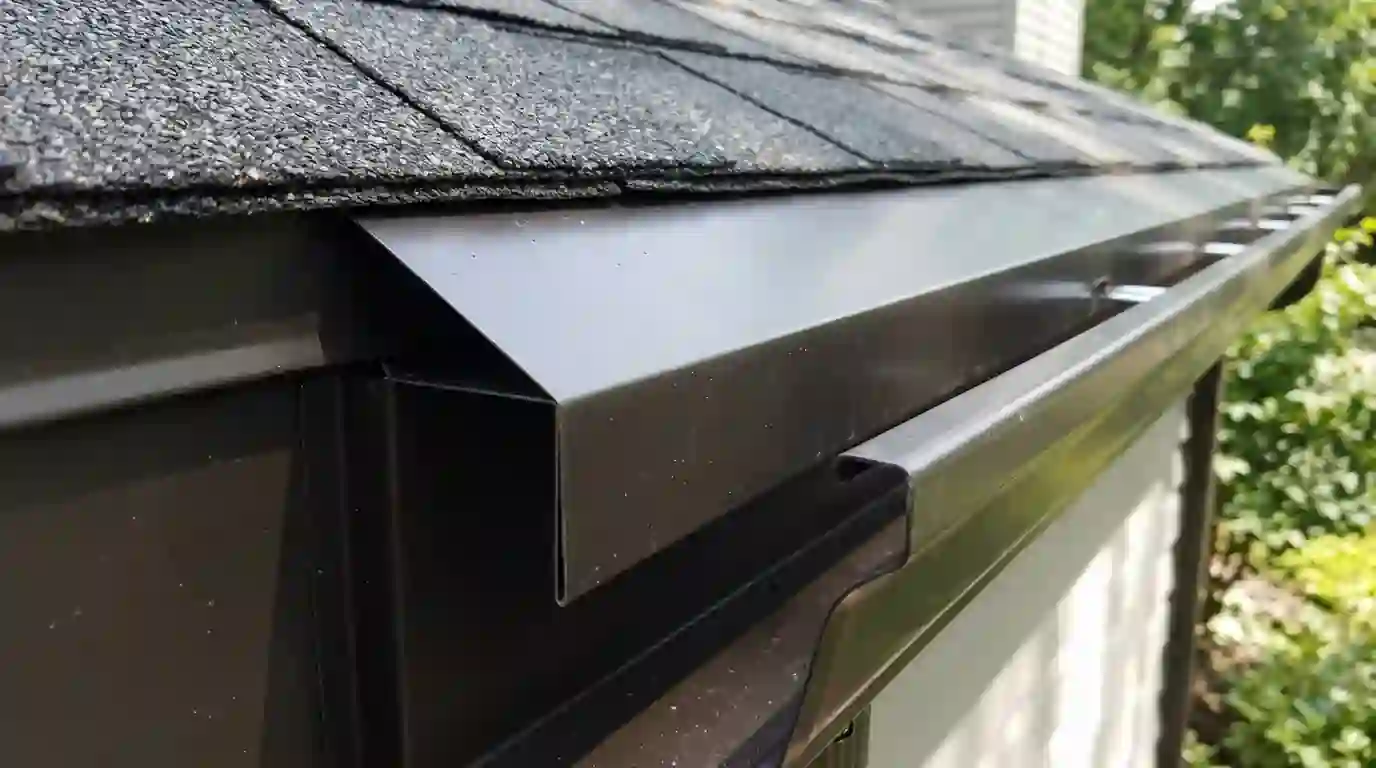
Drip edge is a bent metal flashing along the roof edge that carries water off the shingles and into the gutter. Gutter apron is a version made to reach down into the gutter itself. A retrofit slides it under the first shingle course on an existing roof. You need it when water runs behind your gutters or the fascia shows rot.
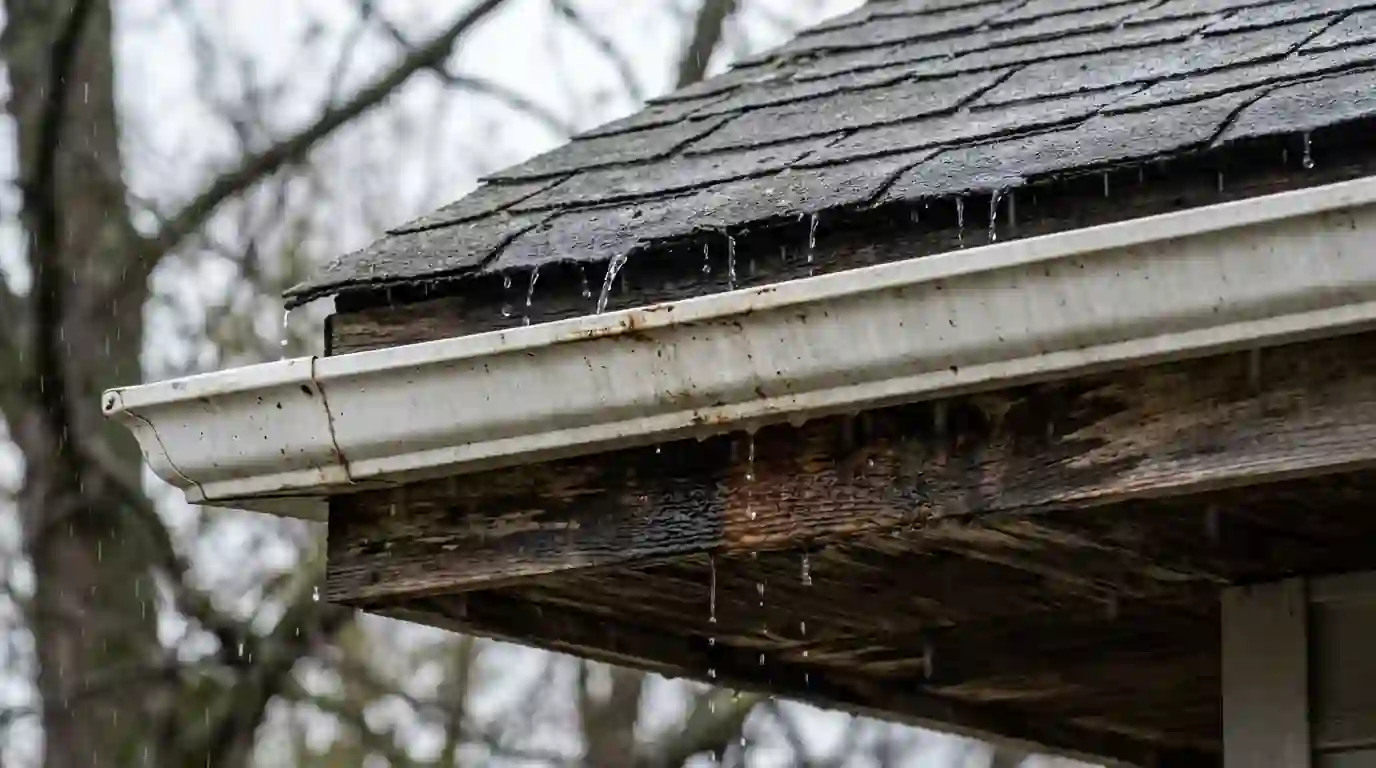
Many older Omaha roofs were shingled without drip edge, and some newer ones have it installed short of the gutter. In either case, there is a gap between where water leaves the shingles and where the gutter catches it, and water clings to the underside of the shingle and curls back toward the house.
That gap is easy to miss from the ground. You notice it as rotted fascia, stained soffit or water dripping behind the gutter while the gutter itself stays half empty. A strip of drip edge or gutter apron closes the gap.
The gap between shingles and gutter
Water does not fall straight off a shingle edge. Surface tension pulls it along the underside of the shingle, and on a light rain it can run back several inches before dropping. Without a metal edge to break that path, the water lands on the top of the fascia or slips between the gutter and the board.
Gutters hung too low make the gap worse. If the back of the gutter sits more than an inch or so below the shingle line, even a well-flashed roof can shed water behind it. We check gutter height at the same time we check the flashing.
Drip edge versus gutter apron
Standard drip edge is an L-shaped or T-shaped flashing that runs along the roof edge. Its outer lip pushes water out away from the fascia and into the gutter below. It is installed on most roofs at the eaves and rakes during roofing.
Gutter apron is a different profile. It has a longer leg that extends down into the gutter itself, which is useful when the gutter sits a bit low or when the existing roof has no drip edge at all. On retrofit work at the eaves, apron is often the better fit.
- Drip edge: short L or T profile, standard on new roofing
- Gutter apron: longer leg reaching into the gutter
- Aluminum or galvanized steel in colors to match trim
- Installed under the first shingle course and over the fascia top
Retrofitting under an existing roof
Adding drip edge to a roof that already has shingles takes care. We break the seal on the first course of shingles, slide the flashing up underneath and fasten it near its top edge so the nails are covered by the shingle. Then the shingles are pressed back down and resealed if needed.
This works best on shingles that are still flexible. On a cold day, or on very old brittle shingles, lifting the edge can crack them, so we schedule retrofits in warmer weather when possible. Where gutters are coming down anyway for replacement, the flashing goes in with the new gutter.
Checking roof condition first
Drip edge is a fix for a gap, not for a worn-out roof. Before we install it, we look at the first few feet of shingles. If they are cupped, missing granules or cracking, the roof itself may be close to replacement, and adding flashing now would mean tearing it out again soon.
In that case, we will tell you plainly and suggest waiting for the roofer to install drip edge with the new shingles. We can still fix the gutters and protect the fascia in the meantime. Good roofing practice puts drip edge on every eave, so a reroof is the cleanest time to get it.
Pairing drip edge with gutter work
Most of our drip edge jobs happen alongside other work at the roof edge. When we replace rotted fascia, we add flashing so the new board does not suffer the same fate. When we hang new gutters, we set the back of the gutter tight up under the apron so water has nowhere else to go.
We also look at the corners. Inside corners under valleys and outside corners at the rakes are where flashing pieces often overlap poorly, and those spots get extra attention. Where a valley overshoots the gutter entirely, valley splash guards solve that separate problem.
What to look for
Signs your roof edge needs flashing
Water behind the gutter
During rain, you see water dripping between the back of the gutter and the fascia instead of flowing down the gutter to the downspout.
Rotted top edge of fascia
Fascia that is soft along its top edge, right under the shingles, has been soaking up water that the roof edge should have kept away.
No metal visible at the eave
Looking up at the roof edge, you can see only shingles and wood, with no metal flashing between them and the gutter.
Stains on the soffit
Brown streaks or wet spots on the soffit just behind the fascia line often come from water slipping behind the gutter along the board.
Ice building behind the gutter
In winter, ice forming between the gutter and the fascia rather than in the gutter itself points to meltwater running behind the trough.
Gutter hung well below shingles
If there is a visible gap of more than an inch or so between the shingle edge and the gutter back, water can drop straight past.
How the job goes
How we install drip edge
- 1
Inspect roof edge and gutters
We look at shingle condition, fascia soundness, gutter height and existing flashing along every eave, and photograph spots where water is running behind the gutter.
- 2
Choose profile and color
Based on gutter height and roof condition, we pick drip edge or gutter apron, and a color to match the gutters or trim so the new metal blends in.
- 3
Lift the first shingle course
On a warm day, we carefully break the seal on the starter course and lift the shingle edge just enough to slide the flashing underneath without cracking it.
- 4
Fasten and lap the flashing
Flashing pieces are fastened high so nails stay covered, lapped at joints in the direction of water flow, and trimmed neatly at corners and rakes.
- 5
Reseal shingles and test
Shingle edges are pressed back down and sealed where needed, gutter height is adjusted if the back sits too low, and we run water to confirm it lands in the gutter.
Pricing
What drip edge installation costs
Drip edge on an existing roof is priced by the linear foot. The rows below are national cost references, and our price guide gives more background.
| Item | Published range |
|---|---|
| Drip edge added to an existing roof | $1 to $3 per foot |
| Fascia replacement if rot is found | $7 to $40 per foot |
| Minor gutter reset or height fix | $75 to $300 |
National ranges published by Angi, This Old House, HomeGuide. Your price depends on the house; we give you a number on the phone or at the house before any work starts. See the full gutter price guide.
Roof pitch, shingle condition, second-story height and whether gutters must come down to reach the edge affect the price. Rotted fascia found during the job is priced separately.
Omaha conditions
Why the roof edge matters in Omaha
Omaha's rain comes heaviest from May through August, and summer storms can drop a lot of water fast. Every gallon that slips behind the gutter instead of into it soaks the fascia, so a missing edge flashing does its damage in the very months the gutters are working hardest.
Winter adds a second round. The city averages about 27 inches of snow a year, and as that snow melts off the roof, meltwater follows the same path behind an unflashed gutter. On older homes, many of which predate modern drip edge practice, that cycle has often gone on for years.
Talk to a gutter crew about drip edge installation
Tell us what you are seeing at the roof edge. We answer around the clock and give you straight answers on repair or replacement.
FAQ
Drip Edge Installation questions
Can drip edge be added without replacing my roof?
Yes, in most cases. We lift the first course of shingles and slide drip edge or gutter apron underneath, then reseal. The key is shingle condition. Flexible shingles in decent shape handle it well. Very old, brittle or cupped shingles may crack, and then it makes more sense to wait for a reroof.
Does drip edge go over or under the roof underlayment?
On new roofing at the eaves, drip edge typically goes under the underlayment so water on the felt drains over the metal. On a retrofit, the underlayment is already in place, so we slide the flashing under the shingles and over the felt as best fits the existing layers. The goal is the same: water lands in the gutter.
Will drip edge alone fix my rotted fascia?
No. Drip edge stops future water from reaching the board, but wood that is already soft needs to be cut out and replaced. We usually do both on the same visit: replace the bad sections of fascia, wrap them and add flashing so the problem does not come back.
Is gutter apron better than standard drip edge?
It depends on the gap. Gutter apron has a longer leg that reaches down into the gutter, so it works better when the gutter sits a little low or when there is no drip edge at all. Standard drip edge is fine when the gutter is set correctly just below the shingle line. We pick based on what we measure.
Can you install drip edge in the winter?
We prefer not to. Cold shingles are stiff and can crack when lifted, and the adhesive strips will not reseal until warm weather. If water is causing active damage in winter, we can fix the gutter and protect the fascia, then come back to add flashing when temperatures allow the shingles to flex.
Related gutter services
Checking costs? The gutter price guide lists published ranges, the gutter size calculator estimates 5 or 6 inch and downspout count, and the cleaning schedule planner shows how often your trees fill the gutters.