Cleaning and upkeep
Gutter inspection in Omaha, NE with a photo report
You can see a gutter from the lawn, but you cannot see whether it holds water, leaks at the seams or hangs on rotted wood until someone gets up there and looks.
- Phone answered 24/7
- Our own crews
- Measured and priced on site
 Omaha, Nebraska
Quick answer
A gutter inspection is a hands-on check of the whole system: slope, seams, hangers, outlets, fascia behind the gutter, where each downspout discharges and how the ground slopes at the foundation. You get photos and a plain report. It is most useful before buying a house, after hail and ahead of winter.
Home inspectors look at gutters from a distance, usually from the ground or a single ladder set. That catches the obvious, like a missing downspout, but it misses the details that decide whether a system has years left or needs work soon.
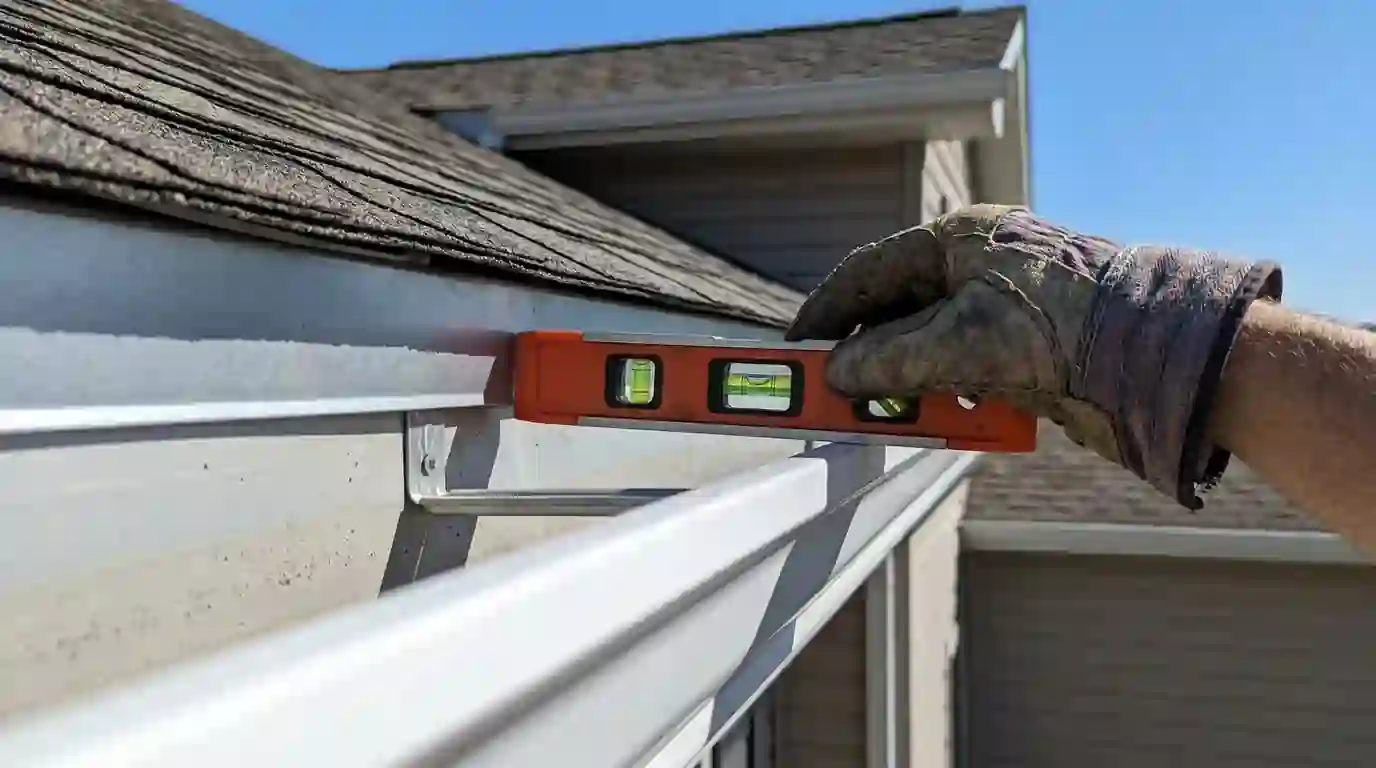
Our inspection is done by a gutter crew, so we look the way an installer looks. We put a level on the runs, run water through them, probe the fascia, and follow each downspout to where the water actually ends up.
What we check, run by run
Each side of the house gets the same routine, and every finding is photographed so you can see it for yourself. Nothing on the report is a guess from the ground.
We pay special attention to the seams and corners because sealant breaks down in the summer sun. A miter that looks fine dry can drip steadily once water reaches it, which is why the water test matters.
- Pitch measured with a level along each run, with standing water noted
- Seams, miters, end caps and outlets checked for drips under a hose test
- Hanger type, spacing and grip in the fascia
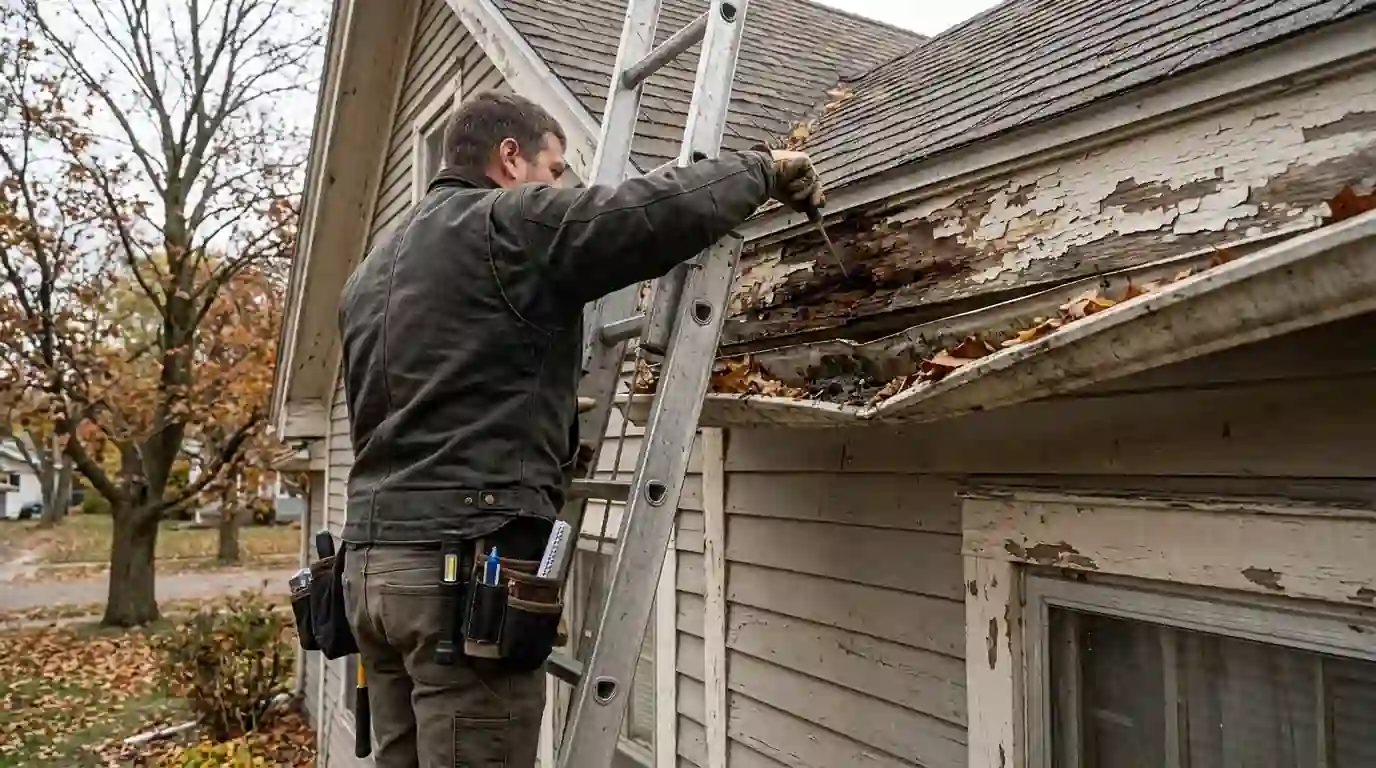
- Fascia probed for soft spots behind and below the gutter
- Roof edge: drip edge or gutter apron present, shingle overhang
- Downspout straps, elbows and where each one discharges
- Grading at the foundation and signs of splash-back or erosion
Before you buy a house
A gutter system that needs replacing can be a meaningful expense, and it rarely shows up as a line item in a general inspection report. Checking it during your option period gives you real numbers to bring to the negotiation instead of a vague note that the gutters appear older.
We also look for the quieter warnings that come with neglected gutters: stained soffit, peeling paint along the fascia, eroded beds under the eaves and downspouts that dump right next to window wells. Those point to water that may have been reaching the foundation for years.
After a hailstorm
Hail leaves its mark on aluminum gutters and downspouts long before it is obvious on shingles. Dents along the front face, dimpled downspouts and crushed elbows give a fair idea of hailstone size and direction. We photograph and measure those dents so you have a clear record.
That record is yours to share with your insurer. We do not handle claims or predict what an adjuster will decide, but clear photos with a tape measure in frame make the conversation simpler. If the damage is real, our hail replacement page covers what comes next.
Before winter sets in
Fall is the last good chance to catch a loose hanger or a low spot before ice adds weight. Water that sits in a sagging section freezes, expands and pries at the seams, and a gutter that is already pulling away can tear loose under a load of snow.
A pre-winter inspection looks hardest at hangers, pitch and downspout outlets, since a frozen elbow can back up an entire run. If ice dams have been a problem on the house before, we note where they formed and what the gutters looked like afterward.
Honest repair or replace advice
The report ends with a straight answer. Many gutters just need cleaning, a few hangers and fresh sealant at the corners. Others have rotted fascia behind them or slope the wrong way across a long run, and patching those only buys a season.
When replacement is the smarter call, we explain why with the photos in front of you, and we will say so just as plainly when it is not. If you only need a fix, see our repair services.
What to look for
When an inspection is worth booking
Under contract on a house
A buyer has a short window to learn what the gutters need. An inspection turns guesswork into photos and a clear list you can take back to the seller.
A storm with hail just passed
If neighbors are talking about roof claims, check the gutters and downspouts too, since dents there are often the easiest hail evidence to see.
Water in the basement
Seepage after rain often traces back to a downspout discharging too close or a gutter overflowing at one corner. Following the water from the roof down narrows it quickly.
Paint peeling at the eaves
Flaking paint and dark stains along the fascia or soffit suggest water is running behind the gutter, which can quietly rot the boards it hangs on.
Gutters of unknown age
If you inherited the gutters with the house and have no idea how old they are, one inspection tells you whether to budget for them now or later.
Before adding gutter guards
Guards should go on gutters that are sound and properly pitched. Checking first avoids covering a sagging or leaking run that will need to come off again.
How the job goes
How an inspection visit goes
- 1
Ground walk and roof view
We walk the perimeter, note downspout locations, staining, erosion and grading, and look at the roof edge from the yard to plan ladder positions around beds and walkways.
- 2
Ladder check of every run
Each run is checked by hand for hanger grip, seam condition and debris, and a level is set along the top edge to measure pitch and find low spots.
- 3
Water test
A hose is run from the high end of each section so we can watch flow, standing water, drips at seams and how each downspout handles the volume at its outlet.
- 4
Fascia and roof edge probe
We press and probe the fascia behind and below the gutter for soft wood, and look under the shingle edge for drip edge or apron flashing that keeps water off the boards.
- 5
Photo report and walkthrough
You get the photos sorted by side of the house, with each issue noted as fine, watch, repair or replace, and we talk through it with you before we leave.
Pricing
What an inspection costs
There is no national price index for a standalone gutter inspection, so the closest honest guide is the cost of a minor repair visit, which takes similar time on site. When an inspection turns up repairs, those are priced on their own. See our price guide for more.
| Item | Published range |
|---|---|
| Comparable visit: minor repair call | $75 to $300 |
| If cleaning is added to the visit | $100 to $250 |
| Typical repair if problems are found | $100 to $450 |
National ranges published by HomeGuide. Your price depends on the house; we give you a number on the phone or at the house before any work starts. See the full gutter price guide.
House height, the number of runs and whether you want cleaning and a water test on every section affect the time involved. Pre-purchase visits often move faster when the seller has the gutters clear.
Omaha conditions
Inspection in the context of Omaha homes
Nearly half of Omaha's houses were built before 1970, and many of them are on their second or third set of gutters, often hung on original fascia. Those homes are where we most often find soft boards hidden behind a gutter that looks fine from the street.
Hail is the other reason inspections are common here. A 2025 analysis of federal data ranked Nebraska first in the country for hail risk, and dents on gutters and downspouts are frequently the first visible sign that a storm left more behind than a few broken branches.
Talk to a gutter crew about gutter inspection
Tell us what you are seeing at the roof edge. We answer around the clock and give you straight answers on repair or replacement.
FAQ
Gutter Inspection questions
How is a gutter inspection different from a home inspection?
A general home inspector covers the whole house in a few hours and usually views gutters from the ground. We spend that time on the drainage system alone, checking pitch with a level, water-testing seams and probing the fascia. The result is more detailed, and it comes from people who install and repair gutters every day.
Can you inspect gutters in the winter?
Partly. On a dry, mild day we can check hangers, seams, fascia and downspout routing. We cannot water-test frozen runs, and we will not climb onto an icy roof. For a home purchase in winter, we inspect what can be safely checked and note what needs a second look after the thaw.
Will you tell me if my gutters are fine and need nothing?
Yes. Plenty of inspections end with clean gutters, a couple of tightened hangers and a note to check again in a year. We do not pad the list. If the system is sound, the report says so, which can be just as useful to a buyer or seller as a list of problems.
Do you look at where the downspout water ends up?
Always. A gutter that works perfectly still causes trouble if the downspout drops water against the foundation or into a window well. We follow each one to its outlet, check for extensions and look at the ground slope. If water is pooling, we can suggest extensions or a buried line.
Can you document hail dents on my gutters for an adjuster?
We photograph dents with a tape or coin for scale, note which sides of the house were hit hardest and look at downspouts and elbows as well. You get the photos to share as you see fit. We do not file claims or speak for your insurer, and we do not predict what they will approve.
Related gutter services
Checking costs? The gutter price guide lists published ranges, the gutter size calculator estimates 5 or 6 inch and downspout count, and the cleaning schedule planner shows how often your trees fill the gutters.