Hail, storm and winter
Heated Gutter Cables in Omaha, NE
Snow on the roof melts on a sunny January afternoon, runs into a gutter that is still frozen, and turns to ice again by evening. Week after week, that ice grows until nothing drains.
- Phone answered 24/7
- Our own crews
- Measured and priced on site
 Omaha, Nebraska
Quick answer
Heated gutter cables are self-regulating heat cables laid in gutters and down through downspouts, sometimes with a zigzag along the roof edge. They keep a narrow channel open so meltwater can drain instead of refreezing. They suit trouble spots that ice up every winter, such as north-facing eaves, shaded valleys and downspouts that freeze solid.
Heat cable does not melt the roof clear, and it is not supposed to. Its job is to keep a path open. A warm line in the bottom of the gutter and down the inside of the downspout gives meltwater a route to the ground, so it does not back up and freeze into a dam at the eave.
We install the cable, the clips and the routing through gutters and downspouts. The cable needs power from a GFCI-protected outdoor outlet near the roofline. If one is already in place, we plug in and test. If a new circuit or outlet is needed, that work belongs to a qualified electrician, and we plan the cable layout so it is ready when the power is.
How self-regulating cable works
Self-regulating cable has a conductive core between two bus wires. As the cable gets colder, the core conducts more and puts out more heat. As it warms, output drops. That means a stretch lying in slush puts out more heat than a stretch in the sun, and the cable will not overheat where it crosses itself.
That behavior is why we use self-regulating cable rather than the constant-wattage kind sold in some hardware kits. Constant-wattage cable puts out the same heat everywhere, which wastes power in mild spots and can damage itself if it overlaps.
Where the cable goes
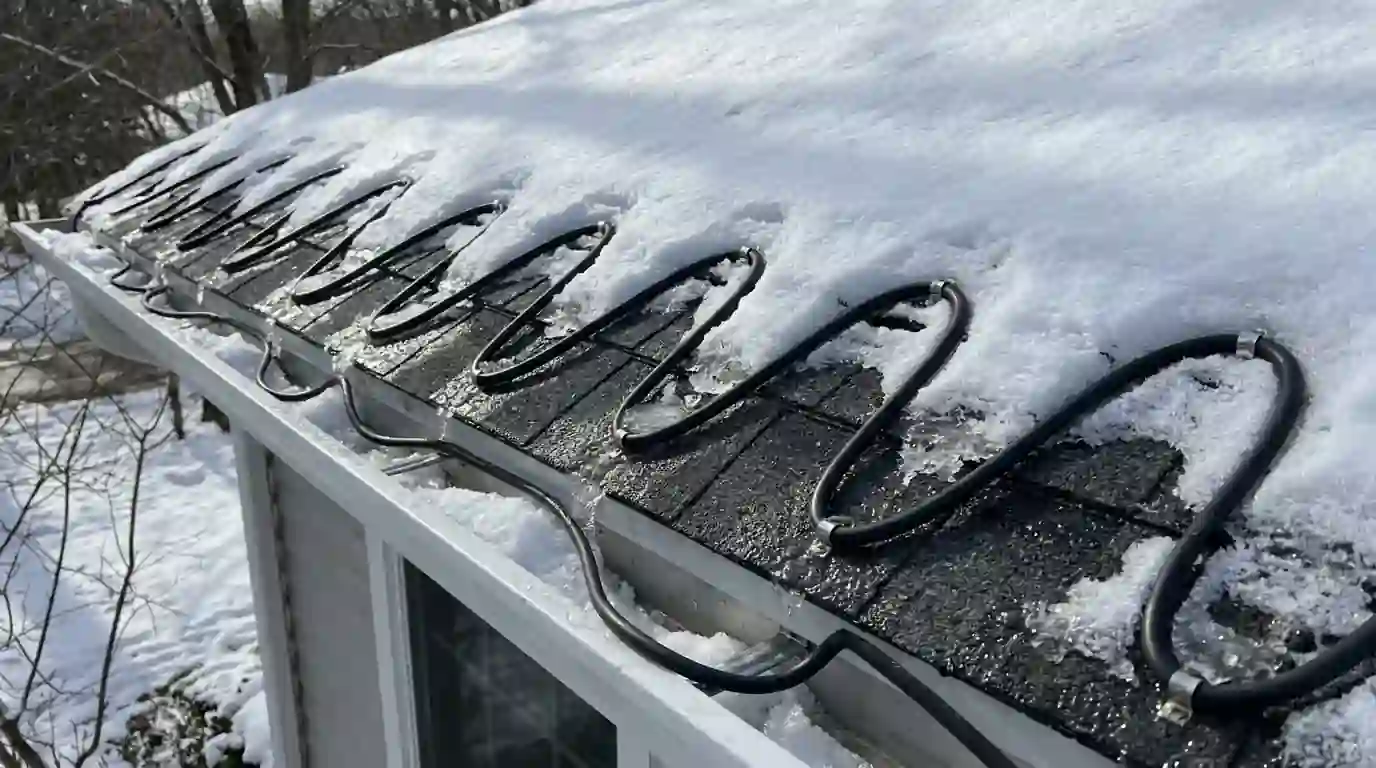
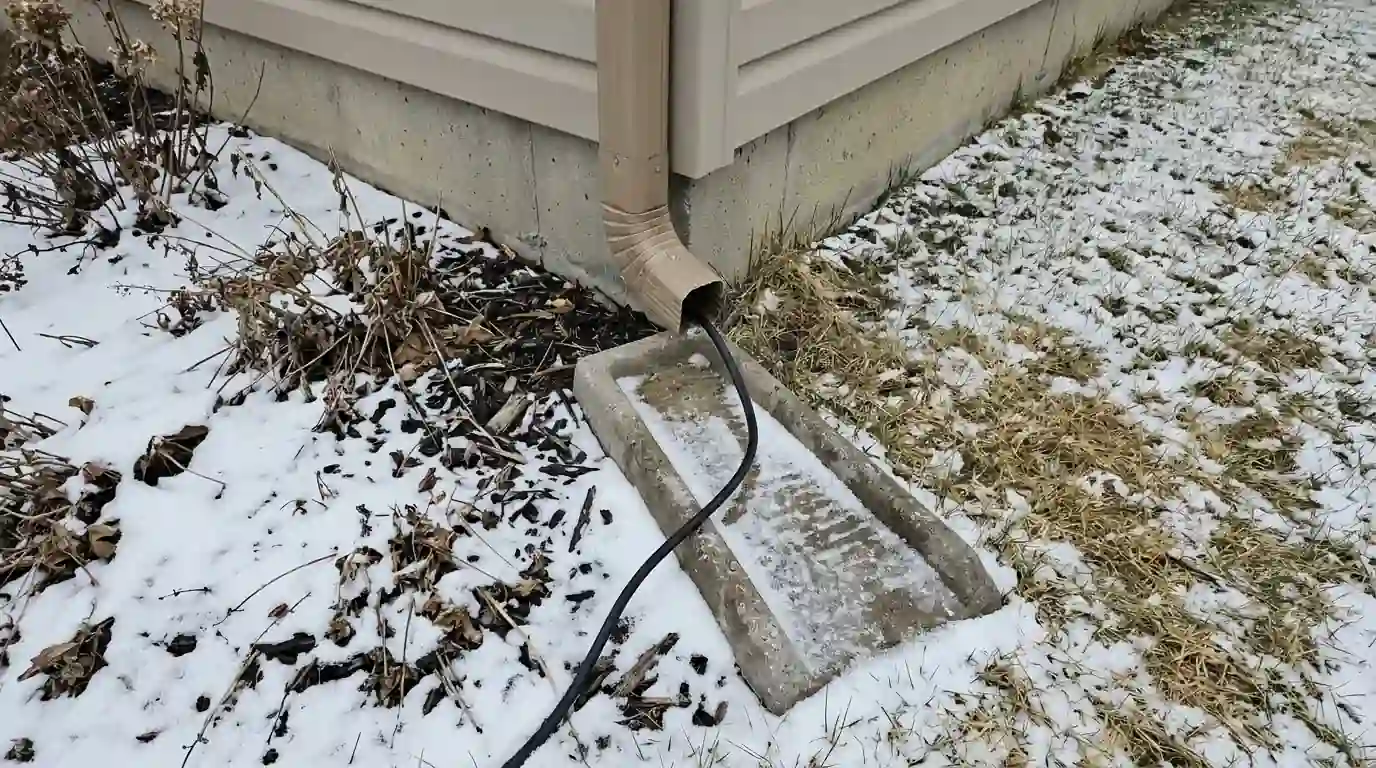
Most ice trouble starts at the cold edge of the roof and in the downspout. We lay cable along the bottom of the gutter with clips that hold it in place, then run a loop down inside each downspout to its outlet at the ground, because a frozen downspout blocks everything above it.
On eaves that dam badly, we add a zigzag pattern on the roof edge above the gutter, clipped to the shingles without nails through them. The zigzag gives meltwater channels through the snow down to the warm gutter.
- A run in the bottom of each problem gutter
- A loop down each downspout to the discharge point
- Roof-edge zigzag only where ice dams form
- Extra coverage at valleys and inside corners
- Cable kept away from the downspout bottom where it could be crushed
Power, outlets and the electrician
Heat cable plugs into a GFCI-protected outdoor outlet, ideally close to the eave and on a circuit that can carry the load. Many homes already have one. Others need a new outlet or a dedicated circuit, and that is electrical work for an electrician, not a gutter crew.
We size the run lengths so the electrician knows the load, show where the outlet should go, and finish the install once power is ready. A thermostat or a simple controller that turns cable on only in freezing weather saves power through the winter.
What heat cable can and cannot do
Cable keeps drainage open. It does not stop snow from melting in the first place, and it will not fix an attic that leaks heat onto the roof deck. Homes that form heavy ice dams every winter often need insulation and ventilation work from a roofer or insulation contractor, with cable as a backup at the worst spots.
Cable also needs a gutter that can drain. If a run is flat, clogged or sagging, ice will still collect in the low spots. We check slope, hangers and downspouts before we install, and fix them first. See our re-pitching work for the slope side of that.
Living with heat cable
Turn cable on before the first big snow and leave it on through freeze-thaw stretches. Turning it on after a dam has formed does little, since the cable cannot melt a thick block quickly. In spring, switch it off at the controller.
Each fall, look for clips that let go and sections lifted by wind or squirrels. If you use gutter guards, tell us before we route the cable, because some guard styles need the cable placed under them in a specific way.
What to look for
Signs heat cable could help your home
Icicles at the same eave
Long icicles that form in the same spot every winter mark an eave where meltwater keeps reaching a frozen gutter and refreezing.
Downspouts frozen solid
A downspout packed with ice blocks the whole run above it, so new meltwater spills over the front of the gutter and freezes on walks.
Shaded north-side gutters
Gutters on the north side or under evergreen shade stay frozen long after the rest of the roof has thawed and drained.
Ice build-up at valleys
Inside corners collect meltwater from two roof planes, and the ice there can grow thick enough to bend gutters and lift shingles.
Water stains on ceilings
Stains near exterior walls after a winter thaw can mean meltwater backed up under the shingles behind an ice dam at the eave.
Ice on walks below
Slick patches forming under the same gutter every week usually come from overflow dripping off an iced trough and refreezing on the pavement.
How the job goes
How we install heated gutter cables
- 1
Find the problem spots
We look at where ice forms, which eaves face north, where valleys dump water and which downspouts freeze, then plan the cable runs around those areas.
- 2
Fix drainage first
Clogged downspouts, flat runs and loose hangers get fixed before any cable goes in, because cable in a gutter that cannot drain only hides the problem.
- 3
Confirm the power
We check for a GFCI outdoor outlet near the eave. If a new outlet or circuit is needed, we give an electrician the load and the location.
- 4
Route and clip the cable
Cable goes in the gutter bottom, down each downspout and in a zigzag on the roof edge where needed, held with clips and never nailed through shingles.
- 5
Test and set controls
We power the system, confirm every run warms, set up the controller if there is one and show you when to turn it on and off.
Pricing
What heated gutter cables cost
Cost depends on how many feet of cable the problem spots need and whether the gutters are being retrofitted or replaced with a new heated system. Electrical work for a new outlet is billed by the electrician.
| Item | Published range |
|---|---|
| Roof and gutter heat cable installation | $900 to $1,800 |
| Heated gutters, retrofit to new system | $475 to $4,000 |
National ranges published by HomeAdvisor. Your price depends on the house; we give you a number on the phone or at the house before any work starts. See the full gutter price guide.
Cable length, roof-edge zigzag, number of downspouts, controllers and any electrical work move the total. Our price guide has the other winter items.
Omaha conditions
Omaha freeze-thaw and frozen gutters
January in Omaha averages a high near 33 degrees and a low around 14, which is about as bad as it gets for gutters. Afternoon sun melts snow on the roof, and the gutter at the cold edge freezes it again overnight. Each round adds another layer of ice.
Nebraska winters have also grown more erratic, with more multi-day warm spells above freezing than there used to be. More thaws mean more meltwater moving through gutters in midwinter, and more chances for it to freeze in a downspout that heat cable would have kept open.
Talk to a gutter crew about heated gutter cables
Tell us what you are seeing at the roof edge. We answer around the clock and give you straight answers on repair or replacement.
FAQ
Heated Gutter Cables questions
Do heated gutter cables use a lot of electricity?
Self-regulating cable cuts its own output as it warms, so it draws less in mild weather than in deep cold. A controller that switches the cable on only when it is freezing and wet reduces use further. Total cost depends on how many feet you run and how many days it is on, so heating only the problem spots keeps it reasonable.
Are you electricians?
No. We install the cable, clips and routing in gutters, downspouts and on the roof edge. Power comes from a GFCI-protected outdoor outlet. If your home already has one near the eave, we can plug in and test. If a new outlet or circuit is needed, an electrician handles that part, and we give them the load and location.
Can heat cable go in gutters that have guards?
Often yes, but it depends on the guard. Some micro-mesh and solid covers leave room for cable underneath, while others press down on the trough and can pinch it. We check the guard style before routing and adjust where the cable sits. If your micro-mesh guards are already installed, tell us when you call.
Will heat cable prevent ice dams completely?
Not by itself. Cable keeps a drainage path open so meltwater can leave the roof, which reduces dams at the eave. Heavy ice dams usually come from attic heat warming the roof deck, and that is fixed with insulation and ventilation work. Cable works best as part of that plan, especially on eaves and valleys that ice up every year.
When should I turn on my gutter heat cable?
Before the first lasting snow, and leave it on during freeze-thaw stretches. Cable is good at keeping ice from forming and slow at melting a dam that is already thick. If you have a controller, it handles this for you. In spring, once freezes stop, switch it off. If ice forms anyway, our ice dam repair team can help.
Related gutter services
Checking costs? The gutter price guide lists published ranges, the gutter size calculator estimates 5 or 6 inch and downspout count, and the cleaning schedule planner shows how often your trees fill the gutters.