Downspouts and drainage
Rain Chains in Omaha, NE
A plain downspout beside the front door or a patio can look like an afterthought. A rain chain turns the same water into something worth watching, as long as the roof above can feed it.
- Phone answered 24/7
- Our own crews
- Measured and priced on site
 Omaha, Nebraska
Quick answer
A rain chain is a string of cups or linked loops that hangs from a gutter outlet and guides water to the ground in place of a closed downspout. It suits small roof areas over entries, porches, pergolas and patios. It is not meant for long eaves or big roof planes that send a lot of water to one corner.
Rain chains come from Japanese homes and gardens, where they have hung from temple and house eaves for centuries. Water clings to each cup or link on the way down and spills from one to the next. On a quiet rain you hear a soft trickle by the door instead of the hollow drum inside an aluminum downspout.
We install them on Omaha homes where the look matters more than raw capacity: a front stoop, a screened porch, a garden shed, a small dormer. The installer's job is mostly to say where a chain will work and where it will splash the siding and flood the bed below. That honest answer saves a lot of disappointment.
Cup chains and link chains
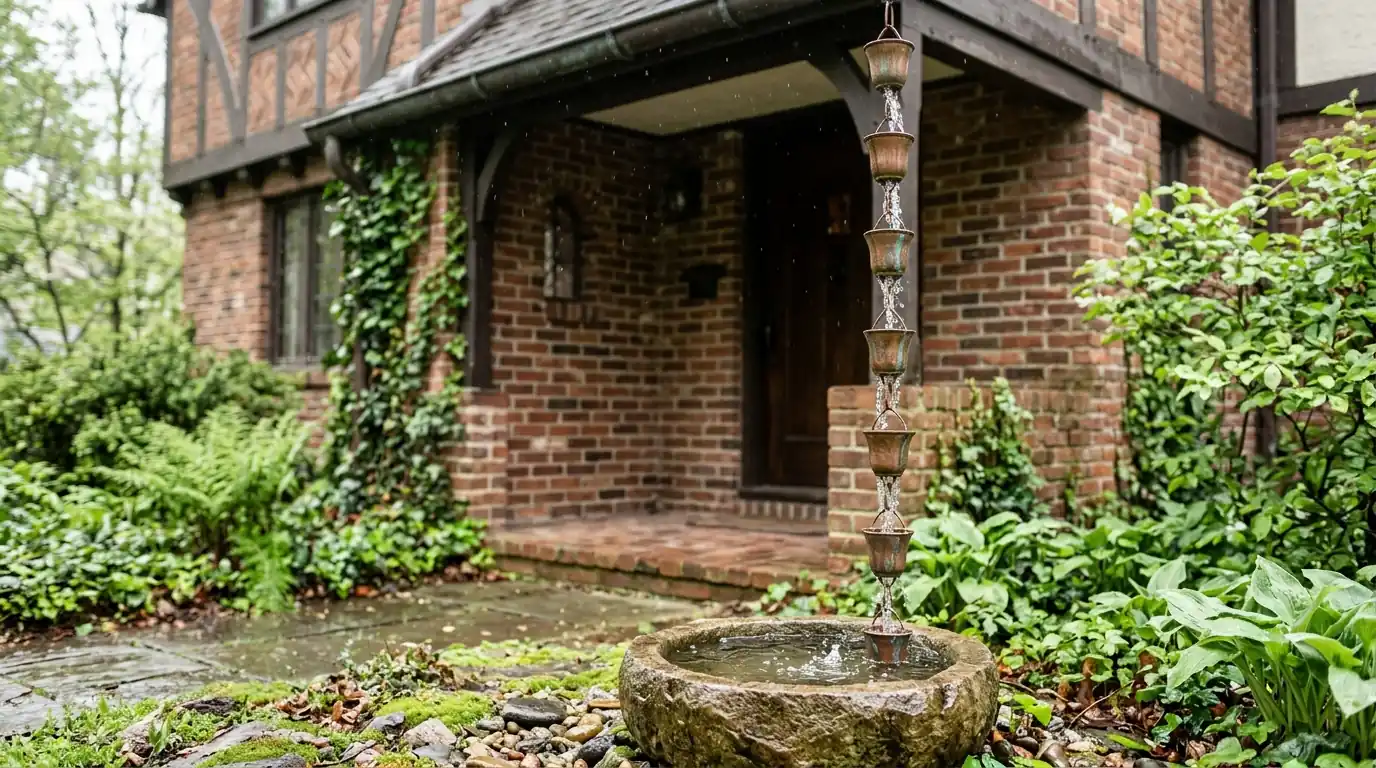
Cup chains carry more water and splash less. Each cup catches the flow from the one above and passes it through a hole in the bottom, so most of the water stays inside the chain. They are the better pick wherever the chain hangs near a door, a window or a walk.
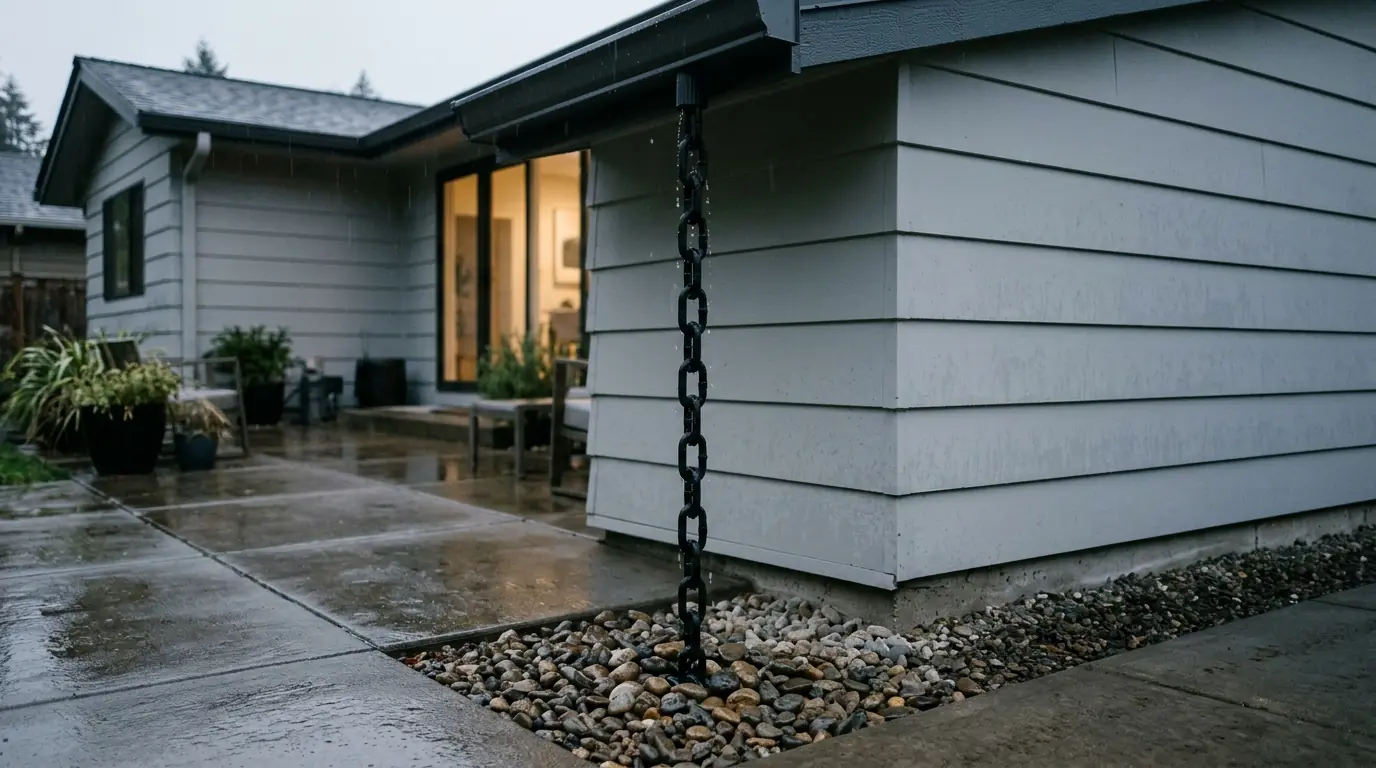
Link chains are lighter and more open. Water rides the outside of the links and sheds off in a fine spray when the flow picks up. They look striking against a plain wall and in winter, but they throw more water sideways, so we keep them away from siding seams and entry steps.
Copper, aluminum and how they age
Copper chains start bright and darken to brown within a year or two, then slowly pick up green patina where water lingers. They match copper gutters and look at home on Tudor and Colonial houses in older parts of the city. We hang copper only from copper or from an isolated outlet, because copper against bare aluminum or galvanized steel corrodes the other metal.
Aluminum chains come powder coated in black, bronze and other colors that match standard gutter coil. They weigh less, cost less and suit modern and ranch houses where the gutters are already aluminum.
Where a chain works and where it does not
A chain handles a fraction of what a 3x4 downspout carries. Think of a 10 to 20 foot run of gutter over a porch or a small gable, not the back slope of a two-story with a valley dumping into one corner. Put a chain on a big roof plane and the gutter overflows behind it in every summer storm.
A good compromise on larger homes is to keep the working downspouts at the corners and add the chain at a short run near the entry. If the gutter run is long, we can split it with a second outlet so the chain only takes part of the flow. Our downspout installers set that up on the same visit.
- Works well: entries, porches, pergolas, sheds, small dormers
- Works with a split run: medium eaves near patios
- Avoid: long eaves, valleys, steep upper roofs feeding one corner
Anchoring and the base
An unanchored chain swings in a Nebraska wind and knocks against siding, windows and the gutter itself. We stake the bottom to the ground or tie it into a basin so it hangs plumb and stays put. A slight pull on the chain also keeps the flow centered.
Whatever the chain lands in has to deal with the water. A gravel bed lined with fabric, a decorative basin with an overflow, or a short buried line all work. The bed sits at least a couple of feet out from the foundation, and we slope it away so the chain does not create a wet corner by the basement wall.
What to look for
Signs a rain chain fits your house
Short run over an entry
A gutter section of roughly 10 to 20 feet over a porch, stoop or bay is the right scale for a chain to carry without overflowing.
Downspout spoils the view
A boxy downspout centered on a front porch post or a garden view is a common reason homeowners ask about a chain.
Room for a base
You need a spot below the outlet for gravel or a basin that can slope away from the foundation and does not block a walk.
Light tree cover overhead
Chains cannot hold back leaves and seeds, so roofs with heavy overhead trees need guards or regular cleaning to keep the outlet open.
Patio or garden setting
Chains shine where people sit and hear the rain, and where a little splash on stone or plants does no harm.
Copper elsewhere on the house
Existing copper flashing, gutters or lights make a copper chain look like it belongs rather than an add-on.
How the job goes
How we hang a rain chain
- 1
Size the roof area
We look at how much roof drains to that outlet and whether a chain can carry it. If not, we suggest splitting the run or keeping a downspout nearby.
- 2
Prepare the outlet
The old downspout comes off, the hole is cleaned or recut, and a gutter installer fits the hanger bar or a leader that centers the chain under the outlet.
- 3
Hang and plumb
The chain goes up in the matching metal, cut to the right length so it ends just above the basin or gravel, and hangs straight from the outlet.
- 4
Build the base
We dig and set a fabric-lined gravel bed or a basin, slope it away from the foundation, and anchor the bottom of the chain to it.
- 5
Run water and adjust
A hose at the gutter shows how the chain handles flow and where it splashes. We fine-tune the length and anchor until the water stays put.
Pricing
Rain chain cost
Most rain chain jobs are small. The first row is a typical project price for swapping a downspout for a chain; the others cover work that often goes with it.
| Item | Published range |
|---|---|
| Rain chain swap, typical project | $150 to $250 |
| Added downspout to split the run | $30 to $75 per downspout |
| Minor gutter repair at the outlet | $75 to $300 |
National ranges published by Angi, HomeGuide. Your price depends on the house; we give you a number on the phone or at the house before any work starts. See the full gutter price guide.
Copper chains cost more than aluminum, and cup styles more than plain links. A basin or buried line at the base, or a second outlet to share the flow, adds to the total.
Omaha conditions
Rain chains through a Nebraska year
The chain earns its place from spring through fall, when Omaha gets most of its rain, with May the wettest month at over 4.5 inches on average. Winter is a different story. Omaha averages about 27 inches of snow, and January lows sit in the mid teens. Meltwater running down a chain on a sunny afternoon refreezes at dusk, and the chain can turn into a heavy rope of ice.
That weight pulls on the gutter and can bend the outlet or a hanger. On exposed corners we suggest taking the chain down after the fall clean-out and hanging a short downspout section or a straight leader until spring. Sheltered porch chains often stay up all year. Pairing a chain with a seasonal maintenance visit makes the swap easy.
Talk to a gutter crew about rain chains
Tell us what you are seeing at the roof edge. We answer around the clock and give you straight answers on repair or replacement.
FAQ
Rain Chains questions
How much water can a rain chain handle compared with a downspout?
Far less. A closed 3x4 downspout moves a large volume in a heavy storm, while even a cup chain carries only part of that before water starts spilling off the sides. That is why we only put chains under short gutter runs or small roof sections. If you love the look on a bigger roof, we can split the run so the chain takes a smaller share.
Should I take my rain chain down for the winter?
On exposed corners, usually yes. Ice builds on the cups and links when meltwater refreezes, and the added weight strains the outlet and nearby hangers. On a covered porch with little roof above, many chains stay up all year without trouble. We can switch the chain for a short leader in late fall and hang it again in spring.
Will a rain chain splash water against my siding?
Some splash is normal in a hard rain, especially with open link chains. Cup chains keep most of the water inside. Anchoring the bottom so the chain hangs plumb, keeping it a few inches off the wall and setting a basin or gravel bed below all cut splash down. We avoid hanging link chains close to doors and siding seams for that reason.
Can a copper rain chain hang from aluminum gutters?
Not directly. Copper touching bare aluminum causes galvanic corrosion, and the aluminum around the outlet wears through over time. We isolate the two metals with a non-metal spacer or a short copper leader set on a separate bracket, or we suggest a powder coated aluminum chain that matches the gutter color. Either way the outlet stays sound.
Do leaves and seeds clog a rain chain?
The chain itself rarely clogs, but the gutter outlet above it can, and a chain has no way to push debris through like a downspout does. Maple seeds and cottonwood fluff collect at the opening and send water over the gutter face. Regular gutter cleaning or a guard over that section keeps the chain fed with clean water.
Related gutter services
Checking costs? The gutter price guide lists published ranges, the gutter size calculator estimates 5 or 6 inch and downspout count, and the cleaning schedule planner shows how often your trees fill the gutters.