Gutter repair
Leaking Gutter Repair in Omaha: Seams, Corners and Outlets
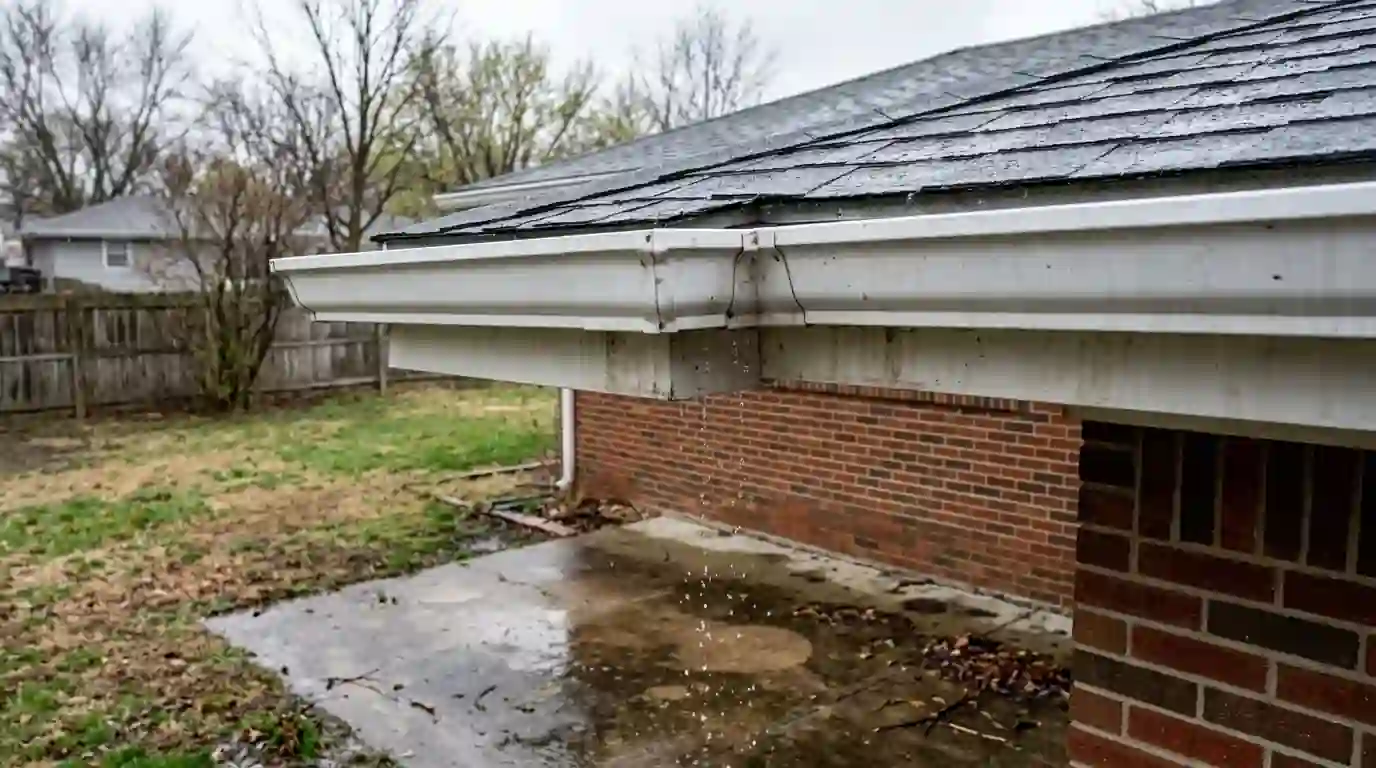
Every rain, the same drip lands on the same spot by the back steps, and the concrete there has a dark stain to prove it. A leaking gutter rarely fixes itself, and the water usually finds wood.
- Phone answered 24/7
- Our own crews
- Measured and priced on site
 Omaha, Nebraska
Quick answer
Leaking gutter repair means finding exactly where water escapes, whether a corner miter, an end cap, an outlet, a sectional seam or a rust hole, then stripping the old sealant, cleaning the metal, re-riveting and resealing. It also means deciding when a sectional system that leaks at every joint should be swapped for seamless.
Most leaks are not mysteries once water is running through the gutter. A hose at the high end and a person on the ground watching will show the drip within a minute or two. What takes skill is making the repair last, because a bead of caulk squeezed over a wet, dirty seam might stop the drip for a month and then let go in the first freeze.
Our approach is slow on purpose: find the leak with water, take the joint back to clean metal, tighten it mechanically with rivets, then seal it with a sealant made for gutters. That order matters more than the brand of sealant. Leaks are just one kind of failure; the gutter repair overview covers the rest.
The five places gutters leak
Inside and outside corners, called miters, are the most common leak point on seamless gutters. They are the only joints on a long run, and the sealant there flexes every time the metal expands in summer sun and shrinks on a January night.
End caps come next. They are crimped and sealed onto the end of each run, and once the sealant dries out, water collects behind the cap and drips down the fascia. Outlets, where the downspout tube is riveted through the gutter bottom, leak around the flange when sealant fails or when a heavy downspout pulls on them.
Sectional gutters add a joint every 10 feet, and each one is a future leak. Finally, older steel gutters rust through from the inside, usually where debris has sat wet for years, and small pinholes grow into open seams.
- Corner miters, inside and outside
- End caps at the ends of each run
- Outlet flanges where downspouts attach
- Slip joints on sectional gutters
- Rust holes and split seams in older steel
Why caulk over the top does not hold
The quick fix most people try is a tube of caulk run over the leak from the outside. It rarely lasts. Sealant will not bond to dirt, oxidation, old cracked sealant or moisture, and outside-only beads sit where the water does not reach anyway. The water is getting through from the inside of the trough.
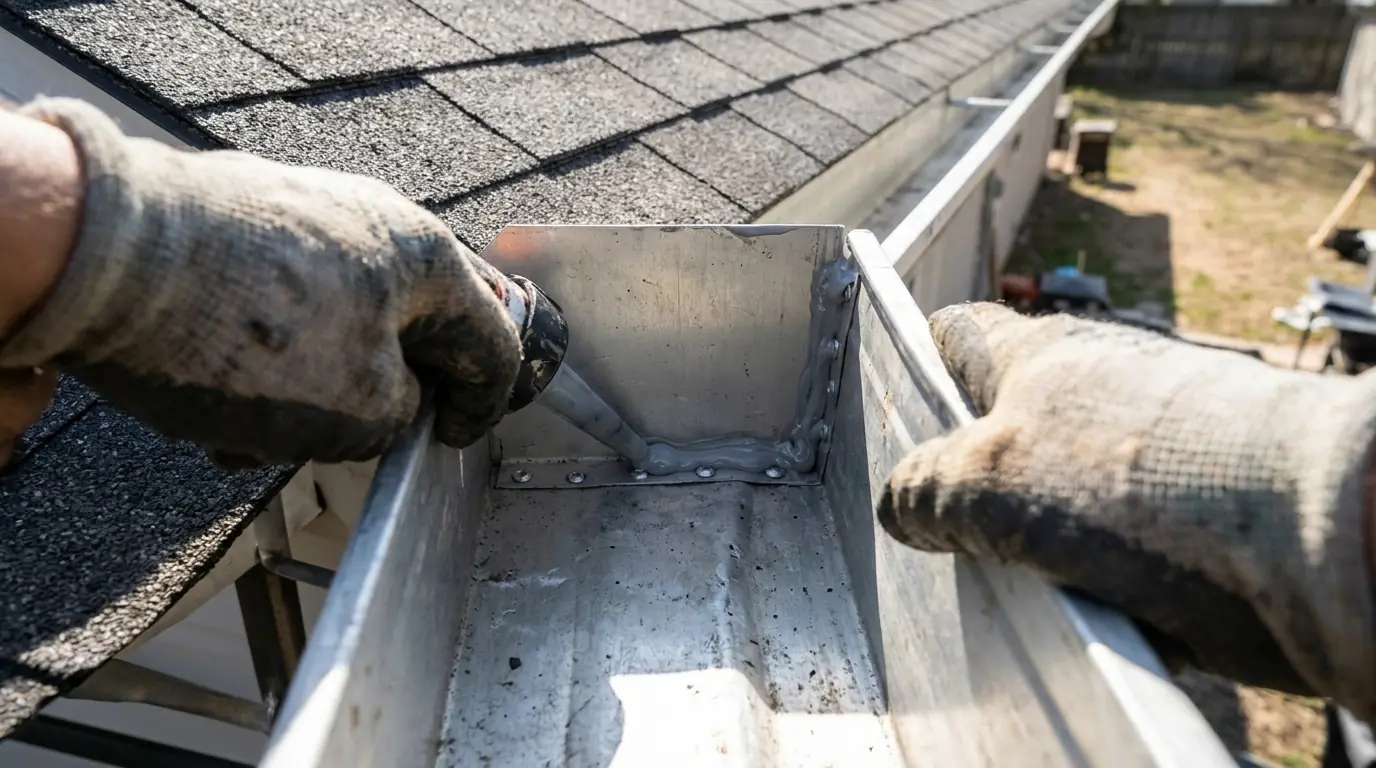
A proper reseal happens from inside the gutter. We scrape out the old sealant completely, scrub the metal with a wire brush or pad, wipe it with a solvent so it is clean and dry, and only then lay fresh gutter sealant into the joint and tool it smooth so water flows over it instead of pooling against it.
Re-riveting loose joints
Sealant is a gasket, not glue. If a miter or end cap has worked loose, no amount of sealant will hold it, because the joint moves every time the gutter fills. We drill out failed rivets and set new ones so the metal is pulled tight, then seal over the rivet heads inside the trough.
Outlets get the same treatment. A drop outlet that has sagged away from the gutter bottom is re-riveted and resealed, and the downspout below is strapped to the wall so its weight does not pull the joint apart again.
Patching holes and split seams
Small rust holes in steel or pinholes in aluminum can be patched with a piece of matching metal set in sealant and riveted in place from the inside. Long splits along the bottom of a gutter, often from ice expanding in a clogged run, are harder. A short split can be patched; a long one usually means replacing that section.
If you see a split that runs along the bottom of a gutter that held ice all winter, check the downspout too. A frozen elbow is often what kept the water in the trough to begin with, and our downspout unclogging service clears those blockages.
When a leaking sectional system should go seamless
A sectional gutter on a typical house has dozens of slip joints, each sealed with caulk. Resealing a couple is a reasonable repair. Resealing all of them every few years is not. When most joints on a sectional system are leaking, the money is better put into seamless gutter installation, which leaves only the corners and end caps as joints.
If the existing gutters are straight and well pitched, a full reseal can buy several more years. If they are thin, dented or sagging too, start over.
What to look for
Signs you have a leaking gutter
Drip lines under corners
A steady drip from a corner during rain, often with a stained spot on the ground or deck below, points straight to a failed miter joint.
Stains on the fascia board
Dark streaks or peeling paint on the fascia behind an end cap or seam show water has been escaping there long enough to soak the wood.
Rust trails on steel gutters
Orange streaks running down from the bottom of a steel gutter mean the metal is rusting through and will soon leak, if it does not already.
Wet ground at one outlet
Water splashing beside the downspout rather than through it usually means the outlet flange has pulled loose from the gutter bottom.
Icicles at a single spot
In winter, icicles forming at the same joint every year show where meltwater is leaking through and freezing on its way down.
Joints every ten feet drip
Drips at regular intervals along a run mean a sectional gutter whose slip joints are failing, which is often the cue to consider seamless.
How the job goes
How we fix a leaking gutter
- 1
Find the leak with water
We clean the area and run a hose from the high end of the run while someone watches below, marking every joint, outlet and hole that lets water through.
- 2
Strip the old sealant
Cracked and peeling sealant is scraped out of each leaking joint completely, because new sealant over old will not bond and peels away within a season.
- 3
Clean and dry the metal
Each joint is scrubbed back to bare, clean metal and wiped with solvent so the new sealant grips the gutter itself rather than dirt or oxidation.
- 4
Re-rivet and reseal
Loose joints get new rivets to pull the metal tight, then fresh gutter sealant is laid into the joint from inside the trough and tooled smooth.
- 5
Test again with water
Once the sealant has set enough, we run water through again to confirm each joint is dry, and point out any other weak spots we noticed along the way.
Pricing
What leaking gutter repair costs
Leak repairs are usually priced per joint or by the job. These national figures cover the typical range for resealing and small repairs.
| Item | Published range |
|---|---|
| Resealing leaking seams, per linear foot | $1.50 to $6.50 per foot |
| Minor gutter repair, per job | $75 to $300 |
| Seamless aluminum installed, if replacing | $14 to $20 per foot |
National ranges published by HomeGuide, Fixr. Your price depends on the house; we give you a number on the phone or at the house before any work starts. See the full gutter price guide.
The number of leaking joints, whether rivets or patches are needed, gutter height and access set the price. See our price guide for more.
Omaha conditions
Freeze, thaw and leaks in Omaha
Sealant in an Omaha gutter lives a hard life. July highs average near 88 degrees, January lows drop into the teens, and Nebraska now sees more winter warm spells lasting several days. Every swing makes the aluminum grow and shrink, and the joints take the strain. That is why corners that were dry in October so often start dripping by March.
Spring is the best time to find and fix leaks. Rain is frequent from May through August, so leaks show up quickly, and temperatures are mild enough for sealant to cure properly. If a leak only appears when ice is in the gutter, look at our ice dam gutter repair page as well.
Talk to a gutter crew about leaking gutter repair
Tell us what you are seeing at the roof edge. We answer around the clock and give you straight answers on repair or replacement.
FAQ
Leaking Gutter Repair questions
Can I fix a leaking gutter corner with silicone caulk?
Household silicone is not a good choice. It does not bond well to aluminum that has any oxidation, it cannot be painted, and new sealant will not stick to leftover silicone later. Gutter sealants are made to stay flexible through temperature swings and to bond to metal. Even with the right product, the joint has to be stripped, cleaned and dry first, or the repair will not last long.
How long does a resealed gutter joint last?
A joint that is properly cleaned, re-riveted where needed and sealed with a quality gutter sealant usually holds for several years. Corners on long runs that see full sun move the most and tend to need attention first. A quick look at the corners during a spring cleaning catches early cracks before they turn into drips.
Why does my gutter leak only in winter?
Winter-only leaks usually come from ice. Water freezes in the gutter or a blocked downspout, the ice expands against seams and pushes them open, and meltwater then finds the gap. Ice can also back up behind the gutter and spill over the back edge. A joint that looks sound in summer may still need resealing, and the downspout should be checked for a clog.
Is a leaking end cap worth fixing or should I replace the run?
An end cap leak on its own is a simple fix. The cap is resealed or replaced and riveted, and the rest of the gutter is unaffected. Replacing a whole run for one leaking end cap does not make sense unless the gutter is also sagging, dented, undersized or leaking in several other places. We look at the full run before suggesting anything bigger.
Can water from a leaking gutter damage my foundation?
It can. A leak at a corner or outlet drops water in one concentrated spot, often right against the foundation wall, rain after rain. That can wash out soil, soak the ground next to the basement and contribute to seepage. Fixing the leak keeps water in the system so the downspout and its extension can carry it well away from the house.
Related gutter services
Checking costs? The gutter price guide lists published ranges, the gutter size calculator estimates 5 or 6 inch and downspout count, and the cleaning schedule planner shows how often your trees fill the gutters.