Gutter guards
Gutter Guard Repair and Cleaning in Omaha, NE
You paid for gutter guards so the overflow would stop. Now water is spilling over the covers anyway, or a section is hanging loose after the last windstorm.
- Phone answered 24/7
- Our own crews
- Measured and priced on site
 Omaha, Nebraska
Quick answer
Gutter guard repair and cleaning covers the work that keeps guards doing their job: brushing off matted fluff and pollen, removing panels to clean the trough beneath, refastening covers that slipped or blew loose, correcting gutters with no pitch under the guard, and replacing worn-out drop-in screens with something sturdier.
Guards fail in a handful of predictable ways, and almost none of them mean the guard was a bad idea. A mat forms on top, a panel comes loose, or fine grit builds up inside over the years. Sometimes the guard was installed on a gutter that never drained well, and the cover just made the problem harder to see.
We work on guards whether we put them up or not. The visit starts with figuring out which failure you have, because the fix for a clogged surface is very different from the fix for a gutter holding water underneath a perfectly clean cover.
When the top of the guard clogs
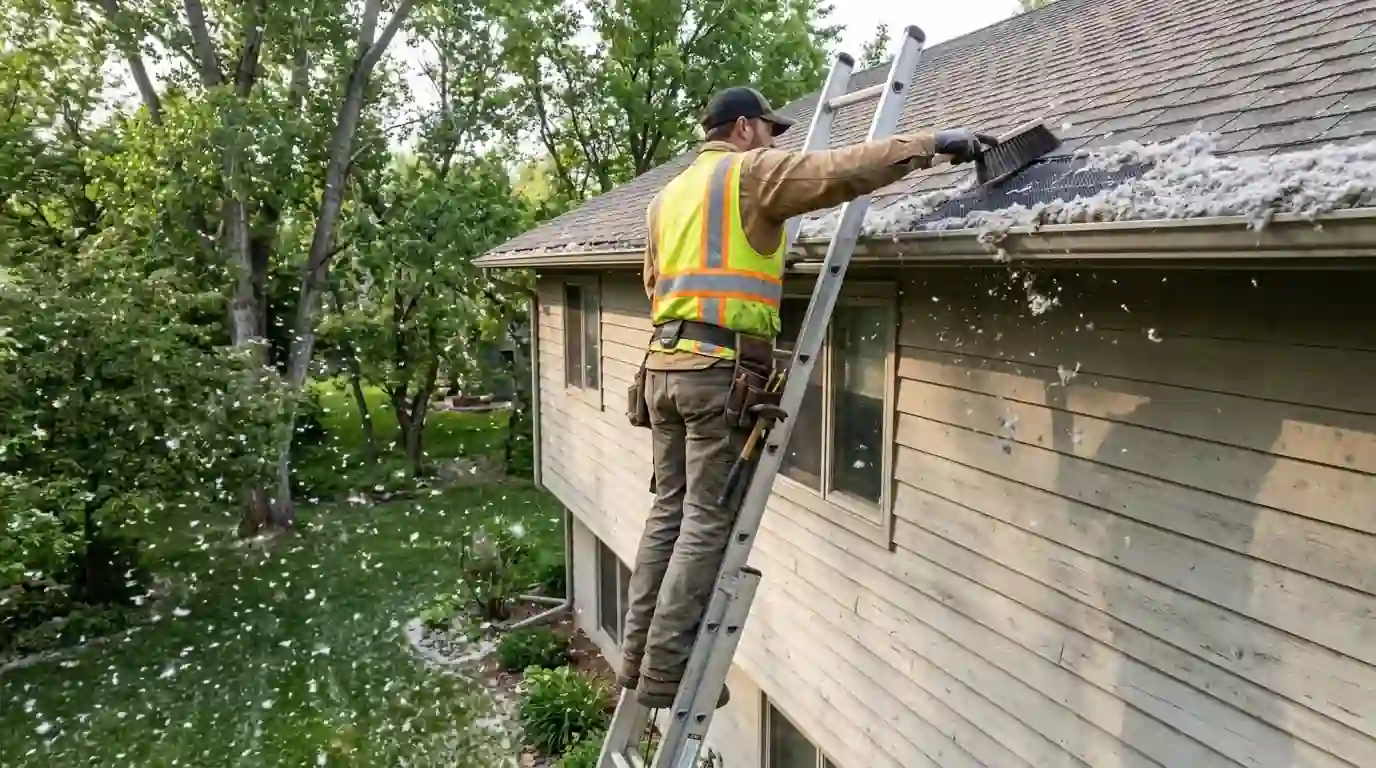
Fine mesh and tight perforations keep debris out of the gutter by holding it on the surface. Most of the time wind and rain carry it off. In late spring, though, cottonwood fluff and tree pollen land wet and dry into a felt-like skin. Water beads on that skin and runs straight over the front edge.
We brush or rinse the surface run by run, working from the high end toward the outlet, and pay extra attention to corners and valleys where the mat is thickest. On mesh, a soft brush does the job without stretching the weave. We avoid pressure washers, which can force debris through or bend the frame.
Cleaning under the guards
Even good guards let some fine material through over time: shingle grit, seed dust, the odd needle. It settles in the bottom of the trough as a sludge that holds water and can block an outlet. Every few years, the guards should come off for a proper clean underneath.
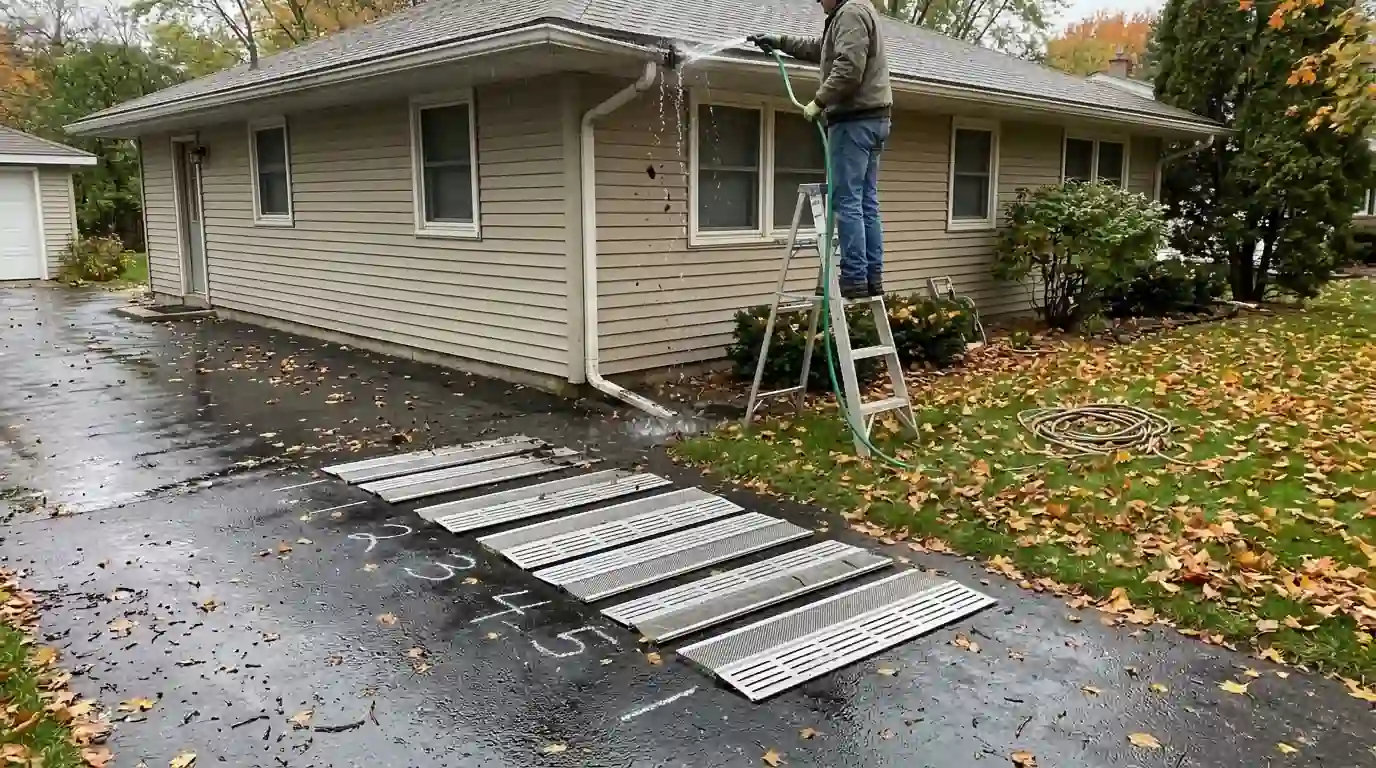
We unfasten the panels, number them so each goes back where it came from, scoop and flush the gutter, clear the downspouts and inspect the hangers and seams while everything is open. Panels go back with fresh screws in new holes so they grip tightly. This often pairs well with a regular gutter cleaning visit for the parts of the house without guards.
Loose, lifted and blown-off sections
Spring and summer storms on the plains bring strong straight-line winds, and a guard with too few fasteners or a back edge left loose can catch the wind like a sail. We find panels lifted at the back, twisted at a joint, or lying in the yard after a storm.
Reattaching usually means new screws at closer spacing along the front lip and a snug tuck at the back. Bent panels get straightened if the metal allows, or replaced with a matching section. Where branches fall on the roof, we check the gutter beneath for crushed sections or pulled hangers too, and our storm damage repair covers anything larger.
Guards sitting on a flat or sagging gutter
One of the most common problems we find under guards has nothing to do with the cover. The gutter was hung with little or no slope, or it has sagged between hangers, so water sits in the trough. Under a guard, that standing water breeds mosquitoes and rots leaves into muck, and you never see it.
The fix is to take the guards off, re-hang the gutter on a proper pitch toward the outlet, and put the guards back. Our re-pitching service handles the slope work, and we refit the covers once the water runs.
- Water standing under the cover after rain
- Sludge and odor when a panel is lifted
- Overflow at the wrong end of the run
- Sag visible from the ground between hangers
Replacing guards that are past saving
Plastic drop-in screens, foam inserts and brush guards are the usual candidates for replacement. Foam soaks up fine debris and grows seedlings, brush guards fill with seeds and fluff, and plastic grids crack and sag. Cleaning them buys a few months at best.
We pull the old guards, clean and check the gutter, and fit a fastened replacement suited to your trees: rigid aluminum screens for broad leaves, or stainless micro-mesh where fluff and seeds are the issue. Our guard installation page compares the options.
What to look for
Signs your guards need attention
Water sheeting over covers
Rain running over the front of the guards instead of dropping through means the surface is matted or the pitch below is wrong.
Visible mat on top
A gray or white skin across mesh or screens after cottonwood season is a film that slows water and needs brushing off.
Panel lifted or missing
A guard sticking up at the back, twisted at a joint or found in the yard after wind has lost its fasteners.
Seedlings poking through
Small plants growing from foam inserts or screens show debris has been composting inside for a long time.
Mosquitoes near the eaves
Insects hovering around the gutter line in summer often trace back to standing water hidden under the guards.
Downspout runs dry in rain
If water pours over the edge but little comes out the downspout, the outlet under the guard may be blocked with sludge.
How the job goes
What a guard service visit includes
- 1
Diagnose the failure
We look at the guards and run water to see whether the surface, the fastening, the gutter pitch or the outlet is causing the overflow before touching anything.
- 2
Clear the surface
Mats of fluff, pollen and seeds are brushed or rinsed off every run, with extra time at valleys and inside corners where debris collects.
- 3
Open and clean the trough
Where needed, panels come off in order, the gutter is scooped and flushed, and downspouts are cleared all the way to the ground.
- 4
Repair and refasten
We re-pitch sagging sections, reseal leaking seams and refasten every panel with new screws so the guards sit tight and level.
- 5
Final water check
A hose run confirms water passes through the guards, flows to the outlets and leaves the downspouts, and we show you any parts that need later attention.
Pricing
Guard cleaning and repair costs
Most guard service lands in the range of a cleaning visit or a small repair. When old guards are beyond saving, replacement is priced per foot.
| Item | Published range |
|---|---|
| Cleaning visit, typical home | $100 to $250 |
| Clogged downspouts cleared, added | $60 to $150 |
| Small repair or re-pitch | $75 to $300 |
| Replacement guards installed, per foot | $15 to $45 per foot |
National ranges published by HomeGuide. Your price depends on the house; we give you a number on the phone or at the house before any work starts. See the full gutter price guide.
Removing and refitting guards to clean underneath takes longer than a surface brushing. Two-story homes, many corners and any re-pitching or seam work also add time.
Omaha conditions
Why Omaha guards clog when they do
The busiest time for guard cleaning here is right after cottonwoods drop their seed in late spring, when the fluff drifts through neighborhoods like snow. Silver maples release their seeds around the same weeks. Those two together can mat a guard surface in a few days, just ahead of May and June, which are among the wettest months of the Omaha year.
Fall brings a second round as leaves pile on top of guards and in roof valleys. Many homeowners schedule a surface cleaning after each of those seasons. A seasonal maintenance plan handles both visits, and our guide on guards explains what to expect from different covers.
Talk to a gutter crew about gutter guard repair and cleaning
Tell us what you are seeing at the roof edge. We answer around the clock and give you straight answers on repair or replacement.
FAQ
Gutter Guard Repair and Cleaning questions
How often should gutter guards be cleaned on top?
Under light tree cover, once a year or less may be enough. Under cottonwoods and silver maples, a brushing after the late spring seed drop and again after fall leaves keeps water flowing. Check during a rain: if water runs over the front of the guards instead of dropping through, the surface needs cleaning. Watching one storm tells you more than a calendar.
Why are my guards overflowing even though they look clean?
A clean surface with overflow usually points below the guard. The gutter may have no slope or a sag that holds water, the outlet may be packed with sludge, or the downspout may be clogged lower down. Valley corners can also overshoot the guard entirely. We run water to find the cause and fix the gutter or outlet before refitting the covers.
Can you repair gutter guards another company installed?
Yes. We clean, refasten and repair most common guard types regardless of who put them up. If a particular brand needs proprietary parts we cannot get, we will tell you and talk through replacing those runs with a fastened screen or mesh that fits your gutters. We never pretend a guard is fixable when replacement is the honest answer.
Is it worth replacing foam gutter inserts?
In most cases, yes. Foam holds fine debris in its pores, stays damp and grows seedlings, and it is hard to clean without pulling it out. After a few seasons it often blocks more water than it lets through. Swapping to a fastened aluminum screen or stainless mesh costs more upfront and saves repeated cleanings and overflow afterward.
What happens to guards when the roof is replaced?
Guards that slide under the shingles must come off before the roofers start, and lip-mounted guards often come off too so the gutter can be protected or reset. We remove them, store them, check the gutter and refit them once the roof is done. If the roofers plan to pull the gutters as well, our detach and reset work covers both.
Related gutter services
Checking costs? The gutter price guide lists published ranges, the gutter size calculator estimates 5 or 6 inch and downspout count, and the cleaning schedule planner shows how often your trees fill the gutters.