Gutter guards
Gutter Screens in Omaha, NE
If your trouble is mostly fall leaves from oaks or big maples, you may not need the most expensive guard on the market. A well-fastened screen can carry most of the load.
- Phone answered 24/7
- Our own crews
- Measured and priced on site
 Omaha, Nebraska
Quick answer
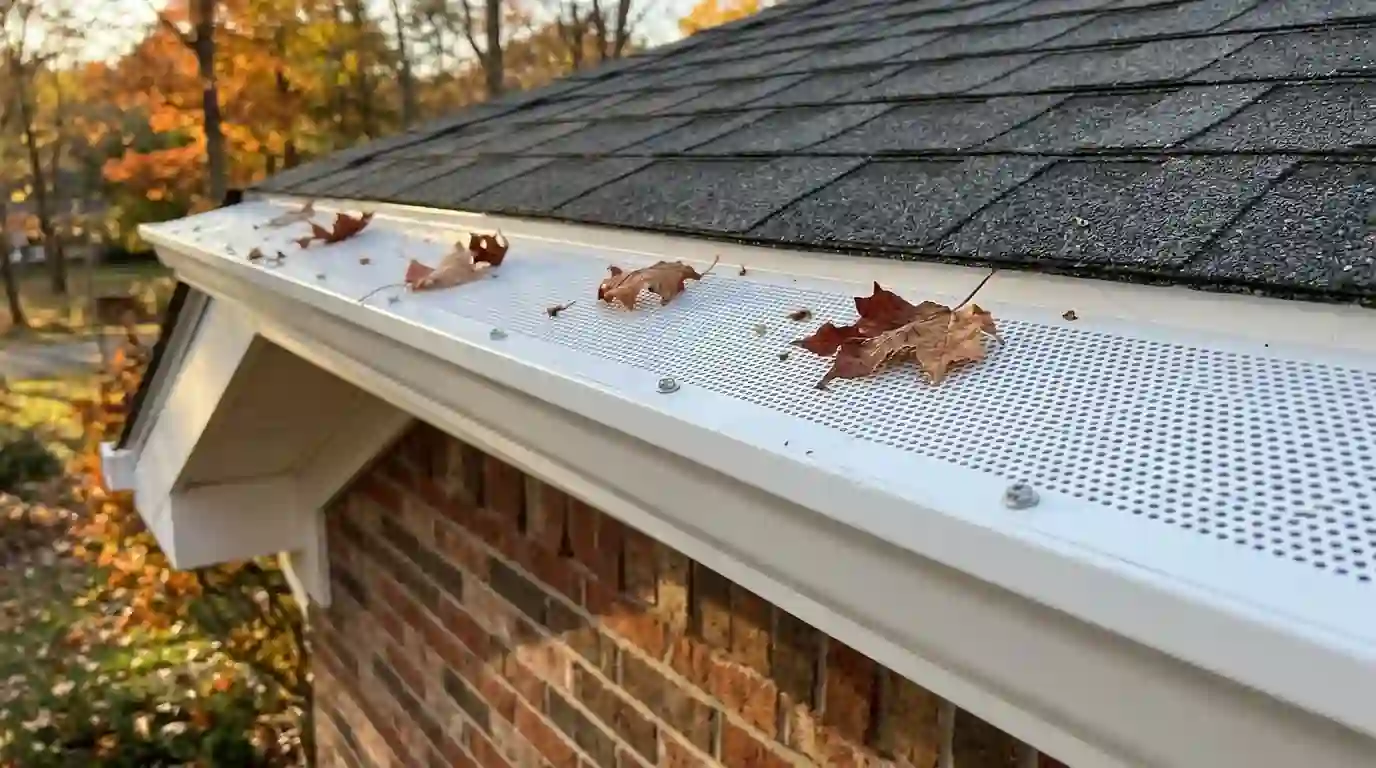
Gutter screens are rigid panels of perforated aluminum or vinyl grid that cover the gutter opening. Water drops through the holes while broad leaves and twigs stay on top. They are the budget choice among guards and work best under oaks and large-leaf maples, though they let fine fluff, seeds and needles slip through.
Screens were the first guards most people ever saw, and the cheap snap-in kind still fill store shelves. That reputation makes them easy to dismiss. A sturdy perforated aluminum screen, fastened properly to the gutter, is a different product and handles leaf-heavy yards for a lot less than micro-mesh.
The key is being honest about what your trees drop. Under a stand of red oaks or a big sugar maple, a screen keeps the gutter clear through autumn. Under a cottonwood, it will disappoint within one season. We look at your trees before recommending one.
Perforated aluminum versus vinyl grids
Perforated aluminum screens are flat or slightly ribbed sheets punched with rows of small holes. They are stiff enough to span the gutter without sagging, they stand up to sun and cold, and they come in colors that match common gutter coil. This is the screen we install most.
Vinyl and plastic grids cost less and look similar at first. After a few Nebraska summers and winters, UV and cold turn the plastic brittle. It cracks where it bends over the lip, and the open squares are larger, letting more small debris through. We rarely recommend them.
Rigid fastened screens versus drop-in screens
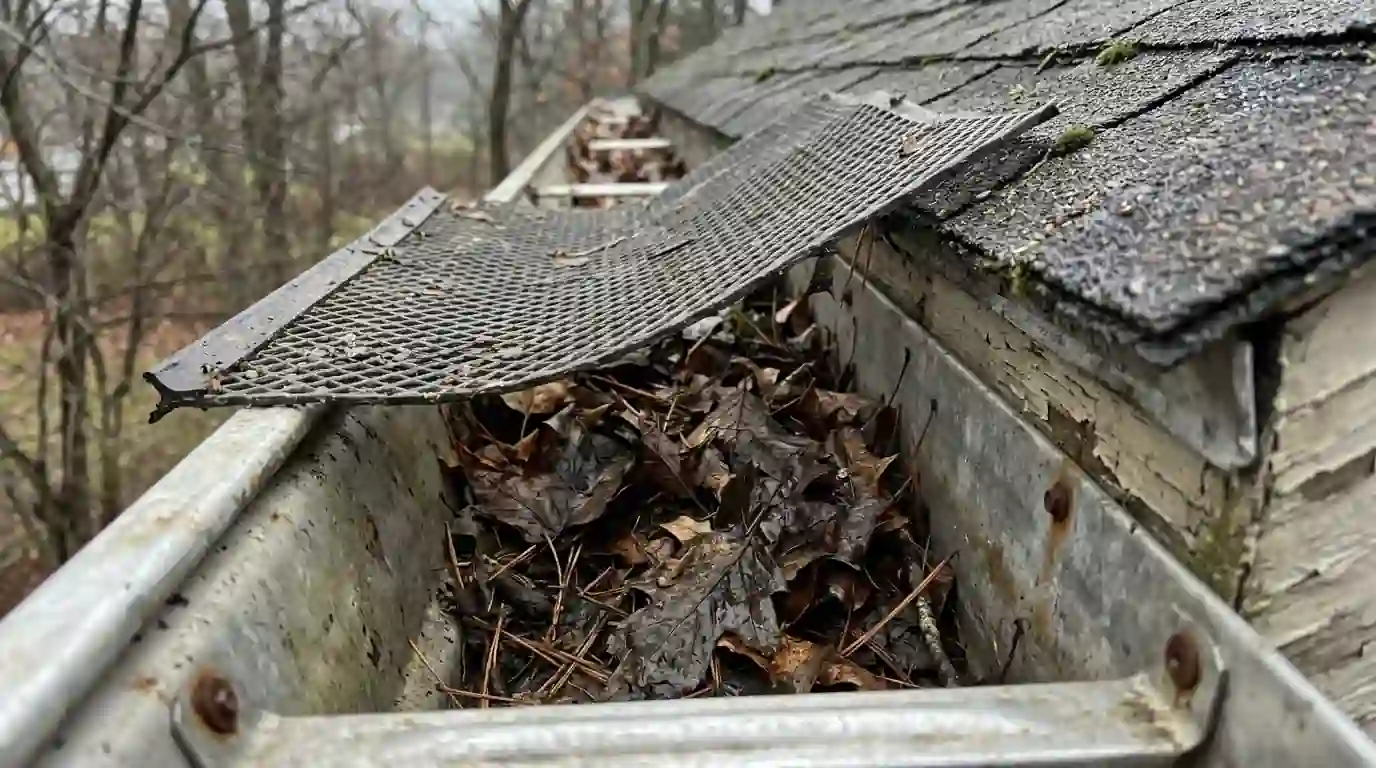
Drop-in screens rest inside the gutter or wedge under the lip with no fasteners. They are easy to place and just as easy to lose. Wind gets under them, ice heaves them, and the weight of wet leaves pushes them down into the trough until they sag between hangers. A sagging screen holds debris instead of shedding it.
Rigid screens fasten to the front lip with screws and tuck under the drip edge or rest against the fascia at the back. They stay level, shed leaves off the front, and survive our spring winds. The difference in price is small next to the difference in how long they work.
- Drop-in: lowest cost, sags, blows out, shifts under ice
- Snap-on plastic: better hold, still brittle after a few winters
- Fastened aluminum: stays flat, sheds leaves, lasts many seasons
What screens block and what they let through
Screens excel at broad leaves. Oak, maple, linden and ash leaves land on top, dry out and blow away. Twigs and acorns stay out too, and the gutter stays open through the heaviest fall drop.
Fine debris is another matter. Cottonwood fluff and pollen pass through the holes and settle inside. Maple and elm seeds can wedge into the perforations. Pine needles slide through end first. If those trees overhang your roof, micro-mesh guards are the better fit, and our guard overview explains the full range.
Screens on older or simpler homes
Screens make sense on a lot of one-story ranch homes built in the 1950s and 1960s across the metro, where gutters are easy to reach and the trees are mostly mature shade trees. They also suit garages and outbuildings where the goal is fewer clean-outs at a low price.
Before fitting them we make sure the gutter underneath is sound. A screen on a gutter that sags or holds water just hides the problem, so we will suggest sag repair or re-pitching first when we find it.
What to look for
Signs screens suit your home
Mostly broad leaves
Oaks, sugar maples and lindens over the roof drop large leaves that screens shed well, without the cost of finer mesh.
One-story eaves
Low, reachable gutters let you brush off the occasional leaf pile yourself, which suits a lower-cost cover.
Drop-ins sagging now
If plastic inserts are bowing into the trough or blowing off, swapping to fastened aluminum fixes the problem directly.
Outbuildings and garages
Detached garages and sheds under shade trees get fewer clean-outs with screens, and the budget stays small.
No cottonwoods nearby
Without cottonwood fluff in the air each spring, screens avoid their main weakness and keep working year round.
Leaf dams every November
Gutters that overflow in late fall rains because of piled leaves are exactly what a rigid screen stops.
How the job goes
How we fit gutter screens
- 1
Look at the trees
We identify what overhangs the roof and confirm screens will handle it. If fluff, seeds or needles are the main debris, we point you toward mesh instead.
- 2
Clean and inspect
Gutters are cleaned out, downspouts flushed, and hangers and pitch checked so the screen sits on a gutter that drains properly.
- 3
Cut and notch panels
Screens are cut to each run, notched around hidden hangers and trimmed at corners so they lie flat without gaps or lifted edges.
- 4
Fasten to the lip
Each panel screws to the front lip and tucks at the back, giving a level surface that sheds leaves and resists wind.
- 5
Check the flow
We run a hose over the screens to confirm water drops through and reaches the downspouts, with special care at valleys and corners.
Pricing
What gutter screens cost
Screens are the lower-cost guard option. Published averages tend to group screens with mesh, so expect basic perforated aluminum to land below those figures.
| Item | Published range |
|---|---|
| Mesh and screen guards, typical | $38.12 per foot |
| Pro-installed guards, all types | $15 to $45 per foot |
| Foam insert guards, for comparison | $21.58 per foot |
| Gutter cleaning before install | $100 to $250 |
National ranges published by This Old House, HomeGuide. Your price depends on the house; we give you a number on the phone or at the house before any work starts. See the full gutter price guide.
Material, number of corners, roof height and any repairs before the install move the total. Simple aluminum screens on straight one-story runs sit at the low end of the guard range.
Omaha conditions
Screens under Nebraska shade trees
Many older Omaha neighborhoods are lined with mature shade trees, and the fall leaf drop is the main gutter chore there. Emerald ash borer was confirmed in a Pulaski Park tree in 2016, when the city had roughly 11,000 ash trees on public land, and declining ash have been coming down since. Whatever shade trees replace them on your block will drop their own leaves into gutters as they mature.
Screens handle that kind of debris well. Where silver maple seeds or cottonwood fluff are part of the mix, they fall short. We can split the difference on the same house, putting mesh on the runs under seeding trees and screens elsewhere. See our price guide for related work.
Talk to a gutter crew about gutter screens
Tell us what you are seeing at the roof edge. We answer around the clock and give you straight answers on repair or replacement.
FAQ
Gutter Screens questions
Why do cheap plastic gutter screens sag?
Plastic drop-in screens are not fastened, and they span the gutter on thin ribs. Wet leaves add weight, summer heat softens the plastic and winter cold makes it brittle. Over a season or two they bow down into the trough, where they hold debris instead of shedding it. Fastened aluminum screens stay flat because they are stiffer and screwed to the gutter lip.
Do gutter screens stop maple helicopter seeds?
Partly. Some winged seeds sit on top and blow off, but many wedge into the perforations or slip through and collect inside. If a silver maple hangs over the roof, expect to clear seeds from the screen surface each spring. Micro-mesh blocks them far better. We can put mesh just on the runs under the maple and screens on the rest.
Can I clean under my gutter screens myself?
Fastened screens can be unscrewed to clean under, but it is slow work and you risk bending the panels. Most of the time you only need to brush the top surface. If debris has built up inside after several years, our crew removes the screens, cleans the trough, and reattaches them with new screws so they sit tight again.
Are gutter screens a good fit for a detached garage?
They often are. Garages usually have short runs, low eaves and a simple roof, so a basic aluminum screen keeps the gutter clear of leaves at a low cost. If the garage has a metal roof, we check that snow sliding off will not bend the screens and may add a sturdier style or snow guards on the roof above.
How long do perforated aluminum screens last?
A fastened aluminum screen typically lasts as long as the gutter it sits on, since aluminum does not rust and the rigid panel resists sagging. The main threats are falling branches, ladders leaned against the gutter, and hail, which can dent the panels. Dented screens still work, but badly bent sections should be swapped to keep water flowing.
Related gutter services
Checking costs? The gutter price guide lists published ranges, the gutter size calculator estimates 5 or 6 inch and downspout count, and the cleaning schedule planner shows how often your trees fill the gutters.