Downspouts and drainage
Downspout Extensions in Omaha, NE
Water that leaves a downspout and lands against the house soaks the loose backfill around your foundation, then finds the basement wall. A short elbow at the base is usually to blame.
- Phone answered 24/7
- Our own crews
- Measured and priced on site
 Omaha, Nebraska
Quick answer
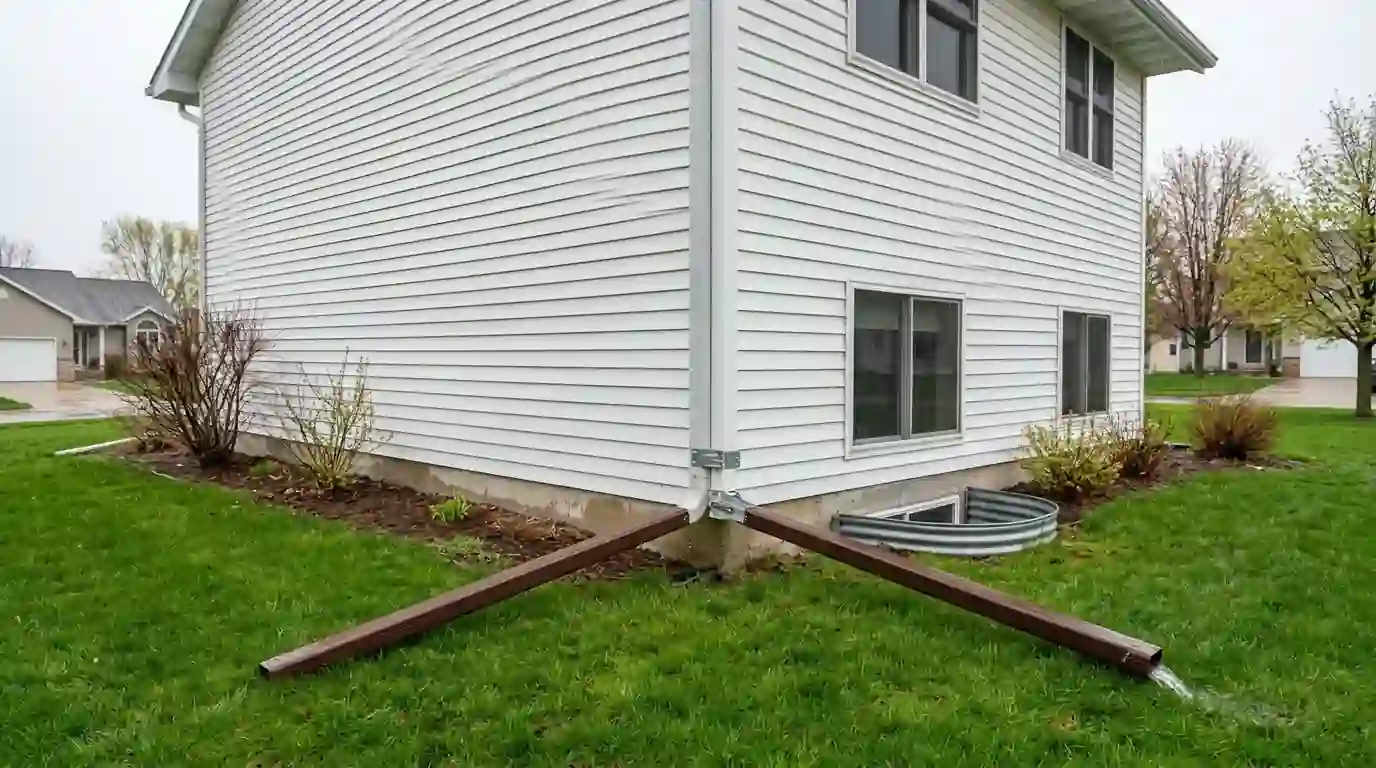
A downspout extension is a length of pipe or a hinged section added to the bottom elbow so roof water empties well away from the foundation. You need one when the downspout ends at the wall, when a splash block has sunk or tipped, or when the basement shows damp corners after storms.
Most downspouts we see around the metro end in a single elbow and a splash block that has settled into the mulch. That arrangement drops hundreds of gallons beside the house in one storm, right where the soil was dug out and refilled when the basement was poured. Backfill never packs as tight as undisturbed ground, so it takes on water fast.
Our crews fix that by extending each outlet to a spot where the yard can carry the water off. Sometimes that is a plain aluminum section in the same color as the downspout. Sometimes it is a hinged piece that lifts for the mower, or a line that runs under the lawn through our underground drain work. The goal stays the same: water lands where it can leave.
How far the water needs to go
Nebraska Extension guidance puts the minimum at 5 feet from the foundation, and we treat that as a floor rather than a target. On a lot that falls away from the house, 5 to 6 feet is usually enough. On a flat lot, or one that tips back toward the wall, we go longer or change where the water ends up.
The same guide calls for soil graded about 2 percent away from the house, which works out to roughly an inch of drop for every 4 feet. Where the grade has sunk or a raised flower bed acts like a dam, an extension only moves the puddle. We point that out on the visit so you can decide whether the grade needs work too.
Extension types we install
Each option has a place, and the right one depends on how that side of the yard gets used.
- Fixed aluminum sections: matching color, riveted to the elbow, best along beds and side yards where nothing has to pass over them.
- Hinged or flip-up sections: swing up against the wall for mowing or shoveling, then drop back down before the next rain.
- Roll-out sleeves: a flat tube unrolls under water pressure; cheap, but fluff and grass clippings stop them up.
- Splash blocks: fine at the end of an extension, not as a replacement for one.
- Buried lines: the cleanest look when water has to cross a walk, a patio or a long run of lawn.
Window wells, walks and the neighbor's yard
A downspout that empties within a few feet of a basement window well is one of the first things we change. Wells fill from the side through gravel and loose backfill, and a full well leaks around the window frame. We swing the extension away from the well or move the downspout to a different corner of the run.
We also look at where the water goes once it leaves the pipe. Dumping it across a sidewalk invites a sheet of ice in January, and aiming it at the property line can put it in the neighbor's basement instead of yours. Getting the angle right sometimes means an added elbow up top, which our downspout installation crew handles on the same trip.
Why loess and clay change the plan
Much of the Omaha area sits on loess, a fine silt that blew out of the Missouri River valley after the glaciers and piled up in deep layers along the bluffs. It drains well when dry, then softens and slumps when it stays wet. Pockets of heavier clay hold water at the surface instead. Both soils argue for getting roof water farther out than a builder-grade splash block.
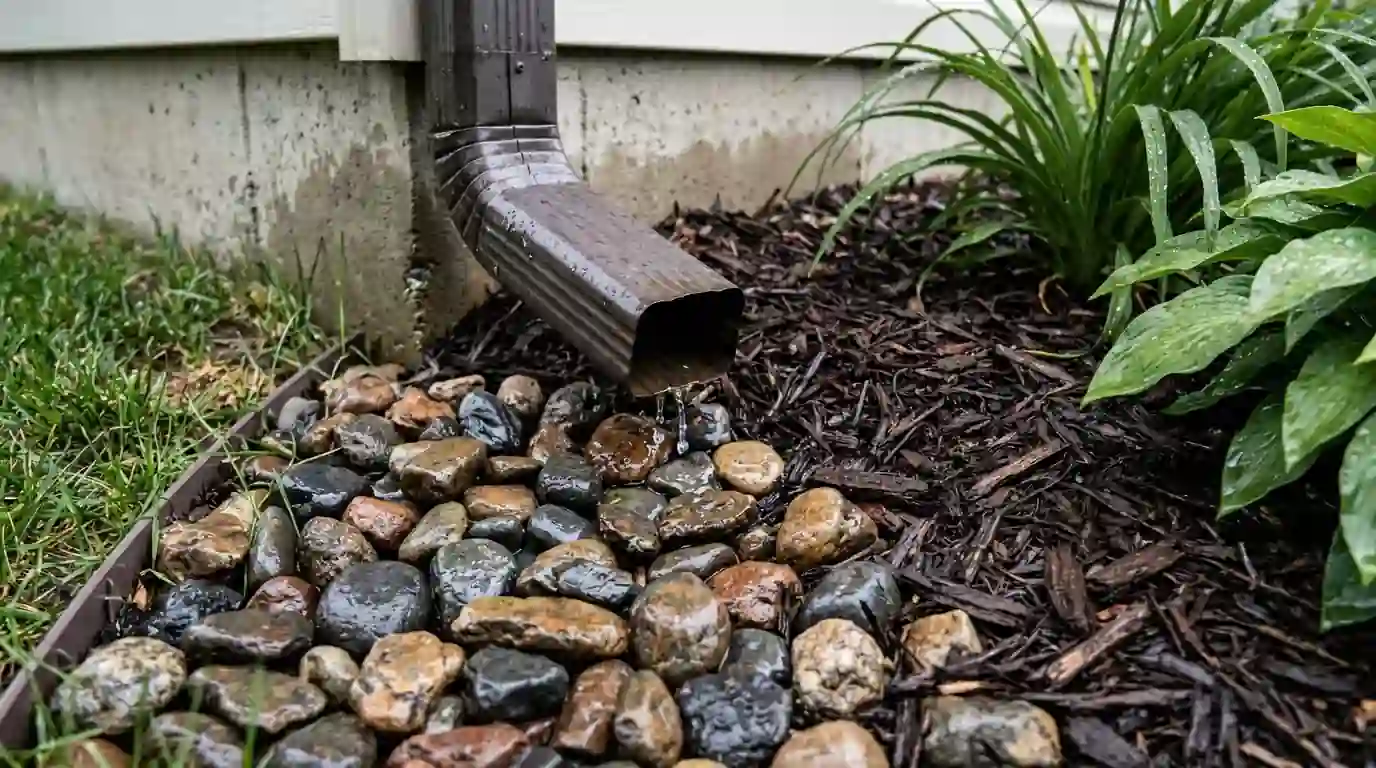
On sloped lots in the older parts of the city, a long extension that discharges onto bare ground can cut a small gully. We end those runs on a splash pad or a bed of rock so the water spreads out before it reaches soil.
What to look for
Signs your downspouts need extending
Damp basement corners
Wet spots or white mineral streaks that show up near the same corner after every hard rain usually line up with the downspout outside that wall.
Sunken soil at the outlet
A dip or a bare hole where the downspout empties means the water is carrying soil away and pooling beside the foundation.
Splash block tipped back
Once a block tilts toward the house, it steers water against the wall instead of away from it. Mowers and frost heave knock them out of line.
Water in window wells
Standing water or silt at the bottom of a well after a storm points to a downspout or an overflow emptying too close by.
Mulch washed into the lawn
Bark spread in a fan across the grass shows the force and direction of the discharge, and that it is landing in the bed.
Ice on the front walk
A patch of ice that forms in the same spot all winter usually traces back to an extension aimed across the sidewalk.
How the job goes
How an extension visit goes
- 1
Walk the lot
We watch where each downspout empties, check the grade with a level, and note window wells, walks, beds and anything the water must cross before it leaves the yard.
- 2
Pick the right type
Fixed, hinged or buried, chosen corner by corner. A side yard bed might take a fixed section while the back corner by the lawn gets a flip-up piece.
- 3
Fit and fasten
We cut the extension to length, crimp and rivet it to the bottom elbow, and match the color so it reads as part of the downspout rather than an add-on.
- 4
Set the landing
Each run ends on a splash block, a rock pad or a pop-up emitter so the discharge spreads out instead of digging a hole in the lawn.
- 5
Test with a hose
We run water from the gutter above and follow it all the way out, then adjust angles until nothing heads back toward the foundation.
Pricing
What downspout extensions cost
Extensions are among the least expensive drainage fixes on a house. The table shows national ranges for the parts of this job, and our price guide covers the rest of the system.
| Item | Published range |
|---|---|
| Ground-level extension, per downspout | $5 to $15 per downspout |
| Aluminum downspout pipe, per foot installed | $7.52 to $31.79 per foot |
| New downspout added, each | $30 to $75 per downspout |
National ranges published by Forbes Home, Fixr, HomeGuide. Your price depends on the house; we give you a number on the phone or at the house before any work starts. See the full gutter price guide.
Hinged hardware, extra elbows to clear a walk and rock pads at the outlet add to the low figures. A downspout that has to move to a new corner costs more than a simple extension.
Omaha conditions
Omaha rain and a dry basement
May, June and August are the wettest months here, each averaging well over 4 inches, and that rain tends to arrive in short, heavy bursts. City of Omaha stormwater material notes that an inch of rain on 1,000 square feet of roof sheds more than 600 gallons. A typical house sends that water to four to six downspouts, so every outlet carries a lot in one afternoon storm.
Nearly half of Omaha's homes were built before 1970, and plenty of those basements have block or older poured walls that seep when the soil outside stays wet. Extending the downspouts costs little next to basement repairs, and it is usually the first change we suggest when someone mentions water downstairs. Our guide to downspouts and basement water goes deeper.
Talk to a gutter crew about downspout extensions
Tell us what you are seeing at the roof edge. We answer around the clock and give you straight answers on repair or replacement.
FAQ
Downspout Extensions questions
Will flip-up downspout extensions stay down in the wind?
The hinged pieces we use have enough weight and a stop at the hinge to stay down in normal wind. The bigger risk is forgetting to lower one after mowing. If that is likely in your household, a fixed section along a bed or a short buried line through the lawn takes the guesswork away. We can mix types around the same house.
Should downspout extensions stay on through the winter?
Yes, since snowmelt and January thaws send water down the downspouts too. Plows and shovels catch them, so hinged pieces near driveways get flipped up during a snowstorm and lowered once the area is clear. If an extension freezes solid with ice, leave it alone and let it thaw instead of banging on it, which cracks the elbow.
Do extensions help if my yard slopes toward the house?
Only partly. They carry water past the backfill zone, but if the ground keeps falling back toward the house, the water will drift back with it. In that case we usually suggest a buried line to a lower spot or to the curb, along with regrading by a landscaper. We tell you plainly when an extension alone will not solve it.
How long should each downspout extension be?
At least 5 feet from the wall is the starting point, following Nebraska Extension guidance. Beyond that, the right length is wherever the ground sits lower than the foundation and the water will not cross a walk or head for a neighbor. On some corners that is 6 feet, on others 10 or more, and a few need to go underground.
Are roll-out sleeve extensions worth buying?
They work on a clean, low-debris roof, but they are the first type to fail under our trees. Cottonwood fluff, maple seeds and grass clippings clog the flat sleeve, and the plastic cracks after a few cold winters. Rigid aluminum or a hinged section costs a little more and lasts far longer. Keeping your gutters cleaned helps any extension work.
Related gutter services
Checking costs? The gutter price guide lists published ranges, the gutter size calculator estimates 5 or 6 inch and downspout count, and the cleaning schedule planner shows how often your trees fill the gutters.