Specialty gutter work
Commercial Gutters and Downspouts in Omaha
Water pouring off a storefront canopy onto customers, ice sheets on the sidewalk by the back door, a scupper that drips down brick all winter. Commercial roofs move a lot of water, and the gutters have to keep up.
- Phone answered 24/7
- Our own crews
- Measured and priced on site
 Omaha, Nebraska
Quick answer
Commercial gutter work covers the larger box-style gutters, scuppers, conductor heads and oversized downspouts used on shops, offices, churches, strip centers and warehouses. We size them for big roof areas, form them from heavier metal, and schedule the work around tenants, services and business hours so the building stays open.
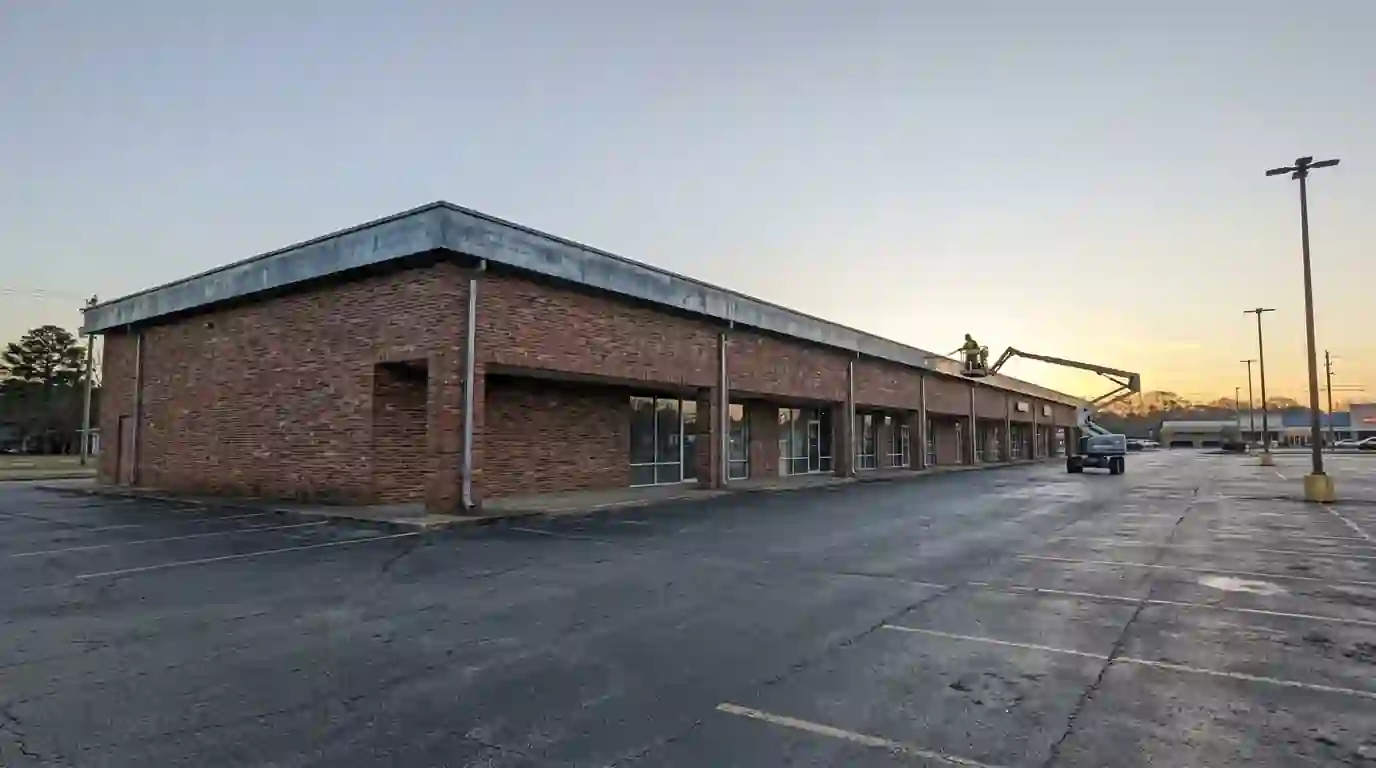
A house gutter and a commercial gutter solve the same problem at very different scales. A low-slope roof on a strip center might drain thousands of square feet to one edge, and the gutter there has to take all of it in a summer cloudburst without spilling onto a parking lot full of people.
We work with building owners, property managers and church facility committees across the metro. The jobs range from a single new box gutter on a dental office to replacing every downspout on a warehouse row. What they share is planning: access, lifts, safety around the public, and timing that does not shut down a business.
Box gutters, scuppers and conductor heads
Most commercial roofs drain either to an edge gutter or through scuppers, which are openings in a parapet wall. Commercial box gutters are square or rectangular troughs, often 6, 7 or 8 inches wide, formed from heavier aluminum or steel. They sit on wider straps or brackets set closer together than residential hangers.
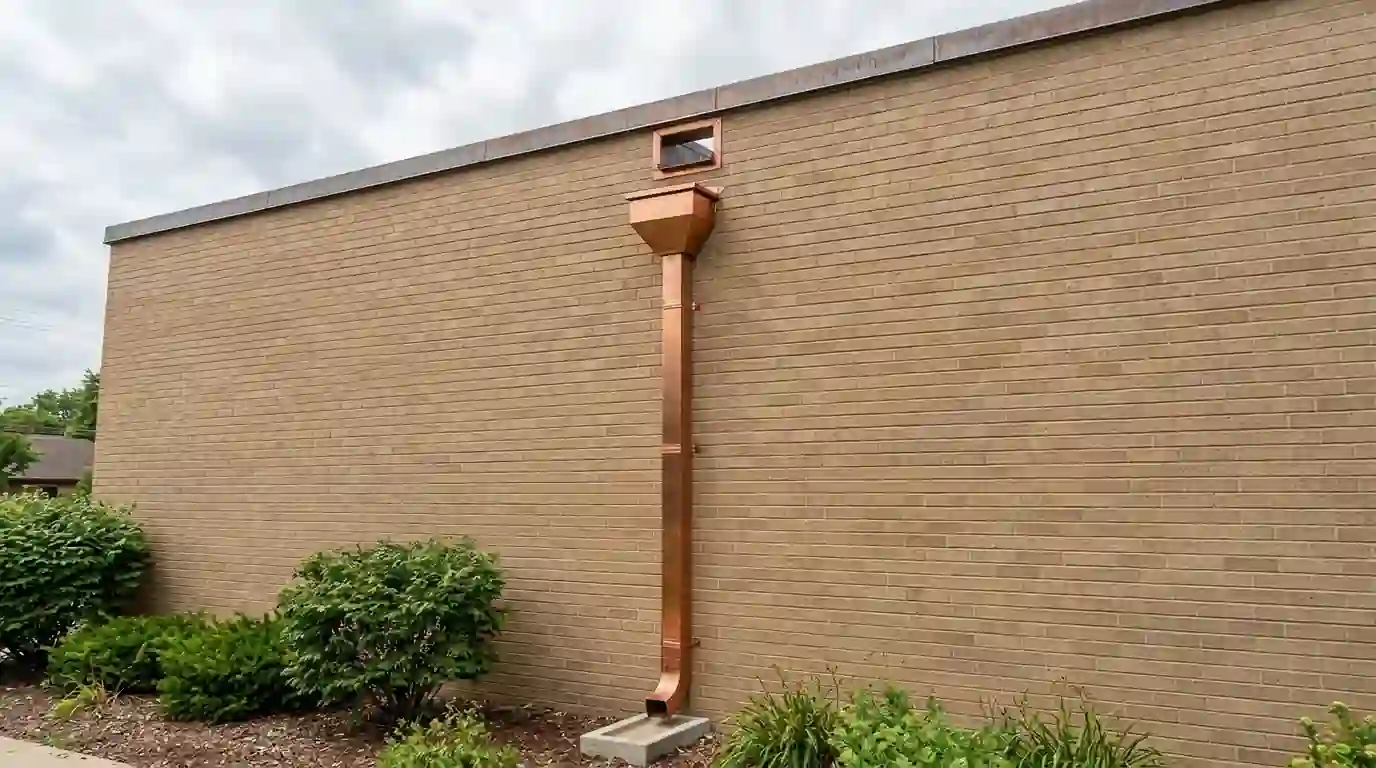
A scupper pushes water through the parapet into a conductor head, a collector box mounted on the wall that feeds a downspout. When the conductor head is undersized or clogged, water overshoots it and runs down the masonry, which stains brick and soaks mortar joints. We replace failed heads, upsize them where the roof needs it and seal the scupper flange to the roof membrane edge.
- Box gutters sized to the roof area each run serves
- .032 and .040 aluminum or steel, chosen for span and exposure
- Conductor heads matched to scupper width and downspout size
- Overflow scuppers kept clear and separate from primary drainage
Oversized downspouts and where they discharge
The downspout is often the real bottleneck. A 3x4 downspout is the usual minimum on commercial work, and many buildings need 4x5 or round 6-inch pipe. We count square footage per outlet and add outlets on long runs rather than forcing one downspout to handle an entire roof plane.
Where the water lands matters as much on a commercial lot as at a house. Discharge across a walkway freezes in winter, and water dumped at a foundation finds its way into a lower level. We tie downspouts to existing storm leads where they are in good shape, or route them to grade away from entrances. For lines that run below grade, see our underground drain work.
Working around tenants and the public
Commercial jobs are as much about logistics as metal. We plan lift placement, cone off work zones, and keep foot traffic away from overhead work. For storefronts and offices we can schedule early mornings, evenings or weekends so customers and staff are not walking under a crew.
Churches tend to want work done between services and events. Property managers want a clean record of what was done to which building. We give a written summary with photos at the end of each job so the manager has something to file and to show owners.
Building types we handle
Strip centers and small retail rows often have long front fascia gutters with canopies, plus scuppers along the rear. Offices and clinics tend to be pitched or mansard roofs with standard edge gutters at a larger size. Churches combine steep roof planes with high eaves and copper or decorative details on older buildings.
Warehouses and light industrial buildings bring metal roofs, long runs and snow sliding off panels. On those we use stronger hangers, closer spacing and sometimes snow guards upslope, coordinated with the roofer. Smaller shops and detached outbuildings on a commercial lot are covered on our garage and barn gutter page.
Keeping commercial gutters working
Big gutters fill with debris just like small ones, plus roofing gravel, tennis balls, bird nests and whatever the wind drops on a flat roof. A clogged conductor head on a busy building can send water through a ceiling in one storm. Scheduled commercial gutter cleaning keeps scuppers and heads open, with records the property manager can keep.
What to look for
Signs a commercial building needs gutter work
Water sheeting off canopies
Rain pouring over the front of a storefront canopy or entry roof means the gutter is undersized, clogged, or missing outlets for the area it drains.
Stained brick below scuppers
White mineral streaks or dark wet patches under a scupper show water missing the conductor head and running down the wall instead.
Ice at entrances
Recurring ice patches near doors or along walkways usually trace back to a downspout discharging across pavement where pedestrians walk.
Gutters pulling off straps
Bent straps or a gutter tipping forward on a long run tells you the hangers are too far apart for the weight of water, ice and debris.
Leaks along interior walls
Ceiling tiles stained along an exterior wall often point to a backed-up gutter or conductor head spilling over and into the building envelope.
Rusted or split seams
Older sectional commercial gutters with rust at the joints or split seams leak at every rain and are often due for full replacement.
How the job goes
How a commercial gutter project runs
- 1
Walk the roof and site
We look at roof areas, drainage paths, existing gutters, scuppers and downspouts, and note access points, lift locations and where people walk around the building.
- 2
Size and scope in writing
Gutter width, metal gauge, hanger spacing, downspout size and outlet count are set from roof area, then laid out in a written scope you can share with owners.
- 3
Schedule around the business
We pick dates and hours that keep entrances open, coordinate with tenants or staff, and plan for weather so work does not drag across busy days.
- 4
Install with the site protected
Work zones are coned and kept clear. Old gutters come down, fascia or edge metal is checked, and new runs, heads and downspouts go up in sections.
- 5
Water test and close out
Every run, scupper and downspout is flushed with a hose. You get a photo summary of what was replaced, where it drains and what to watch going forward.
Pricing
What commercial gutter work costs
Commercial jobs are priced per project because size, height and access vary so much. These national figures for metal type and downspouts give a starting point.
| Item | Published range |
|---|---|
| Steel gutters installed, galvanized to stainless | $10 to $35 per foot |
| Aluminum gutters installed | $10 to $20 per foot |
| Aluminum downspout pipe installed | $7.52 to $31.79 per foot |
| Old gutter removal and disposal, per job | $50 to $200 |
National ranges published by HomeGuide, Fixr. Your price depends on the house; we give you a number on the phone or at the house before any work starts. See the full gutter price guide.
Lift rental, after-hours scheduling, metal gauge, gutter width and the number of conductor heads move the price the most. Our price guide covers residential ranges as well.
Omaha conditions
Commercial drainage in the Omaha climate
City stormwater material points out that an inch of rain on a 1,000 square foot roof sheds more than 600 gallons. Scale that to a 20,000 square foot retail roof and a single heavy storm sends a small pond toward the gutters. May through August are our wettest months, and summer storms here arrive fast and hard.
Hail is the other factor. Nebraska ranks at the top nationally for hail risk, and dented commercial gutters lose capacity where the trough is crushed. After a hail event we document damage for owners and managers, and our hail damage replacement page explains that process.
Talk to a gutter crew about commercial gutters
Tell us what you are seeing at the roof edge. We answer around the clock and give you straight answers on repair or replacement.
FAQ
Commercial Gutters questions
Can you replace gutters on a storefront without closing the business?
In most cases, yes. We schedule work early in the morning, in the evening or on weekends, and we cone off work zones so customers can still reach the door. Entrances are protected or worked on during closed hours. On a strip center we usually move one storefront at a time so only a short stretch of sidewalk is affected on any given day.
What size gutter does a commercial roof need?
It depends on the roof area draining to each run, the roof slope and the number of outlets. Many commercial buildings need 6-inch or wider box gutters with 3x4 or larger downspouts, and long runs need more outlets. We measure the roof areas and size each run to the water it will carry rather than using one size for the whole building.
Do you repair scuppers and conductor heads on parapet walls?
Yes. We replace rusted or undersized conductor heads, reseal scupper flanges where they meet the gutter or downspout, and clear blocked heads. If the scupper opening itself or the roof membrane around it is failing, that part belongs to the roofer, and we coordinate with them so the flashing and the metal work fit together properly.
Can you provide documentation for a property manager or owner?
We provide a written summary with photos at the end of each job showing what was installed or repaired, where each downspout discharges and any issues we noticed that are outside our scope. Managers with several buildings often keep these records to plan future work and to show owners what was spent where. We can label photos by building or unit if that helps.
Are steel gutters better than aluminum on a commercial building?
Steel holds up better to hail, ladders and impacts from equipment, and it spans longer runs with less flex. Aluminum is lighter, will not rust and costs less. On a busy loading area or a building that sees frequent hail damage, steel often earns its price. On an office or church where the gutter is out of reach, heavy-gauge aluminum is usually enough.
Related gutter services
Checking costs? The gutter price guide lists published ranges, the gutter size calculator estimates 5 or 6 inch and downspout count, and the cleaning schedule planner shows how often your trees fill the gutters.