Fascia, soffit and roof edge
Fascia board replacement in Omaha, NE behind your gutters
A gutter is only as strong as the board it is screwed into, and on many Omaha homes that board has been soaking up water behind the gutter for years.
- Phone answered 24/7
- Our own crews
- Measured and priced on site
 Omaha, Nebraska
Quick answer
Fascia is the trim board along the roof edge that your gutters hang on. When it rots, hangers lose their grip and gutters sag or fall. Replacement means cutting out the soft wood, installing new lumber or composite, wrapping it in aluminum trim coil and rehanging the gutters on solid backing.
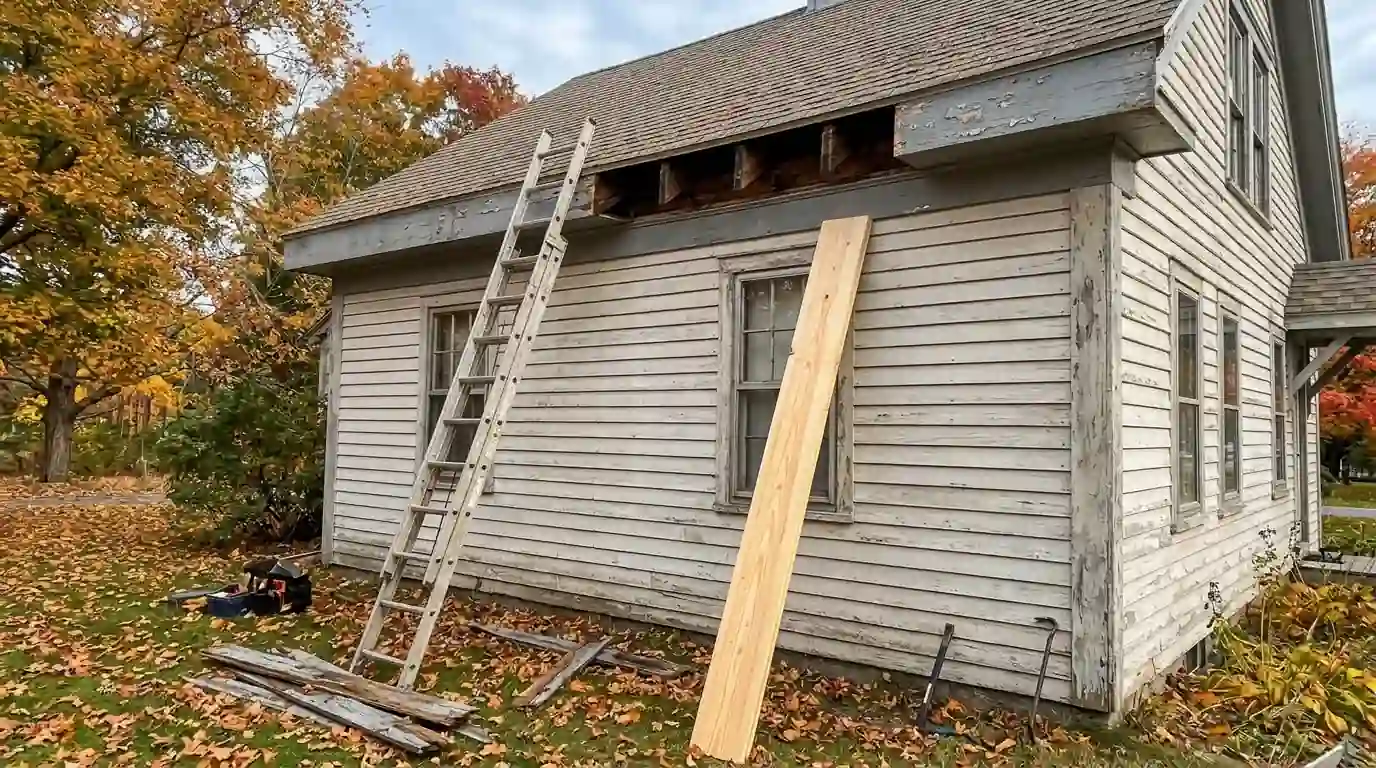
Rotted fascia hides well. The gutter covers its face, the shingle edge covers its top, and paint can make a soft board look fine from the driveway. Most homeowners find out when a hanger pulls loose and a whole section of gutter swings down after a storm.
We replace fascia as gutter installers, which means we think about it as the foundation for the gutter rather than as trim. The new board has to be straight, solidly fastened to the rafter tails and protected from the same water that ruined the old one.
Why fascia rots behind gutters
The most common cause is water getting behind the gutter instead of into it. Without a drip edge or gutter apron, rain runs off the shingles, curls under the edge and soaks the top of the fascia. Over many seasons that wet wood softens from the top down.
Overflowing gutters do the same thing from the other side. A clogged gutter spills over its back edge as easily as its front, and that water sits against the board. Old spike-and-ferrule hangers make it worse, since every nail hole is a path for water into the grain.
- Missing or short drip edge at the roof line
- Clogged gutters overflowing at the back
- Gutters set too low, so water runs behind them
- Nail holes from old spikes letting water into the wood
- Peeling paint that leaves raw wood exposed
- Ice dams forcing meltwater under the shingle edge
How we find soft wood
We probe the fascia with an awl or screwdriver along every run, with special attention near downspout outlets, inside corners and anywhere the gutter has pulled away. Sound wood resists the point. Rotted wood lets it sink in with little effort, sometimes right through.
When the gutters are already coming down for replacement, we can see the full face of the board, which is the best time to judge it. On a repair-only job, we probe from above and below and check behind loose hangers, since that is where rot usually starts.
Wood or composite for the new board
Most Omaha homes have dimensional lumber fascia, typically a 1x6 or 1x8. We match that size so the roof edge lines up with the existing trim. Primed pine or fir is common and works well once it is wrapped. Cedar holds up better to moisture and costs more.
Composite or PVC trim boards do not rot at all, which makes them a good choice on north sides, under valleys and anywhere water has been a repeat problem. They expand more with temperature, so they need proper fastening and room at the joints. We will walk you through the tradeoffs before choosing.
Wrapping with aluminum trim coil
Once the new board is up, we usually wrap it with aluminum trim coil bent on a brake to fit the profile. The wrap tucks under the drip edge at the top and turns under the bottom edge, so water has no exposed wood to soak into, and you never paint the fascia again.
Coil comes in many colors, so the wrap can match the soffit, the new gutters or the house trim. We pick a color with you that ties the roof edge together, which matters more than people expect because the fascia is a long, visible line around the whole house.
Same-day fascia and gutter work
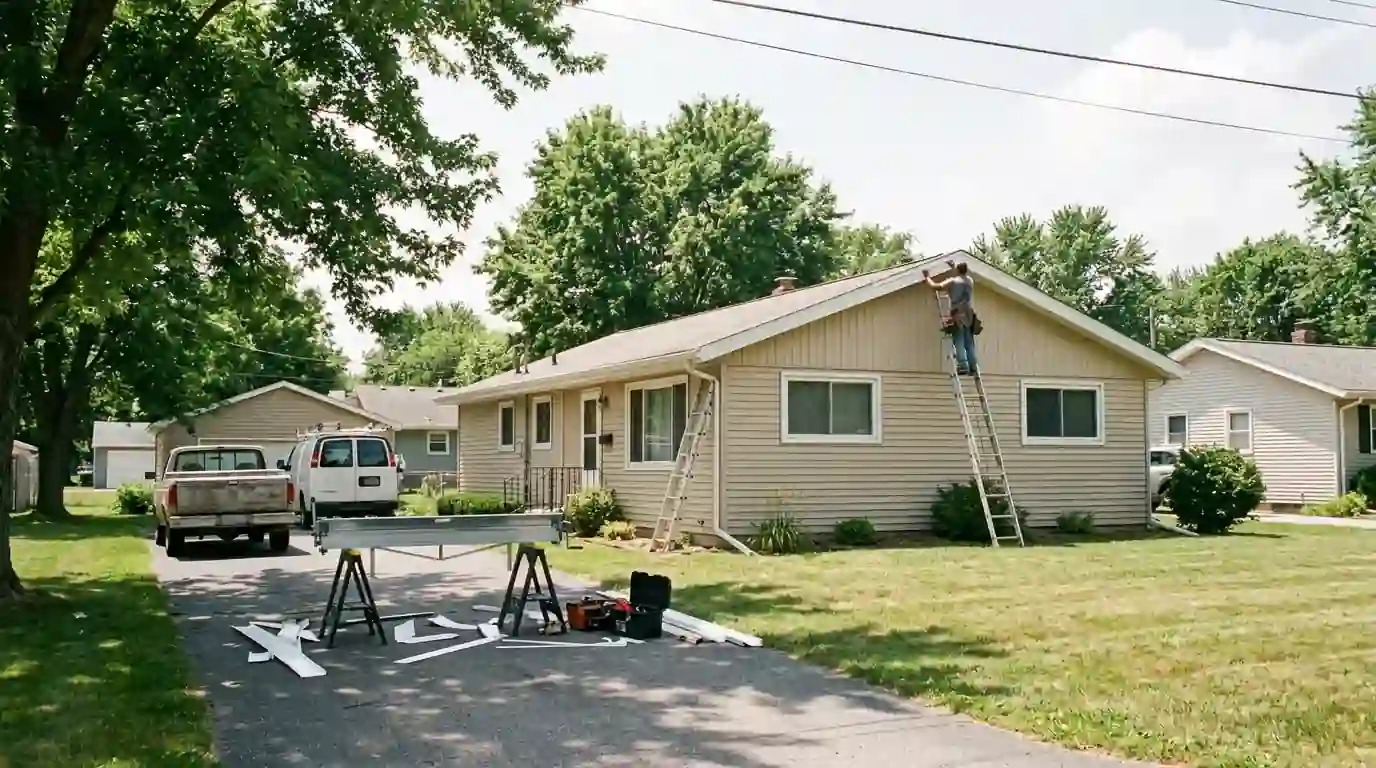
The most efficient time to replace fascia is during a gutter replacement. The old gutters come off, the rotted sections are cut out and replaced, the wrap goes on, and the new seamless gutters are hung on solid wood the same day.
If your gutters are in good shape, we can take them down carefully, replace the bad fascia and reset them with new hidden hangers. Either way, the gutter goes back on wood that will hold a screw, which is the whole point of the job.
What to look for
Signs your fascia is failing
Gutter pulling away
A gap between the back of the gutter and the board, or hangers that wobble when pushed, usually means the screws or spikes have lost their grip in soft wood.
Paint blistering or peeling
Bubbled or flaking paint along the fascia shows moisture coming from inside the board, which is a common early warning sign of rot behind the coating.
Dark stains below the gutter
Streaks or water marks running down the board and onto the soffit mean water is getting behind the gutter instead of flowing into it.
Soft spots at corners
Inside corners and spots under roof valleys take the most water, so the wood there is often the first to turn spongy when pressed.
Wavy roof edge line
Looking down the eave from the corner, a fascia that dips or bulges in spots may have rotted sections that are flexing under the gutter load.
Pests at the eaves
Carpenter ants, bees, birds or squirrels working at the roof edge often find their way in through rotted fascia that has softened or opened up.
How the job goes
How fascia replacement is done
- 1
Probe and mark the damage
We probe every run, mark soft sections and photograph them so you can see exactly how much board needs replacing before any cutting begins.
- 2
Remove gutters from bad sections
Gutters over damaged fascia come down, either for disposal on a full replacement or set aside carefully if they will be reinstalled after the new wood is in.
- 3
Cut out and replace the rot
Rotted fascia is cut back to sound wood at a rafter tail, and new boards are fitted and fastened. Rafter ends are checked too, since rot sometimes reaches them.
- 4
Wrap with trim coil
Aluminum trim coil is bent to fit and installed over the new and existing fascia, tucked under the drip edge and finished with color-matched trim nails.
- 5
Hang gutters on solid backing
Gutters go back up on hidden hangers screwed into the new board at proper spacing, pitched toward the outlets and water-tested before we pack up.
Pricing
What fascia replacement costs
Fascia is priced by the linear foot, and the board material matters most. The national ranges below give a starting point, and our price guide explains how they relate to Omaha jobs.
| Item | Published range |
|---|---|
| Fascia board replacement, per foot | $7 to $40 per foot |
| Combined fascia and soffit work, per foot | $6 to $20 per foot |
| New aluminum gutters if replacing too | $10 to $20 per foot |
| Removing and hauling old gutters | $50 to $200 |
National ranges published by This Old House, HomeAdvisor, HomeGuide. Your price depends on the house; we give you a number on the phone or at the house before any work starts. See the full gutter price guide.
Composite or cedar costs more than primed pine. Rot that reaches the rafter tails, second-story height and how many short sections are spread around the house all raise the total.
Omaha conditions
Fascia problems common to Omaha houses
About 17.8 percent of Omaha homes date to 1939 or earlier and another 27.9 percent to the years from 1940 to 1969, so many roof edges still carry original or early replacement lumber. On those houses, many coats of paint can hide a board that is soft right through, especially on shaded north and east sides.
Our winters add another stress. Nebraska now sees more multi-day warm spells in winter than it once did, and each one sends meltwater toward the eaves just before the next freeze. When drip edge is missing, that meltwater finds the top of the fascia every time.
Talk to a gutter crew about fascia board replacement
Tell us what you are seeing at the roof edge. We answer around the clock and give you straight answers on repair or replacement.
FAQ
Fascia Board Replacement questions
Can new gutters be hung on old fascia that is only slightly soft?
We do not recommend it. Hidden hanger screws need solid wood to hold, and slightly soft fascia only gets worse once a full gutter of water and ice is hanging from it. If the damage is limited to a few feet, replacing just those sections is affordable and gives the new gutters a sound base.
Do you replace fascia without replacing the gutters?
Yes. If the gutters are in good condition, we take them down carefully, replace the damaged fascia, wrap it and reinstall the gutters with new hangers. This is similar to a detach and reset job, and it saves you the cost of new gutters when the old ones still have life.
Is aluminum wrap just hiding rot under a cover?
Not when it is done right. We only wrap sound wood, after rotted sections have been cut out and replaced. Wrapping over rot would trap moisture and speed up decay, which is why we probe first. On wood that is sound, the wrap keeps water off and ends the cycle of scraping and repainting.
Why did my fascia rot even though my gutters were cleaned?
Clean gutters still let water behind them if the roof edge lacks a drip edge or apron, or if the gutter hangs too low below the shingles. Water curls under the shingle and soaks the top of the board. Adding drip edge flashing alongside new fascia stops that from happening again.
What happens if the rafter tails are rotted too?
Sometimes rot spreads from the fascia into the ends of the rafters. When we find that, we stop and show you. Minor damage can often be sistered or trimmed back, but structural rafter repair is carpentry beyond typical gutter work, and we will tell you plainly if that part needs a roofer or carpenter.
Related gutter services
Checking costs? The gutter price guide lists published ranges, the gutter size calculator estimates 5 or 6 inch and downspout count, and the cleaning schedule planner shows how often your trees fill the gutters.