Gutter guide
5-Inch or 6-Inch Gutters for a Nebraska Roof?
Most houses in the Omaha area wear 5-inch K-style gutters, and many of them never give trouble. Some roofs, though, send more water to one edge than a 5-inch trough can carry. Here is how to tell which one your house is.
By Agatha Prewitt, Gutter Guides EditorUpdated
The short answer
A 5-inch K-style gutter with 2x3 downspouts suits most ranch homes and modest two-story houses with simple roof lines. Move to 6-inch gutters and 3x4 downspouts when a single roof plane is large, the pitch is steep, a valley dumps onto one corner, the roof is metal, or the current gutters overflow in summer storms even when clean. Often the answer is both: 5-inch on most runs and 6-inch where the water concentrates.
Call (402) 395-0908What the numbers on a gutter mean
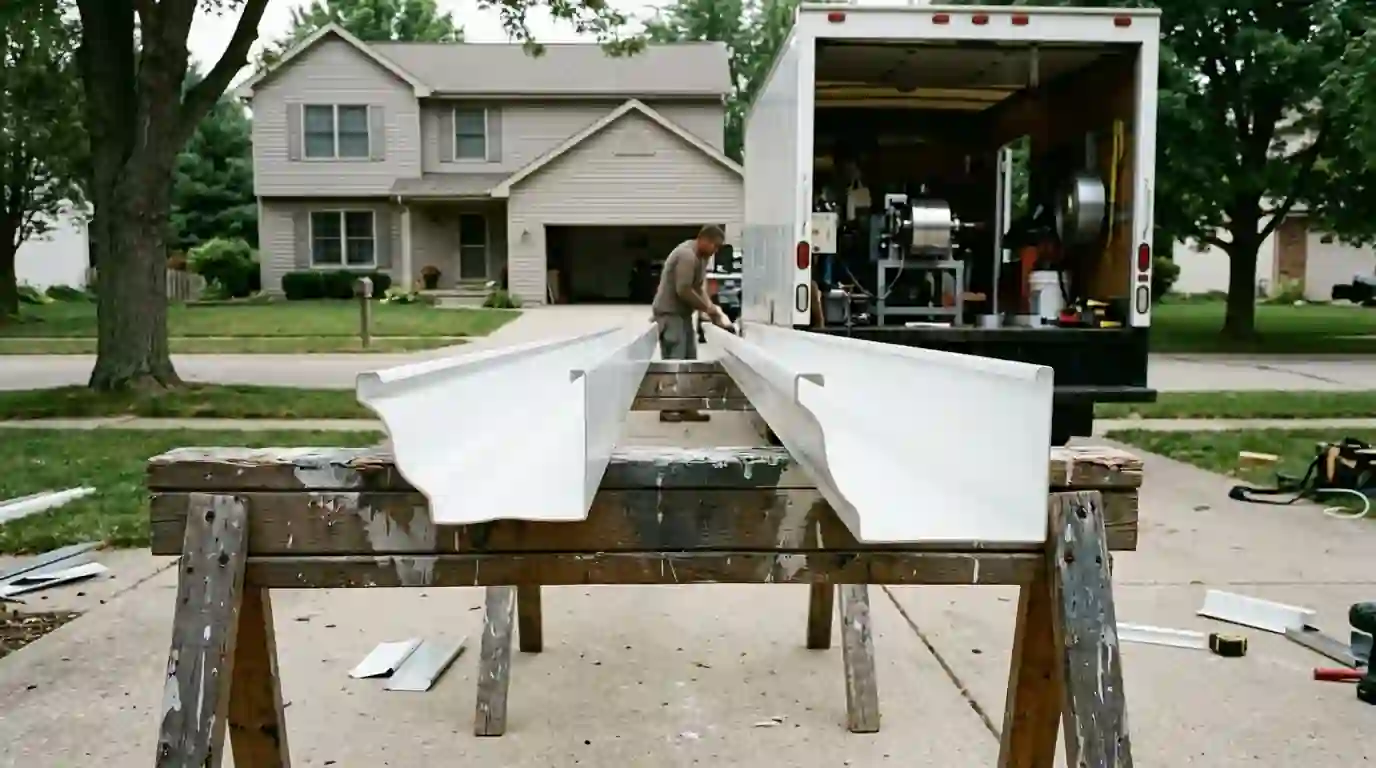
The size of a K-style gutter is the width across the top opening. A 5-inch gutter measures about five inches from the back, where it meets the fascia, to the front lip. A 6-inch gutter is an inch wider and a bit deeper, and that extra cross-section adds up to considerably more water carried per foot of run.
Downspouts matter just as much. A 2x3 downspout is the standard partner for 5-inch gutters. A 3x4 has twice the cross-section of a 2x3, so it drains a run faster and is far less likely to plug with seeds or shingle grit. Plenty of overflow complaints are really downspout complaints, which is why we look at both together.
How much water your roof actually sends
City of Omaha stormwater materials point out that a 1 inch rain on a 1,000 square foot roof sheds more than 600 gallons. Put that on a 2,000 square foot roof and a single inch of rain sends well over a thousand gallons to the gutters, much of it in the first half hour of a summer storm.
Total yearly rainfall is less important than how hard it comes down. Omaha averages about 31.71 inches of precipitation a year, which is moderate, but May, June and August each average well over four inches and much of that arrives in short, intense thunderstorms. A gutter is sized for the worst ten minutes, not the average day.
When 5-inch gutters are the right call
For a large share of metro homes, 5-inch is the correct size, not just the cheap one. Ranch houses, split levels and many two-story homes have modest roof planes broken into several sections, each draining to its own run. With a downspout every 30 to 40 feet and clean outlets, a 5-inch system handles those roofs well.
There are practical advantages too. Five-inch K-style gutters come in the widest range of coil colors, fit standard fascia boards without looking bulky, and cost less per foot. On a one-story house with a low-slope roof, the smaller profile also sits more neatly in proportion with the eave.
When to size up to 6-inch
The case for 6-inch gutters usually comes down to concentrated water. These are the situations where we recommend the larger size, at least on the affected runs:
- A single roof plane longer than about 40 feet or deeper than a typical ranch, all draining to one edge
- Steep pitches, roughly 8 in 12 and up, where water moves fast enough to overshoot a narrow trough
- Valleys that land on an inside corner and pour a stream across the gutter
- Metal roofs, which shed water and snow faster than shingles
- Upper roofs that drain onto lower roofs before reaching the gutter
- Runs that overflow in hard rain even when the gutter and downspouts are clean
- Homes under heavy tree cover, where the wider opening and 3x4 downspouts resist plugging
Mixing sizes on one house
Nothing says every run has to match. A common Omaha example is a two-story house with an attached garage: the main roof is large and steep, while the garage roof is small and shallow. Putting 6-inch gutters on the main house and 5-inch on the garage gives each roof what it needs.
From the street, the difference is subtle as long as the color and profile match. Where the two sizes meet, a transition piece or a downspout at the junction keeps the joint clean. Inside corners under valleys are another good place for a short 6-inch section paired with valley splash guards, which stop the stream from jumping the lip.
| Feature | 5-inch K-style | 6-inch K-style |
|---|---|---|
| Typical downspout | 2x3 | 3x4 |
| Best fit | Ranches, split levels, modest two-story homes | Large or steep roofs, valleys, metal roofs |
| Clog resistance | Good with clean outlets | Better, wider outlet and downspout |
| Look on the eave | Slimmer, suits small fascia | Bolder, suits tall fascia and big houses |
| Color choices | Widest selection | Good selection, slightly fewer |
| Relative cost | Lower per foot | Higher per foot |
Fix pitch and downspouts before blaming the size
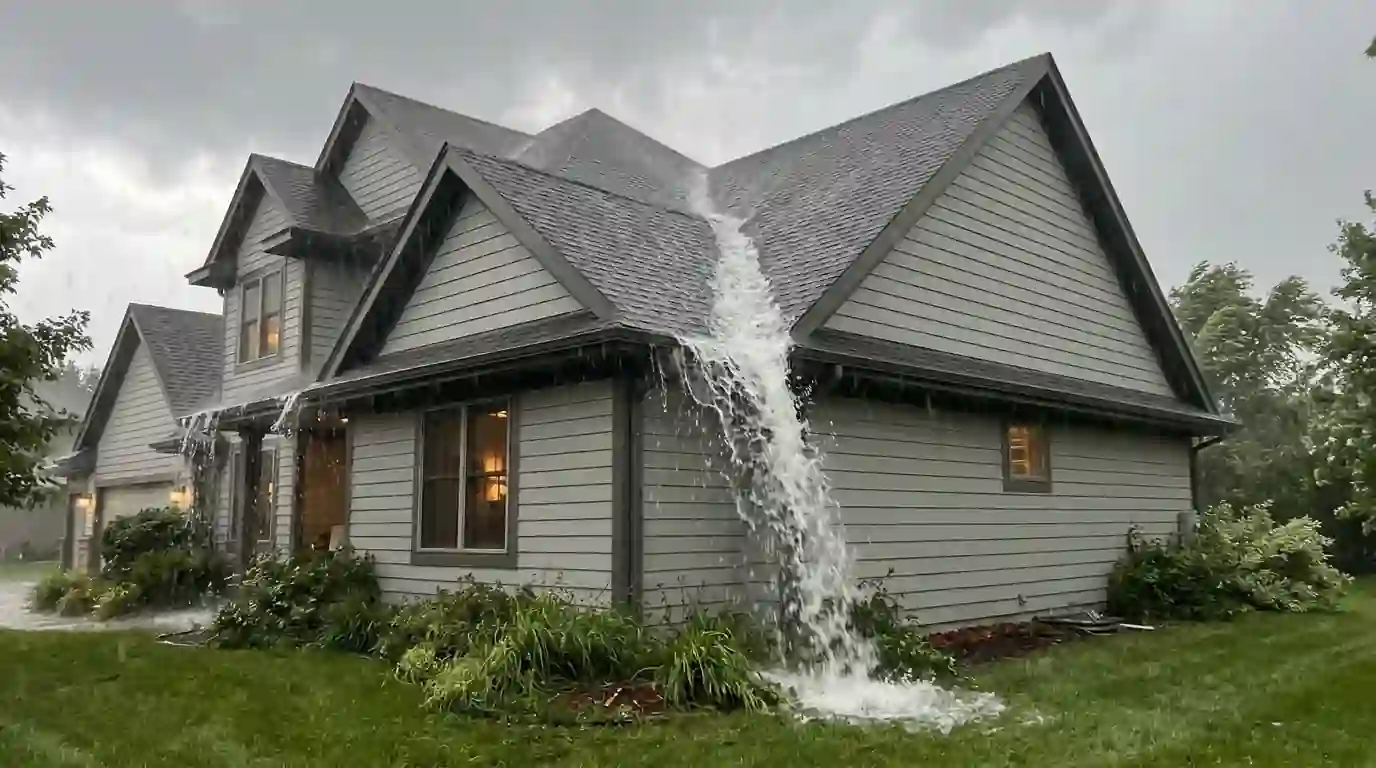
Before anyone sells you a bigger gutter, check the basics. A run needs a steady fall toward the outlet, a common guide being about a quarter inch for every ten feet. If the house has settled or hangers have pulled loose, water pools in a low spot and spills over regardless of size. Re-pitching the run may solve it outright.
Downspout placement is the next suspect. A 50 foot run with one downspout at the far end is asking a 5-inch gutter to do too much. Adding a second outlet near the middle, or upgrading the existing outlets to 3x4, often fixes overflow for less than a full upgrade. When a roof is simply too big for 5-inch, though, no amount of tweaking will change that.
| Item | Published range |
|---|---|
| Upgrade from 5-inch to 6-inch | $3 to $5 per foot |
| Seamless aluminum gutters installed | $14 to $20 per foot |
| Seamless installation in Omaha | $7.67 to $18 per foot |
| New downspout installed | $30 to $75 per downspout |
National ranges published by Angi, Fixr, Handoff, HomeGuide. Your price depends on the house; we give you a number on the phone or at the house before any work starts. See the full gutter price guide.
Cost and how to decide
Moving from 5-inch to 6-inch adds a modest amount per linear foot, and 3x4 downspouts cost a little more than 2x3. On a typical house the difference is a small share of the total job, and it is spent where water damage would cost far more to fix. The price table below gives typical ranges, and our seamless gutter cost guide breaks down the rest.
The best way to decide is to watch the current gutters during a heavy rain and note where they overflow. Bring that observation to the estimate. When we measure for seamless gutter installation, we look at each roof plane, its pitch and any valleys, then size runs individually. Give us a call and we will walk the roof with you.
Agatha Prewitt, Gutter Guides Editor
Writes the gutter guides for Hastings Seamless Gutters, drawing on what our crews see on Omaha roofs through hail season, cottonwood season and winter.
FAQ
Questions readers ask
Do 6-inch gutters look too big on a ranch house?
On a low one-story ranch with a narrow fascia board, a 6-inch gutter can look heavy, and it is rarely needed unless a valley or long roof plane dumps a lot of water. Most ranches are well served by 5-inch. If one section does overflow, we can size up only that run and keep the slimmer profile on the rest of the house.
Can I keep my 5-inch gutters and just add bigger downspouts?
Often, yes. Cutting new outlets and switching from 2x3 to 3x4 downspouts lets a 5-inch gutter drain faster, and adding an outlet in the middle of a long run halves the water each section carries. That fix works well when the gutter itself is in good shape and the overflow happens near the outlets. It will not help a run that is undersized along its whole length.
Are 6-inch gutters better for metal roofs in Nebraska?
Generally, yes. Metal sheds rain quickly and can send it over a narrow gutter on steep sections. In winter, snow can slide off in sheets, and a wider, sturdier trough on closely spaced hidden hangers holds up better. Some metal roofs also need snow guards above the gutter, which is a roofing item worth asking your roofer about.
How do I tell if my gutters are undersized or just clogged?
Clean the gutters and flush the downspouts, then watch the next heavy rain. If water still spills over the front, especially along the middle of a long run or at an inside corner under a valley, the gutter or its outlets are too small for that roof. If the overflow stops after cleaning, size was not the problem.
Questions about your own gutters?
Call and describe what you are seeing. The line is answered 24/7 and a crew can come out to measure.