Gutter guide
Downspouts and Omaha's Combined Sewer
In the older parts of Omaha, the pipe under your street may carry toilet water and storm runoff together. Where your downspouts send roof water decides whether your house adds to that load or stays out of it.
By Agatha Prewitt, Gutter Guides EditorUpdated
The short answer
Omaha's older core is served by a combined sewer that carries sewage and stormwater in the same pipes, and heavy rain can overload it and push water back into basements. Roof water should never go into a sanitary sewer line. If your downspouts disappear into the ground, find out where they go, then redirect them to the surface well away from the foundation. Call 811 before any digging, and check with the city before changing an old connection.
Call (402) 395-0908What a combined sewer is
Most newer neighborhoods have two separate underground systems. One sanitary sewer carries wastewater from sinks, toilets and floor drains to the treatment plant. A separate storm sewer collects runoff from streets and yards and carries it toward creeks and the river.
Older cities were often built with one pipe doing both jobs. Omaha's combined sewer system covers about 43 square miles with roughly 800 miles of pipe that carry sewage and stormwater together. On a dry day, that pipe handles household wastewater easily. In a downpour, everything that runs off streets, driveways and roofs connected to it pours into the same pipe at once.
Why heavy rain backs water into basements
A combined pipe has a fixed size. When a summer storm drops an inch of rain in an hour, the runoff entering the system can outrun what the pipes and the plant can take. In older combined sewer areas, that overload can push water back up through the lowest openings it can find, which are often basement floor drains.
Roof water is a bigger part of that surge than most people realize. City of Omaha stormwater materials note that a 1 inch rain on a 1,000 square foot roof sends more than 600 gallons off the edge. A modest house can shed well over a thousand gallons in that one inch, and if its downspouts are piped into the sewer, all of it arrives at the street at the same moment as everyone else's.
The city's long project, and your part in it
Omaha began its sewer overflow control program in 2014. It carries an estimated total cost of about 2 billion dollars and a deadline of 2037, and it aims to capture or treat 85 percent of combined sewage volume. Much of that work happens in big pipes, tunnels and treatment upgrades that homeowners never see.
What happens on each lot still matters. Every downspout that sends roof water across a lawn instead of into a pipe takes a little load off the system during the storms that cause trouble. It also keeps more water out of the shared pipe beneath your own street, which is the pipe that can back up into your basement.
How to tell where your downspouts go
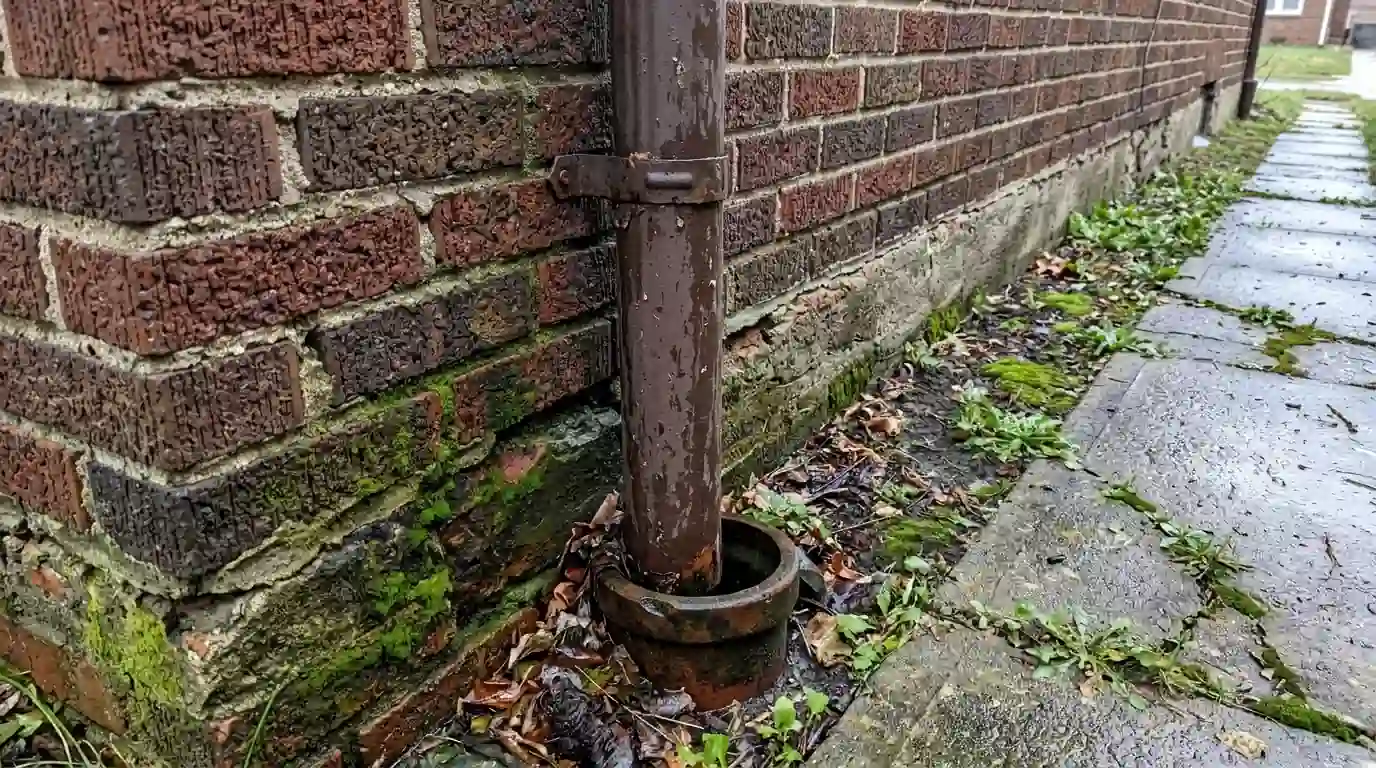
Walk around the house and look at the bottom of each downspout. If it ends in an elbow and an extension or splash block, the water stays on the surface and you can skip ahead. If it drops straight into a clay, cast iron or plastic pipe at ground level, it is going somewhere underground, and you need to know where.
Many houses built before the 1970s had downspouts piped into the ground when they were new, and nearly half of Omaha's homes predate 1970. Engineers working on the city's sewer program found midtown downspouts tied into private sanitary sewer lines and called it a significant problem in some neighborhoods. Other old lines run to a storm sewer, a curb outlet or a dry well.
- Run a hose into the downspout and listen or watch for where the water comes out.
- Look for an outlet at the curb, in a ditch or at the bottom of a slope.
- Check whether water rises in a basement floor drain while the hose runs.
- Note any old clay pipe stubs near the foundation where a downspout once connected.
- If you cannot trace it, a plumber can scope the line with a camera.
Keep roof water out of sewer lines
Roof water does not belong in a sanitary sewer line, whether through a floor drain, a cleanout or an old pipe that happens to lead there. Local rules across the metro generally prohibit that kind of connection. We will not tie a downspout into any sewer line, and we recommend against it no matter where you live.
If you find that a downspout is connected to the house sewer, call the city to ask what is required before you change it, then plan to disconnect it. The work itself is usually simple: cut the downspout above the pipe, cap the old pipe securely so sewer gas and water cannot escape, and add an elbow that sends the water onto the surface. A plumber should handle the cap if the pipe is tied into the sewer.
Where redirected roof water should go
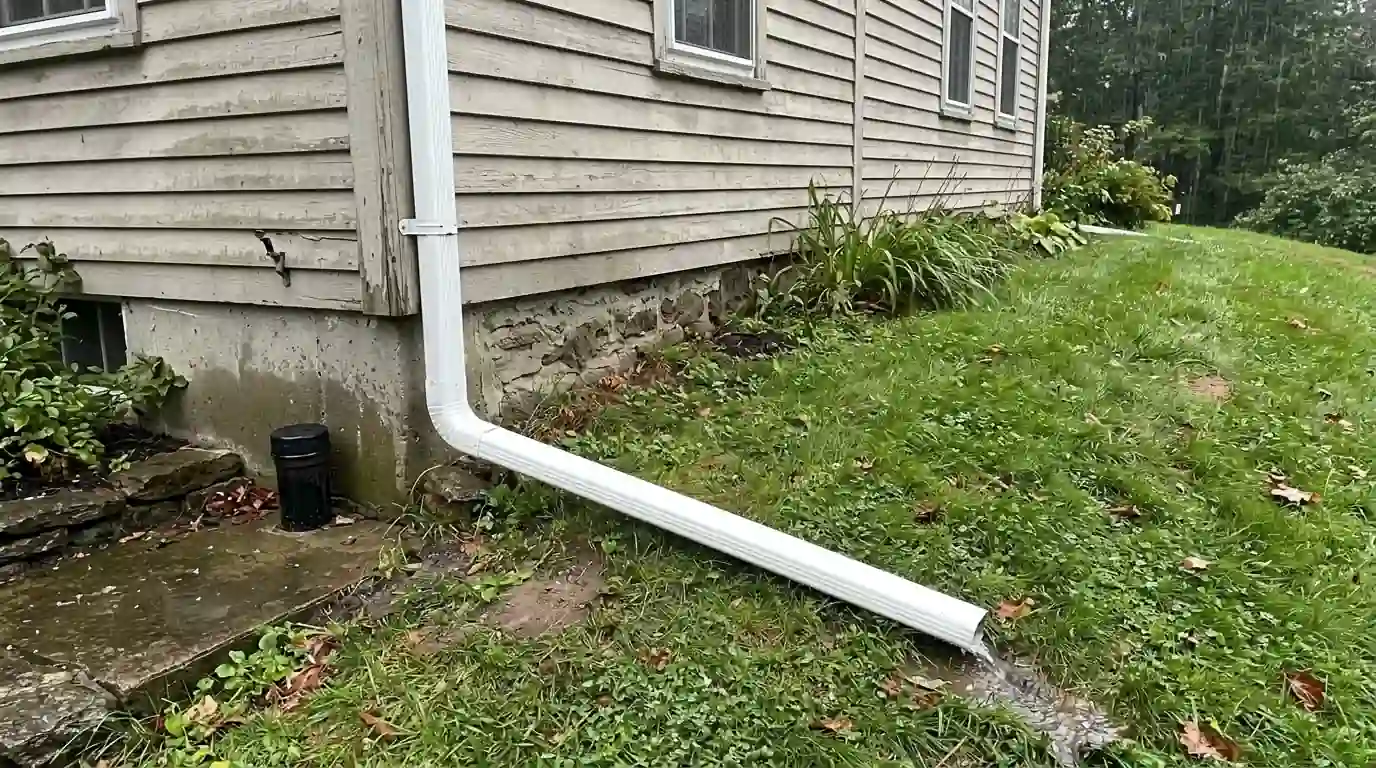
Taking a downspout out of the sewer only helps if the water then lands somewhere safe. University of Nebraska Extension guidance says downspouts should discharge at least 5 feet from the foundation, and the ground there should fall away from the house. Water dumped at the base of the wall just trades a sewer problem for a basement seepage problem.
The choice usually comes down to distance and what sits in the way. Hinged downspout extensions handle most side yards. Where a driveway, patio or flat lawn makes surface discharge awkward, buried drain lines in solid pipe can carry the water to a pop-up emitter in open lawn or to daylight on a slope. In both cases, keep water off a neighbor's property and off public sidewalks where it can freeze.
| Situation | Common fix | Watch for |
|---|---|---|
| Downspout piped into a sewer line | Disconnect, cap the pipe, extend on the surface | Ask the city first, plumber caps the pipe |
| Old pipe runs to a curb outlet | Keep if it flows, or replace with solid pipe | Cracked clay and root intrusion |
| Downspout ends at the wall | Extension or splash block | At least 5 feet and ground that falls away |
| Paved area beside the downspout | Buried solid line to an emitter | Steady slope and a cleanout |
Rain barrels on a disconnected downspout
A rain barrel is a popular way to use some of that roof water in the garden, and it pairs well with a disconnected downspout. The overflow is the part people get wrong. Omaha stormwater guidance says the overflow must be at least as large as the downspout so water does not back up, and it should be piped away from the foundation. Nebraska Extension adds that overflow belongs in a rain garden or planted bed, never aimed at a driveway, the foundation or a neighbor's yard.
Winter changes the setup. The city advises emptying barrels during cold snaps and pulling the downspout out of the barrel for the season, because the spigot and plastic fittings crack when they freeze. Reattach the regular downspout and its extension so snowmelt still lands well away from the house.
Call 811 before any digging
Old downspout pipes sit right where gas, water, electric and communication lines enter a house. Before anyone digs to cap an old pipe or trench a new line, call 811 and wait for utilities to mark their lines. The call costs nothing, and it keeps a shovel out of a gas line.
811 does not mark private lines such as sprinklers, landscape lighting or pet fences. If you hire us for a buried line, we make the 811 call and ask about those on the first visit.
Backflow and the gutters above
If you live in an older combined sewer area and have had water come up through a floor drain, ask a plumber about a backflow valve. The city's backflow valve program has paid 80 percent of installation, with homeowners covering the other 20 percent. That protects the basement from the street side, while disconnecting downspouts reduces what you send into the pipe.
Gutters are the start of the chain. A clogged gutter spills over its front edge onto the foundation, and a downspout too small for its roof backs up in a storm. Sizing runs and outlets correctly, which our gutter size calculator can help you estimate, keeps water moving to the spot you chose. Our downspout and basement guide covers grading and loess soil in more detail. If you want help tracing and redirecting your downspouts, call us for a gutter inspection.
Agatha Prewitt, Gutter Guides Editor
Writes the gutter guides for Hastings Seamless Gutters, drawing on what our crews see on Omaha roofs through hail season, cottonwood season and winter.
FAQ
Questions readers ask
How do I know if my Omaha house is in the combined sewer area?
The combined system serves the older core of the city, roughly the neighborhoods built before separate storm sewers became standard. The surest answer comes from the city's public works or sewer department, which can tell you which system serves your street. Your own house can also give clues, such as downspouts piped into the ground or a history of water rising through a basement floor drain during heavy rain.
Is it legal to send downspout water across my lawn toward the street?
Sending roof water onto your own lawn, at least 5 feet from the foundation, is the usual recommendation. Problems start when the water runs onto a neighbor's property, pools on a public sidewalk where it can freeze, or erodes soil into the street. Rules vary by city, so if your discharge would cross a property line or a walk, check locally and consider a buried line.
What should be done with the old pipe after a downspout is disconnected?
It needs a secure cap. If the pipe connects to a sewer line, an open stub can let sewer gas, odors and backup water escape near your foundation, so a plumber should cap it properly. If it leads only to an old storm outlet, it can be capped or left in service if it flows freely. Mark the location so nobody digs it up later by surprise.
Will disconnecting my downspouts stop my basement drain from backing up?
Not by itself. Backups in combined sewer areas happen when the shared pipe under the street overloads, and your roof is only one of many sources. Disconnecting helps the system and keeps your own roof water out of it. A backflow valve, installed by a plumber, is what protects the basement from water pushing back up from the street.
Questions about your own gutters?
Call and describe what you are seeing. The line is answered 24/7 and a crew can come out to measure.