Gutter guide
The Best Time of Year to Install Gutters in Nebraska
Gutters can go up almost any month in Nebraska, but each season changes what install day looks like, how soon you need the system working and how long you might wait. Here is how we think about the calendar.
By Agatha Prewitt, Gutter Guides EditorUpdated
The short answer
Early fall is often the easiest window: the summer storm peak has passed, the weather is dry and mild for sealant and ladder work, and the new system is in place before leaves drop and winter ice arrives. Late winter and early spring work well too if you want gutters ready for May, the wettest month. The worst plan is waiting until a gutter has already failed in a storm.
Call (402) 395-0908The real deadline is the wet season
In Omaha, May is the wettest month at roughly 4.7 inches on average, and August and June are close behind. Those three months bring a big share of the year's roughly 31.7 inches of rain and melted snow, much of it in heavy thunderstorms. A house with failing gutters feels it most then, in the window wells, along the foundation and on the fascia.
So the question is less about which month is ideal for the crew and more about when your house needs the gutters working. Working backward from May puts the useful install window anywhere from the previous fall through April. Anything after that is a fix in the middle of the storm season rather than a plan for it.
Fall: the window we point most people toward
By September the heaviest storm months are behind you, and a dry, mild fall day suits every part of the job. Sealant at corners and outlets goes on to clean, dry metal. Aluminum coil forms cleanly on the truck. Ladders stand on firm ground instead of soft spring lawn. And the crew is not racing a line of storms coming in from the west.
Timing also lines up with the trees. A fall install means the new gutters are hung and pitched before oaks, maples and honeylocust drop their leaves, and well before the first ice. If you plan to add guards, this is a natural moment, since they fit most cleanly on fresh gutters with new hangers. Our gutter guard installation page covers which types suit which trees.
One caution: a fall install still needs a clean-out after the leaves finish dropping if you skip guards. New gutters clog just as fast as old ones.
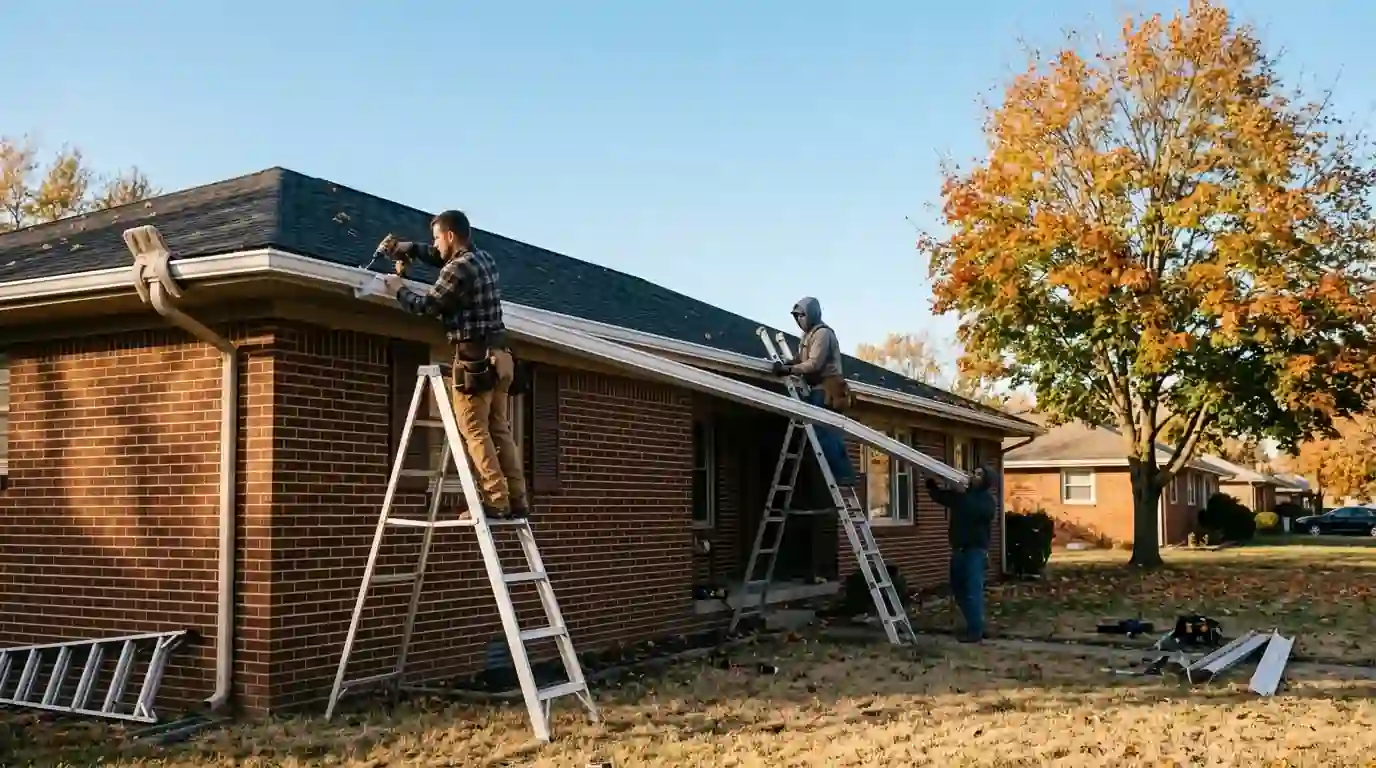
Winter: possible, with limits
January is the coldest month in Omaha, with an average high around 33 degrees and a low near 14.5. Gutters can be installed in cold weather, and aluminum coil does not mind it. What changes is the margin. Sealant needs a dry surface and does better above freezing, roofs with snow or ice on the edge are not safe to work from, and short days shorten the job.
We schedule winter installs on clear, dry stretches and skip days with ice on the eaves. Nebraska now sees more multi-day warm spells in winter than it once did, which opens up more of those workable days than people expect. Winter is also when you find out what your current gutters do under ice. Our ice dam guide explains the damage to look for before the replacement visit.
- Good winter job: a straight replacement on a ranch with clear eaves on a dry day
- Better to wait: steep roofs with snow on the edge or ice still in the old gutters
- Plan around: fascia replacement, since soft wood is easier to judge once it has dried
Spring: good for planning, busy for crews
Late March and April are a strong choice for homeowners who noticed overflow or ice damage over the winter and want it fixed before May. Temperatures rise into a comfortable range for sealant, and the old system is usually clear of ice so problems are easy to see.
The catch is demand and weather. Spring is when hail season begins in earnest, and storms can arrive in clusters. On April 26, 2024, storms dropped hail up to about 2 inches across in Papillion and golf ball sized hail in parts of Omaha, and on April 24, 2025, hail around 3 inches was reported in Ralston. After a day like that, every gutter crew in the metro fills its schedule with hail damage replacements, and planned jobs can slide. Booking by phone in late winter puts you ahead of that.
Late spring also brings cottonwood fluff and silver maple seeds, which can pack a brand-new gutter within weeks. If your house sits under either tree, plan the first cleaning soon after the drift ends.
Summer: fine for the work, risky for the timing
July averages a high around 87.5 degrees, and summer installs are common. Long days help. The challenges are heat on the roof for the crew, afternoon storms that halt ladder work and the fact that summer is the middle of the storm season, so you are fixing a problem while it is happening.
Summer is also the second wave of hail. A June 25, 2024 storm produced 3 to 3.5 inch hail in Papillion and La Vista. Installing brand-new gutters in the weeks right before a likely storm is not wrong, but if your roof is also old, consider whether to time both together after the season.
Line it up with roofing, siding and new construction
The best time for gutters is often set by another project. When a roof is being replaced, the gutters should come down before the tear-off and go back up after the new drip edge is in. That is the moment to check fascia, add drip edge where it is missing and size up runs that overflow. Our detach and reset work covers roof jobs where the existing gutters are good enough to rehang.
On a new home, gutters go up after the roof and fascia are finished and before final grade and landscaping, so downspout discharge can be planned with the grading. Our page on new construction gutters explains that sequence. Siding projects work the same way: gutters off, siding on, gutters back with any kick-out flashing in place.

A season-by-season summary
This table sums up how each part of the year usually plays out for a gutter install in eastern Nebraska. Your house and your schedule may shift the balance.
| Season | Working conditions | Main advantage | Main drawback |
|---|---|---|---|
| Early fall | Dry, mild, firm ground | Ready before leaves and ice | Leaf drop still to come |
| Winter | Cold, short days, ice risk | Quieter schedules on clear days | Weather limits workable days |
| Early spring | Warming, often wet ground | Done before the May peak | Hail can disrupt schedules |
| Late spring and summer | Hot, storm interruptions | Long working days | Installing mid storm season |
What to do before the install, whenever it is
Whatever month you choose, a little prep makes the visit faster and the result better. Walk the house in a heavy rain and note where water spills. Check the fascia from a ladder for soft spots, or ask us to probe it on the measuring visit. If boards are rotted, fascia replacement happens the same day before new hangers go in.
Think about size too. Overflow at a valley or along a long rear eave usually means that run needs a 6-inch gutter or larger downspouts, and the gutter size calculator gives a rough starting point from your roof area. Then call us. We measure, talk through timing and color, and set a date that fits the weather and your other projects.
Agatha Prewitt, Gutter Guides Editor
Writes the gutter guides for Hastings Seamless Gutters, drawing on what our crews see on Omaha roofs through hail season, cottonwood season and winter.
FAQ
Questions readers ask
Can gutters be installed when it is below freezing in Nebraska?
Yes, on dry days with no ice or snow at the roof edge. Aluminum forms and hangs fine in the cold. The limits are safety and sealant: corners and outlets need clean, dry metal to seal well, and icy eaves are not safe to work from. We pick clear stretches in winter and reschedule if the eaves are iced or wet.
Should I wait until after hail season to replace old gutters?
If your gutters still drain and you are also expecting a roof claim, waiting until after the storm season can make sense so the roof and gutters are done together. If the gutters leak, sag or overflow now, waiting means another wet spring of water at the foundation. Replacing sooner and keeping photos of the new system is usually the safer call.
Is it better to put up gutters before or after a new roof?
After. Gutters should come down before the roof tear-off and go up once the new drip edge and first shingle course are in place, so the gutter sits correctly under the roof edge. If the existing gutters are in good shape they can be reset. If they are old, undersized or dented, the reroof is the cleanest time to replace them.
How far ahead should I call to get gutters in before May?
Calling in late winter or very early spring gives the most flexibility, before spring storms fill crew schedules with hail and wind repairs. A single hail day can change the picture across the metro within a week. Once we measure, the install itself usually takes a day on a typical home, weather permitting.
Questions about your own gutters?
Call and describe what you are seeing. The line is answered 24/7 and a crew can come out to measure.