Gutter guide
Are Heated Gutter Cables Worth It in Omaha?
Heat cable is one of those upgrades people either swear by or regret. On the right eave of the right house it ends a yearly fight with ice. On the wrong one it is a winter electric bill that changes nothing.
By Agatha Prewitt, Gutter Guides EditorUpdated
The short answer
Heated gutter cables are worth it on a house that ices up in the same spots every winter, such as north eaves, shaded valleys and downspouts that freeze solid, after drainage and attic problems have been addressed. They are rarely worth it on a whole house, on gutters that are clogged or flat, or as a substitute for insulation. Heat only the trouble spots, use self-regulating cable and a controller, and the numbers usually make sense.
Call (402) 395-0908Start with a winter of observation
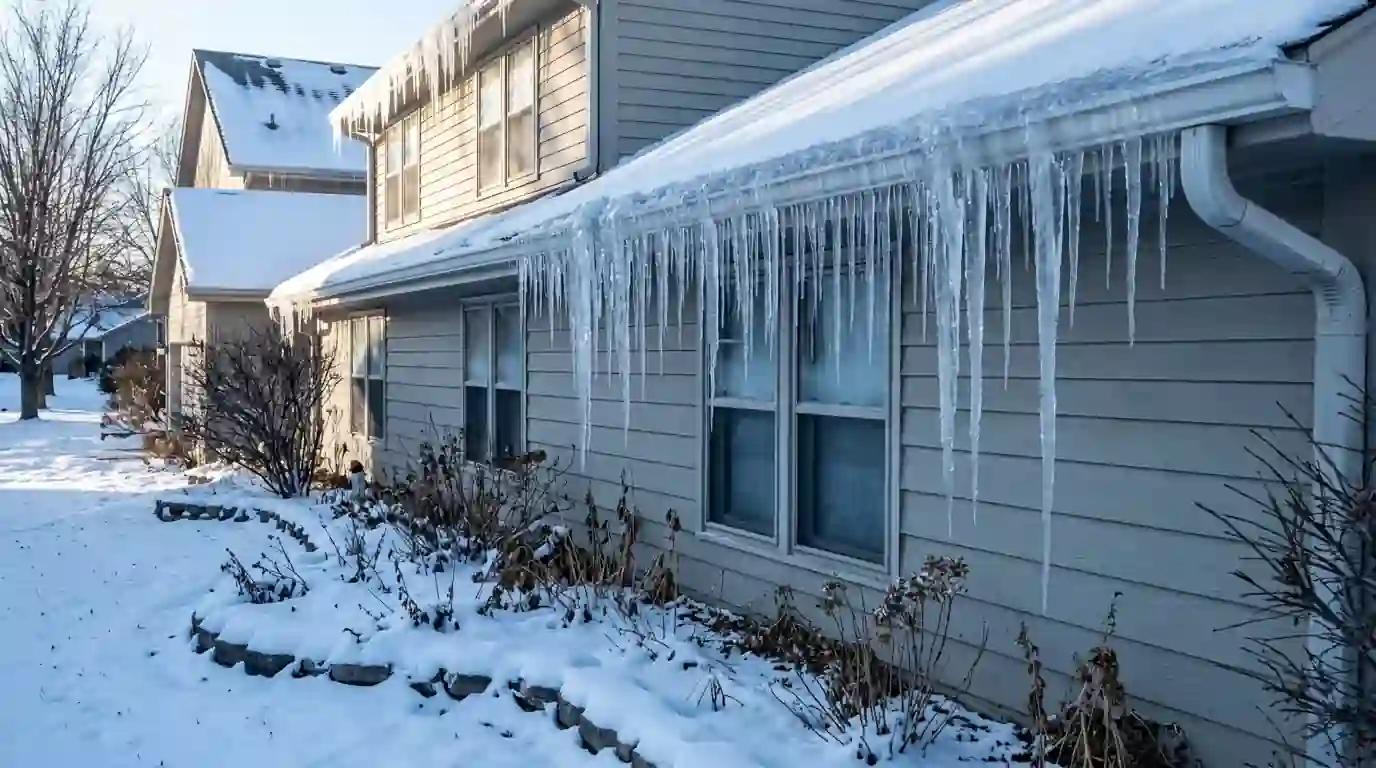
The best evidence for or against heat cable is already on your house. Over one winter, note where icicles form, which downspouts stop draining, where ice builds on walks below the eave and whether any ceiling or wall stains show up after a thaw. Photos with dates help.
Most homes in the metro end up with a short list. One north-facing eave over a bedroom, an inside corner where two roof planes meet, a downspout on the shady side of the garage. That list is what a cable layout should be built around, not the whole perimeter of the house.
- Icicles that return to the same eave after every snow
- A downspout with a column of ice at the bottom elbow
- Gutters still packed with ice days after the rest of the roof has cleared
- Slick patches on a walk or step under the same run every week
- Brown stains near an exterior wall after a midwinter thaw
Why Omaha winters create the problem
January in Omaha averages a high near 33 degrees and a low around 14.5. That pattern is close to the worst case for gutters: afternoon sun and attic warmth melt snow on the roof, the water runs to the cold eave and the gutter refreezes it by evening. The National Weather Service puts average annual snowfall at about 27.1 inches, so there is fuel for that cycle most winters.
Winters have also turned choppier. Nebraska averages fewer days below freezing than it once did, and multi-day warm spells above freezing are more common. Each thaw sends a fresh pulse of meltwater into gutters that may still be frozen at the bottom, and each refreeze adds weight. Heat cable earns its keep on exactly those days, by keeping a path open while the rest of the gutter is solid.
What heat cable actually does, and does not do
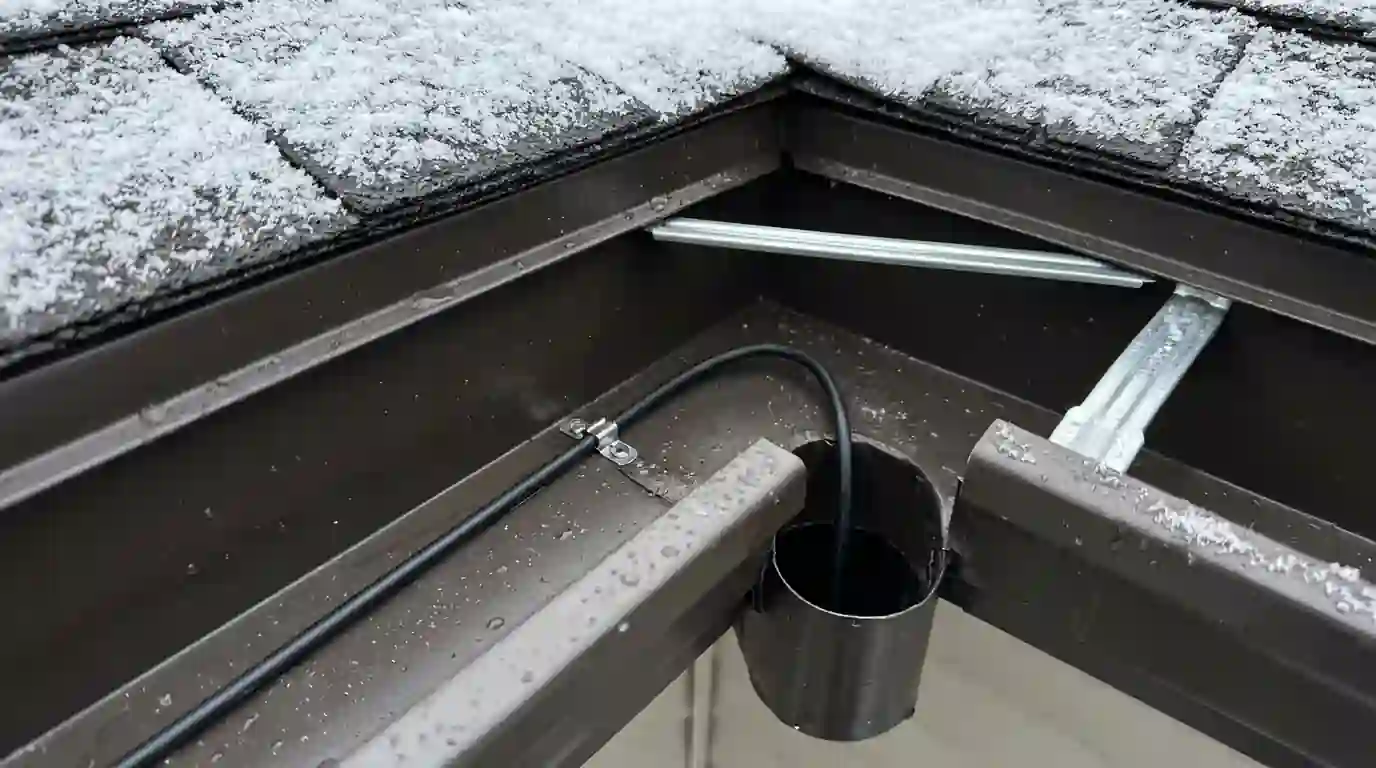
A run of cable in the bottom of the gutter and down the inside of the downspout keeps a narrow channel warm enough to drain. On eaves that dam badly, a zigzag clipped along the roof edge cuts melt channels through the snow down to that warm gutter. The goal is drainage, not a clear roof.
It will not stop an ice dam on its own. NDSU Extension traces ice dams to attic heat melting roof snow that refreezes at the cold eave, and its fixes start in the attic: insulation around R-50, air sealing, soffit and ridge venting, plus a roof rake for the lower roof. Cable can make a dam smaller and less likely to back water under shingles. It will not fix a gutter that pitches the wrong way or holds a mat of maple seeds, and it does little if switched on after a thick block has formed.
What it does protect is the gutter itself. Building science guidance from UMass notes that gutters do not cause ice dams, but a gutter packed with ice can bend and tear away from the house, taking fascia and downspouts with it. Keeping a channel open keeps that weight from building.
Cheaper fixes to rule out first
Before spending on cable, check the things that cause most frozen gutters. A run that holds water from fall will freeze into a solid trough on the first cold night. Clearing leaves in late fall and confirming that each run falls toward its outlet fixes a surprising number of ice complaints. Our gutter re-pitching work handles runs that settled flat.
Downspouts are the next suspect. A 2x3 downspout packed with seeds or ending in a buried extension freezes far sooner than a clear 3x4 that drains onto open ground. Upsizing or adding an outlet can end the problem at a corner without any wiring.
Finally, the attic. Air leaks around light fixtures and hatches and thin insulation sit behind most heavy ice dams, and fixing them is work for an insulation or roofing contractor. Our ice dam guide covers that side.
Self-regulating cable versus hardware store kits
The cable you choose decides both how well it works and what it costs to run. Constant-wattage kits put out the same heat along their whole length, whether a section sits in slush or in sun. They waste power on mild stretches and can overheat if the cable crosses itself.
Self-regulating cable adjusts its own output. One major maker rates its roof and gutter cable at roughly twice the heat per meter sitting in ice water as in open air, so the warmth goes where meltwater and ice actually are. The same cable is rated for standard gutter and downspout metals and is built not to overheat where runs cross. Pair it with a controller that switches on only when it is both freezing and wet, and it sits idle on dry cold days, which is most of a Nebraska winter.
| Point | Self-regulating cable | Constant-wattage kit |
|---|---|---|
| Heat output | Rises in cold and wet spots, drops in warmer spots | Same along the whole run |
| Crossing itself | Will not overheat | Can overheat and fail |
| Running cost | Lower, especially with a controller | Higher if left on |
| Up-front price | Higher | Lower |
| Best use | Gutters, downspouts and roof edge on a house | Small, short-term fixes |
Power, the outlet and an electrician
Gutter cable plugs into a GFCI-protected outdoor outlet, ideally near the eave being heated, on a circuit with enough capacity for the total cable length. Some houses already have a suitable outlet under the soffit. Many do not.
When a new outlet or circuit is needed, that is a job for an electrician, and it is a real part of the total cost. We are a gutter company, not electricians. We plan the cable runs, measure the total length so the electrician knows the load, mark where the outlet should go and install the cable and clips once power is ready. Our heated gutter cable page explains the install steps.
Running the numbers for your house
The installed price depends on how many feet of cable the problem spots need, how many downspouts get a loop and whether a roof-edge zigzag is involved. A full heated gutter system is a bigger job than heating two corners, and the price rows below show how wide that spread is. Electrical work for a new outlet is billed separately by the electrician.
Weigh that against what ice costs you now. Bent hangers and split corners every spring, a fascia board softened by meltwater, a ceiling stain to repaint, a slick front step. If the same eave needs ice damage repair every year or two, heating that one run often pays for itself within a few winters. If ice shows up once a decade, it likely will not.
Running cost follows the same logic. Short runs on a controller cost little. Cable on every eave left switched on from November to March costs a lot more, and that is the setup behind most of the regret stories.
| Item | Published range |
|---|---|
| Roof and gutter heat cable installation | $900 to $1,800 |
| Heated gutter systems | $475 to $4,000 |
| Ice dam removal, for comparison | $650 to $2,400 |
| Typical gutter repair | $100 to $450 |
National ranges published by HomeAdvisor, Angi, HomeGuide. Your price depends on the house; we give you a number on the phone or at the house before any work starts. See the full gutter price guide.
Living with it once it is in
Turn cable on before the first lasting snow, or let a controller do it, and switch it off in spring once freezes are over. Each fall, look along the gutters for clips that let go or loops pulled out of a downspout by wind or squirrels.
Keep the gutters clean. A trough full of leaves around a warm cable still clogs, and the cable will not push debris down a downspout. If you have or plan micro-mesh guards, mention it when you call, because some guard styles need the cable placed under them a certain way. Give us a call and we will look at where your ice forms and tell you plainly whether cable belongs on your house.
Agatha Prewitt, Gutter Guides Editor
Writes the gutter guides for Hastings Seamless Gutters, drawing on what our crews see on Omaha roofs through hail season, cottonwood season and winter.
FAQ
Questions readers ask
Do I need heat cable on every gutter of my house?
Almost never. Ice tends to form in the same few spots, usually north-facing eaves, valleys where two roof planes meet, and downspouts on the shady side of the house. Heating those runs and their downspouts handles most of the problem at a fraction of the cost and power of a whole-house layout. Watching one winter of icing tells you exactly where cable belongs.
How much electricity does gutter heat cable use in a Nebraska winter?
It depends on total cable length and how many hours it runs. Self-regulating cable draws less when it is warmer, and a controller that switches on only when it is freezing and wet keeps it off on dry cold days. Short runs on a controller cost little. Long runs left on all season are where the bills climb, so heating only trouble spots matters.
Can heat cable be added to gutters that are already installed?
Yes. Cable is clipped into the existing gutter, run down the downspouts and, where needed, zigzagged along the roof edge without nails through shingles. The gutters should be clean, well pitched and firmly hung first, since cable in a sagging or clogged run only hides the problem. A suitable GFCI outdoor outlet near the eave also has to be in place.
Is it safe to leave gutter heat cable plugged in all winter?
Self-regulating cable on a GFCI-protected outlet is designed for long winter use and will not overheat where it crosses itself. Leaving it on all season mostly costs money rather than adding risk, which is why a controller is worth having. Inspect it each fall for damaged jackets, loose clips and chewed sections, and have an electrician look at any outlet that trips repeatedly.
Questions about your own gutters?
Call and describe what you are seeing. The line is answered 24/7 and a crew can come out to measure.